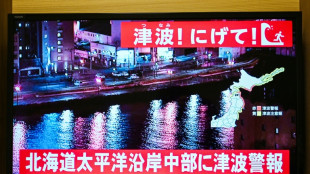
Japan wastewater release sparks wave of misinformation in China / Photo: Pedro Pardo - AFP

Japan's release of wastewater has sparked a wave of misinformation in China about nuclear contamination in the Pacific Ocean, with viral posts promoting wild theories that lack scientific backing.
Despite being deemed safe by the International Atomic Energy Agency, the release of wastewater has drawn the outrage of Japan's neighbours, whose fraught relationships with their former coloniser have laid the groundwork for public mistrust of the plan.
In China, state-linked outlets have drawn links to the fictional monster Godzilla, promoted a campy song decrying Japan for polluting the Pacific and fish merchants were pelted with comments doubting the safety of their products.
And as a diplomatic spat between Beijing and Tokyo deepens, misinformation on social media has further fuelled the flames -- often promoted by state-run outlets and affiliated commentators and boosted by armies of pro-government users.
"Of course [the discharge] should be opposed!" prominent nationalist commentator Hu Xijin wrote on Weibo.
"It's polluting oceans and creating known long-term risks that we don't quite understand."
Government officials have also weighed in, with Beijing's Consul General in Belfast Zhang Meifang posting an animation on social media platform X -- which is banned in China -- of Godzilla surrounded by flames.
"By discharging #Fukushima nuclear-contaminated water into the sea, Japan is unleashing #Godzilla, the embodiment of its own nuclear trauma, to the world," she wrote above the video, which appears to have been first shared on X by state media outlet Xinhua.
- 'Misleading' posts -
Animations falsely showing nuclear material seeping into the Pacific have also gone viral.
One showing deep purple and red streaks unfurling across the Pacific from eastern Japan was posted widely across Chinese social media accounts with hundreds of millions of followers.
The animation actually originated with a 2012 study by the GEOMAR Helmholtz Centre for Ocean Research Kiel in Germany and shows a simulation of long-term caesium dispersal into the Pacific following the 2011 Fukushima nuclear accident.
Jim Smith, a professor of environmental science at the University of Portsmouth, told AFP that it was "misleading" to use the simulation in reference to the recent Fukushima release.
Operators of the water disposal said Friday that initial results show radioactivity levels are within safe limits and experts insist the Fukushima water is not dangerous.
"When released into the Pacific, the tritium is further diluted into a vast body of water and would quickly get to a radioactivity level which is not discernibly different from normal seawater," said Tom Scott from the University of Bristol.
That did not stop China's official state news agency CGTN from producing a musical parody claiming Japan was pumping "polluted water and poisoned fish" into the sea.
- 'I don't dare eat this' -
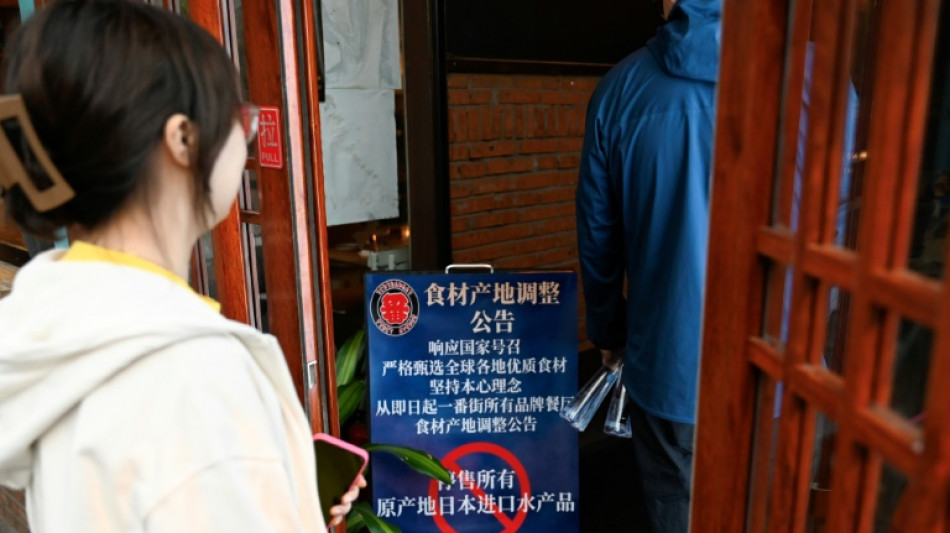
China banned the import of all aquatic products from Japan just hours after wastewater began to be released.
That decision is causing a major overhaul in the sourcing of seafood across China -- a leading importer of Japanese fish.
A livestream by visibly upset seafood merchants was inundated with negative comments accusing them of selling tainted food.
"Sell it quickly. If you don't sell it now you never will," one comment wrote.
"I don't dare to eat this, get lost," another said.
And the false belief that iodised salt can protect against radiation -- as well as fears that sea salt from the Pacific might be contaminated -- has prompted panic buying of the seasoning in China.
China's main state-owned salt firm issued a statement calling on people not to "blindly hoard" after footage on social media showed shop shelves stripped bare of the mineral.
And in Hong Kong, the government issued a statement saying the city's edible salt supply was "stable" and urged the public not to worry.
Elsewhere in the city, a news report by TV channel i-Cable that compared the tritium discharge levels of nuclear power plants across Asia was taken down hours after it aired.
Asked if it was censoring scientific views that did not fit Beijing's narrative, the TV channel told a local news outlet that it would not comment on editorial decisions.
(O.Joost--BBZ)