Berliner Boersenzeitung - Soldiers' gallows graffiti revealed for first time at English castle

EUR -
AED 4.109134
AFN 72.728281
ALL 91.068859
AMD 404.188339
ANG 2.002579
AOA 1027.144156
ARS 1729.248535
AUD 1.622267
AWG 2.014008
AZN 1.912528
BAM 1.962541
BBD 2.256963
BDT 139.639646
BGN 1.955636
BHD 0.42335
BIF 3352.798341
BMD 1.118893
BND 1.435939
BOB 13.448193
BRL 6.164092
BSD 1.120608
BTN 105.233465
BWP 15.436573
BYN 3.355807
BYR 21930.308026
BZD 2.253754
CAD 1.575964
CDF 2595.832638
CHF 0.915614
CLF 0.027765
CLP 1092.755792
CNY 7.470292
CNH 7.464898
COP 3624.934461
CRC 508.200341
CUC 1.118893
CUP 26.89452
CVE 110.645053
CZK 24.34225
DJF 199.549121
DKK 7.475085
DOP 68.091023
DZD 152.371974
EGP 60.59389
ERN 16.783399
ETB 183.918275
FJD 2.53496
FKP 0.837816
GBP 0.834308
GEL 2.903532
GGP 0.837816
GHS 13.099997
GIP 0.837816
GMD 83.360443
GNF 9925.302097
GTQ 8.567428
GYD 235.037326
HKD 8.774098
HNL 30.117916
HRK 7.5738
HTG 146.842519
HUF 362.970109
IDR 20210.289352
ILS 3.555675
IMP 0.837816
INR 105.063575
IQD 1699.638057
IRR 2116222.136659
ISK 136.807259
JEP 0.837816
JMD 177.849031
JOD 0.793295
JPY 176.818359
KES 145.344762
KGS 97.844756
KHR 4565.478491
KMF 494.551073
KPW 1007.003897
KRW 1511.428985
KWD 0.347875
KYD 0.933978
KZT 502.294127
LAK 25210.540792
LBP 100348.254387
LKR 372.651831
LRD 190.59467
LSL 18.532011
LTL 3.303801
LVL 0.676807
LYD 7.171171
MAD 10.959244
MDL 20.030134
MGA 5092.033018
MKD 61.61355
MMK 2349.067623
MNT 4029.320399
MOP 9.050287
MRU 45.241565
MUR 52.676978
MVR 17.226835
MWK 1943.136649
MXN 20.801703
MYR 4.54215
MZN 71.498438
NAD 18.532427
NGN 1509.297401
NIO 41.241756
NOK 10.50836
NPR 168.291842
NZD 1.997004
OMR 0.430223
PAB 1.121251
PEN 3.862166
PGK 5.107192
PHP 70.84272
PKR 309.925281
PLN 4.386677
PYG 7004.679653
QAR 4.098277
RON 5.341147
RSD 117.61829
RUB 91.830664
RWF 1654.020058
SAR 4.207616
SBD 9.005505
SCR 15.499192
SDG 673.014658
SEK 11.009395
SGD 1.432256
SHP 0.837965
SLE 25.678699
SLL 23462.637275
SOS 640.404952
SRD 42.051926
STD 23158.831582
STN 24.573095
SVC 9.809695
SYP 14547.8499
SZL 18.525693
THB 37.515398
TJS 10.342425
TMT 3.916126
TND 3.354823
TOP 2.694026
TRY 56.14781
TTD 7.59947
TWD 36.716461
TZS 2959.162776
UAH 50.765874
UGX 4585.751516
USD 1.118893
UYU 45.10493
UZS 13377.951689
VES 1002.882387
VND 28529.540512
VUV 133.441527
WST 3.119277
XAF 655.957
XAG 0.02128
XAU 0.000273109292
XCD 3.023864
XCG 2.02054
XDR 0.791116
XOF 655.957
XPF 119.331742
YER 264.75817
ZAR 18.435484
ZMK 10071.378954
ZMW 22.770224
ZWL 360.283175
SSP 6428.301763
MXV 2.33848
  • CMSD

    -0.1200

    19.81

    -0.61%

  • JRI

    0.0000

    10.77

    0%

  • BCC

    -1.8200

    74.15

    -2.45%

  • CMSC

    -0.2228

    19.53

    -1.14%

  • BCE

    0.2000

    20.34

    +0.98%

  • RIO

    0.0100

    94.17

    +0.01%

  • AZN

    -2.7400

    161.47

    -1.7%

  • GSK

    -1.1800

    48.17

    -2.45%

  • RBGPF

    0.0000

    65

    0%

  • NGG

    0.8800

    75.82

    +1.16%

  • RYCEF

    -0.7300

    19.08

    -3.83%

  • BTI

    -0.4500

    54.4

    -0.83%

  • BP

    0.4700

    43.99

    +1.07%

  • RELX

    -0.0600

    33.18

    -0.18%

  • VOD

    -0.1800

    16.15

    -1.11%

Soldiers' gallows graffiti revealed for first time at English castle
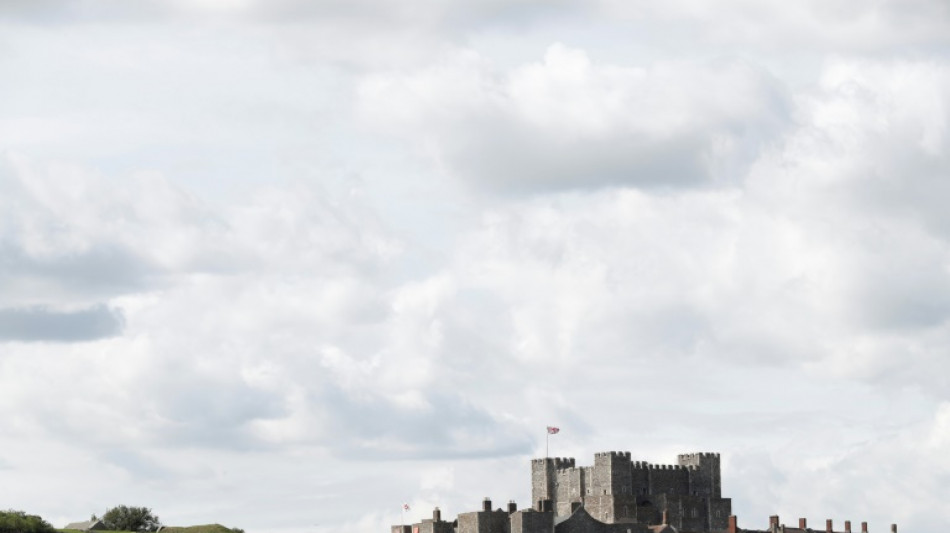
Soldiers' gallows graffiti revealed for first time at English castle / Photo: Adrian DENNIS - AFP

Soldiers' gallows graffiti revealed for first time at English castle

Macabre depictions of hangings carved by soldiers guarding England's biggest medieval castle at a time of looming war with France went on display Monday.

Text size:

The graffiti-covered door -- part of a new exhibition at Dover Castle on the country's south coast -- dates from the late 18th century when soldiers garrisoned there faced the threat of invasion by Napoleon Bonaparte's French forces.

Historian Paul Pattison said scaling a ladder to the top floor of the castle's St John's Tower and seeing the carvings on the long-forgotten door had been an "astonishing discovery".

He said the soldiers' fascination with public execution gave "a unique glimpse into the minds of these soldiers, especially during such a charged period of time".

The door features some 50 pieces of carved graffiti including nine hangings, many initials and two surnames.

There are also a number of dates including 1789, the year of the French Revolution, and 1798.

Pattison, a historian with English Heritage which manages Dover Castle, said the threat of impending invasion would have made strategically important Dover a hive of activity with ships filling the harbour and soldiers a constant presence.

Dover is the closest port to continental Europe and has been a prime target for invaders down the centuries.

- 'Strange and macabre' -

Researchers believe the "strange and macabre repetition" of hangings carved into the door could depict an actual execution in Dover where they would have provided a form of public entertainment during the late 18th century, attended by thousands of people.

In one of the carvings, however, the figure is dressed in military uniform and one of Napoleon's trademark two-cornered bicorne hats, making it possible it was intended to be the French military and political leader himself.

Also carved into the door is a detailed and accurate depiction of a single-masted sailing ship, thought to be an 8-gun cutter which was in use by Britain's Royal Navy at the time.

"What makes this door such an extraordinary object is that it is a rare and precious example of the ordinary person making their mark, whether that be simply for the purpose of killing time or wanting to be remembered," Pattison added.

Dover Castle, which is now visited by more than 350,000 people a year, underwent a wide-ranging modernisation in the 1790s to transform it from an ageing medieval castle into a modern military garrison.

With the ultimately unrealised threat of an invasion from the other side of the Channel growing, it became home to thousands of soldiers.

St John's Tower, with its commanding view over the vulnerable northern end of the castle, would have been guarded by between six and 12 men at any one time, leaving them hours to kill time by carving graffiti with knives or possibly bayonets, according to English Heritage.

The door has been painstakingly conserved and features in the castle's new "Dover Castle Under Siege" exhibition.

The exhibit delves back into the castle's bloody and dramatic 1216-17 siege when it repelled an attack by French and rebel English forces.

Using digital reconstruction, it also reveals the fortress's original entrance from the time, multiple lost towers and long-lost defensive walls.

(B.Hartmann--BBZ)