RBGPF
-0.8200

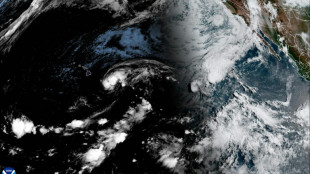
A downgraded Hurricane Melissa made landfall in Cuba early on Wednesday after ripping a path of destruction across Jamaica, which authorities have designated a "disaster area."
The National Hurricane Center (NHC) said Melissa, which it described as an "extremely dangerous hurricane," had weakened to a Category 3 storm before it made landfall in Santiago de Cuba province on the island's southern coast.
It hit with maximum sustained winds of approximately 120 miles (195 kilometers) per hour, the NHC said, after fluctuating between Category 3 and Category 5, the highest on the Saffir-Simpson scale.
Windspeeds of the storm, which is now about 60 miles (95 kilometers) west of Guantanamo, have eased slightly to a maximum of 115 miles (185 kilometers) per hour, but it was still causing "flooding rains and dangerous storm surge."
Curtains of rain, dark skies, and raging seas lashed Cuba, as local authorities declared a "state of alert" in six eastern provinces.
Residents told AFP they had been stockpiling food, candles, and batteries since Monday.
"We bought bread, spaghetti, and ground beef. This cyclone is serious, but we'll get through it," Graciela Lamaison told AFP in Santiago de Cuba.
Authorities in Haiti, east of Cuba, ordered the closure of schools, businesses and government offices on Wednesday.
Cuban authorities reported that about 735,000 people have been evacuated so far.
"It will be a very difficult night for all of Cuba, but we will recover," Cuban President Miguel Diaz-Canel said on social media platform X.
Carrying loved ones and a handful of quickly snatched belongings, Cuban families trekked along narrow paths slick with mud and fringed by dense greenery to head to relative safety.
Others, visibly distraught, squeezed onto crowded buses -- gripping handrails and bags -- or loaded onto lorries waiting to be spirited away.
- Rising flood waters -
"A house collapsed in Mariana de la Torre, oh God, please," a resident of Santiago, the island's second-largest city, wrote on Facebook.
"We are all being flooded," warned another resident of the city.
In El Cobre, rescue workers were attempting to reach 17 people trapped by rising floodwaters and a landslide, according to state media.
"We are safe and trying to stay calm," rheumatologist Lionnis Francos, one of those stranded, told the official news site Cubadebate.
He did not mention any fatalities.
Two children, five elderly people, asthmatics, and people with high blood pressure are among those trapped.
"The rescuers arrived quickly. They called us, but couldn't cross because the road is blocked," the doctor added.
Hurricane Melissa hit Jamaica as a Category 5 storm on Tuesday with winds of nearly 185 miles (300 kilometers) per hour, making it the most powerful tropical storm recorded this year globally, according to an AFP analysis of US weather data.
The Category 5 hurricane is the most potent in terms of wind speed and pressure, and surpassed typhoon Ragasa, which lashed east Asia in September and had winds of 166 miles (267 kilometers) per hour, the data analyzed from the US National Oceanic and Atmospheric Administration (NOAA) said.
It is also the most powerful ever to hit Jamaica since records began and took hours to cross the country, first weakening and then intensifying again.
Jamaican Prime Minister Andrew Holness declared the island a "disaster area" and authorities warned residents to remain sheltered because of continued flooding and the risk of landslides.
Lisa Sangster, a 30-year-old communications specialist in Kingston, said her home was devastated by the storm.
"My sister... explained that parts of our roof was blown off and other parts caved in and the entire house was flooded," she told AFP.
The scale of Melissa's damage in Jamaica was not yet clear. A comprehensive assessment could take days because much of the island was still without power, with communications networks badly disrupted.
Government minister Desmond McKenzie said several hospitals had been damaged, including in Saint Elizabeth, a coastal district he said was "underwater."
Jamaican health authorities also urged on Tuesday to be vigilant of crocodiles that may have been displaced in the storm.
- 'Severely damaged' -
Jamaica's climate change minister told CNN that Melissa's effect was "catastrophic," citing flooded homes and "severely damaged public infrastructure" and hospitals.
Mathue Tapper, 31, told AFP from Kingston that those in the capital were "lucky" but feared for fellow Jamaicans in the island's more rural western areas.
Broad scientific consensus says human-driven climate change is responsible for intensified storms such as Melissa, which are increasingly frequent in the region and bring higher potential for destruction and deadly flooding.
"Human-caused climate change is making all of the worst aspects of Hurricane Melissa even worse," said climate scientist Daniel Gilford.
The United Nations is planning an airlift of some 2,000 relief kits to Jamaica from a supply station in Barbados once air travel is possible.
Assistance is also planned for other affected countries, including Cuba and Haiti, UN spokesperson Stephane Dujarric told journalists.
Jamaican officials said around 25,000 tourists were in the country, famed for its normally crystalline waters.
(Y.Yildiz--BBZ)