'No pilgrims': regional war hushes Iraq's holy cities / Photo: AHMAD AL-RUBAYE - AFP

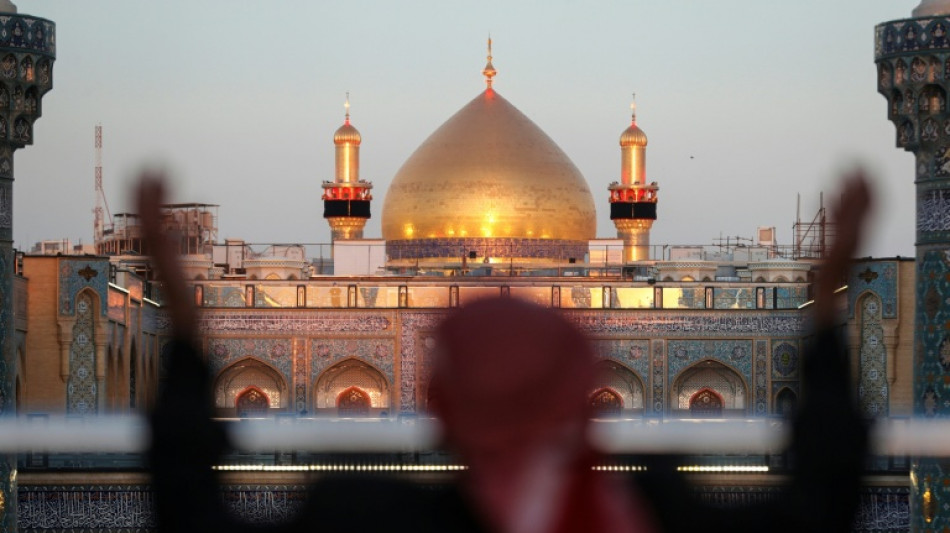
In Iraq's holy city of Najaf, the majestic shrine of Imam Ali stands quiet, its vast courtyards no longer echoing with the multilingual whispers of pilgrims from before the Middle East war.
The absence of tourists leaves nearby shopkeepers and hotel owners with little to do, their days dragging on as they hope for the crowds to return and revive their businesses.
"Iranians used to keep us busy, whether the jeweller, the fabric merchant or the taxi driver. Now there are none," said jewellery shop owner Abdel Rahim Harmoush.
"It used to be hard even to step into the market because of foreigners... Even street vendors drew huge crowds of visitors," the 71-year-old added.
Millions of Shia Muslims from around the world typically flock to Najaf and fellow holy city Karbala every year.
But the regional war ignited in late February by US-Israeli strikes on Iran has stemmed the usual influx of pilgrims from the Islamic republic, Lebanon, the Gulf states, India, Afghanistan and elsewhere.
Iraq was drawn into the conflict from the onset, with strikes targeting US interests and Tehran-backed armed groups in the country.
People in the holy cities "live on religious tourism", said Harmoush, who for 38 years has worked in the old market near Najaf's golden-domed mausoleum.
The shrine is the ornate burial place of Ali -- the Prophet Mohammed's son-in-law, the fourth Islamic caliph and the first Shia Imam.
Harmoush warned of economic ruin were the crisis to persist: shop owners unable to pay rent and taxes, cab drivers left without passengers and labourers struggling to find work.
- Hotels closed -
Hotel owner Abu Ali, 52, was forced to lay off five employees, leaving just one to tend to nearly 70 empty rooms.
"How can I pay salaries if there is no work?" he said.
Saeb Abu Ghneim, head of the hotel association in Najaf, told AFP that 80 percent of the city's 250 hotels had closed, with more than 2,000 employees laid off or on unpaid leave.
He added that most of Najaf's religious tourism relies on Iranians, followed by Lebanese visitors -- also trapped at home by war -- and other nationalities.
The sector, which already weathered the closure of mosques and shrines in the pandemic, is a rare type of tourism in a country reeling from decades of conflicts.
Religious tourism also constitutes a significant source of revenue for Iraq's non-oil economy.
Before the war, 28-year-old Moustafa al-Haboubi could barely manage the crowds queuing to exchange foreign currency for Iraqi dinars.
He now spends the long hours idly scrolling through his phone or chatting with neighbours.
"We barely receive one or two customers," he said. "There are no pilgrims now, Iranian or otherwise."
Even after a fragile ceasefire took effect on April 8 and Iraq's airspace reopened, little has changed.
Some pilgrims trickle through during the week, while on weekends the area grows somewhat livelier as Iraqis visit the sacred sites.
- 'Catastrophe' -
The situation is no different in Karbala, which is around 80 kilometres (50 miles) north of Najaf and home to the shrines of the revered grandsons of Prophet Mohammed, Imam Hussein and his brother Abbas.
The main corridor linking the two golden shrines and the surrounding alleyways were once alive with the murmurs of tourists walking to prayers.
Today, the visitors are almost exclusively Iraqi.
"The situation is dangerous... a catastrophe," said Israa al-Nasrawi, head of Karbala's tourism committee.
She warned that the war had devastated the city's economy, slashing tourist numbers by around 95 percent and forcing hundreds of hotels to close.
The city's many pilgrim tour companies sit idle.
Akram Radi, who has worked in the sector for 16 years, said his company once helped up to 1,000 visitors a month but is now operating at only 10 percent of capacity.
"I might have to close and look for another job," he said.
(Y.Berger--BBZ)