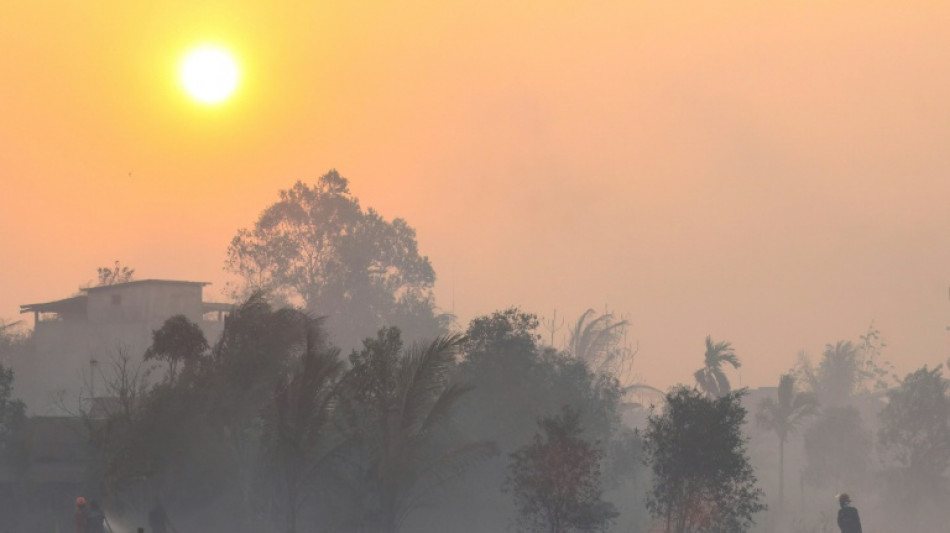
Focus turns to firms as Indonesia fire haze worsens / Photo: MUDA SAGALA - AFP

After months of fires in Indonesia that have caused thick regional haze, attention is turning to whether companies can be held accountable for the blazes and resulting air pollution.
Indonesia experiences fires regularly during its dry season, and experts say years of deforestation and the draining of peatland for cultivation have rendered previously fire-resistant landscapes vulnerable.
Driven by a strong El Nino cycle and resulting drought, this year's blazes have been particularly severe, burning through nearly two million hectares, according to deforestation monitor Nusantara Atlas.
The fires have raged across forests and peatland but also palm oil and timber plantations supplying multinational firms.
Civil society groups have regularly accused companies of responsibility for the blazes, pointing to so-called "hotspots" in supplier plantations, sometimes called concessions.
Environmental group WALHI says it mapped "high confidence" hotspots across Indonesia using NASA fire data and found around 50 percent were inside concessions.
In a report this month the group listed 40 timber and palm oil concessions by the number of hotspots detected.
"This is a structural issue... (that) happens because of the practices, the activities, of these companies," WALHI forests and plantations campaigner Umi Ma'rufah told AFP.
Pressure is also coming from governments, including Singapore, which has issued 10 companies with "preventative measure notices" under its Transboundary Haze Pollution Act.
The notices urge them to fight fires on their land, prevent burning and submit action plans. Firms can face legal action including fines if they do not comply.
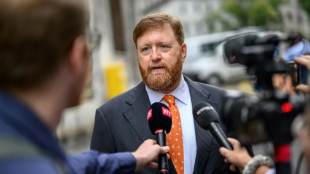
"We must also be clear about where the responsibility for this lies," Singapore Senior Minister K. Shanmugam told reporters.
"This was not simply an act of nature, but a problem driven by companies pursuing profits."
- Legal liability -
Several companies implicated have insisted they are not behind the fires.
"Fires originating outside our boundaries subsequently spread into areas under the Group's management," Singapore Exchange-listed palm oil company First Resources said after one of its concessions was listed in WALHI's report.
Asia Pulp and Paper, a Singapore-registered firm, also insisted that fires in supplier concessions do not "necessarily mean that land was deliberately burned or that the concession holder was responsible for starting the fire."
Satellite monitoring can sometimes show where fires started, said Nusantara Atlas founder David Gaveau.
"In some cases, the satellite photos clearly show that fire starts inside, but we cannot say whether it's by design or whether it's accidental," he told AFP.
"In other cases it's also clear that fire started outside and spread inside the concession."
Experts say fire has been used in the past to illegally open up land for cultivation, including in large concessions, but also by smaller-scale local investors.
Parts of Indonesia also previously allowed smallholders to use fire to clear plots of land, though this year the government has cracked down on that practice too.
Even if fires begin accidentally or outside concessions, firms may have legal responsibilities, explained Azam Hawari, a lawyer with environmental law NGO ClientEarth.
"An external source of ignition or extreme weather does not necessarily absolve a company of civil liability," said Hawari.
Companies are required to have sufficient fire measures, including personnel and equipment, and could also be liable "where activities pose a serious threat to the environment," like peatland drainage, he added.
- International links -
Indonesia has announced "administrative sanctions" against dozens of firms and criminal proceedings against 125 individuals and corporations.
But campaigner Umi pointed out that some previously prosecuted firms have failed to pay fines or carry out forest restoration.
"It's about the will from the government to really do their (enforcement) task," she said.
Some implicated concessions have ties well behind Indonesia's borders, said Holly Yang, an accounting professor at Singapore Management University who teaches sustainability reporting.
After WALHI's report, she and her student Ashmit Bansal mapped concession holders, owners, creditors, investors and supply-chain partners.
"The fires occur in Indonesia, but the ownership, financing and commercial relationships extend across borders," Yang told AFP.
Yang noted that a connection "does not, by itself, establish responsibility for a fire".
But mapping relationships "allows the public to ask informed questions and assess how those parties respond".
(G.Gruner--BBZ)