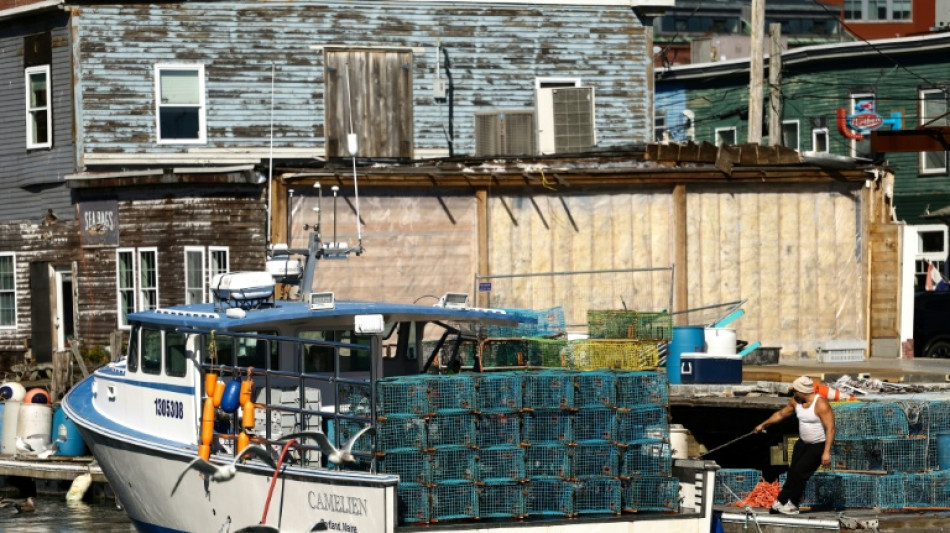
Trapped: Soaring fuel costs hurt Maine lobster industry before midterms / Photo: CHARLY TRIBALLEAU - AFP

Lobsterman Steve Train starts every workday before dawn about $1,000 in the hole, a hike in expenses driven by soaring fuel costs that are hammering Maine's flagship maritime industry ahead of US midterm elections.
Before hauling a single trap from picturesque Casco Bay, north of Portland, the 59-year-old lobsterboat captain counts the costs: Thirty gallons of diesel at $6.49 per gallon -- nearly 45 percent up from one year ago -- and three drums of increasingly expensive bait at $260 a pop.
"It's hard to make a business plan with so many uncertainties and so much change," Train, who works with his brother, told AFP aboard their 36-foot (11-meter) single-engine boat named "Moira Bay."
They had just finished unloading 430 pounds (195 kilograms) of American lobster at the Portland pier. "We had a good day," Train said.
But a storm is brewing -- and the fuel costs affecting Maine's lobster industry feature prominently in November's midterm vote, where the state's veteran Republican Senator Susan Collins is fighting a strong challenge from Democrat Troy Jackson.
Train said he will still back Collins because of her longtime support of Maine's maritime workers, even if Republican President Donald Trump's tariff policies and high fuel prices are "slapping us in the face."
Trump is "such a wild card," Train complained.
Other rising costs faced by the lobster industry include berthing, insurance and maintenance.
Add to those a declining catch, warming water which is pushing what Train called the lobster "sweet spot" out deeper and a shifting tariff policy, and Maine's singular coastal heritage industry is facing peril.
Another challenge also looms: federal regulations aimed at protecting endangered North Atlantic right whales, which migrate along the East Coast and risk entanglement in the vertical lines from lobster traps to surface buoys.
For thousands of Maine families who rely on lobstering, the stakes in sustaining maritime commerce are high.
On a windy morning in Maine's busiest lobster port of Stonington, bearded men in orange trouser bibs sort lobsters into bins, work on their steel wire traps, or prepare their boats.
The town lands 11 million pounds of lobster per year. "That's $50 million to the local economy from 350 boats," according to Alexa Dayton, executive director of the Maine Center for Coastal Fisheries.
"We could not replace that kind of economic power," she told AFP on the Stonington dock.
Belt-tightening afflicting millions of households is having an impact, she noted.
"The industry has really been squeezed by costs going up quite a bit... but the price of lobster is actually at its lowest" in years, Dayton said.
With the significantly decreased profits, she added, "there certainly are people who are asking themselves, is this worth it?"
- 'Devastating consequences' -
The Maine Department of Marine Resources said the state's lobster harvest reached 78.8 million pounds in 2025, an eight-million-pound drop from the previous year but still three quarters of Maine's fisheries value.
In other words, said Dayton, lobsters remain critical to Maine's economic health.
Maine's baby lobsters peaked in 2008, when a convergence of events including slightly warming temperatures -- but not warm enough to cause thermal stress -- spurred larval growth, according to professor Damian Brady, who directs the Darling Marine Center at the University of Maine.
Eight years later, when those lobsters grew to legal harvestable size, Maine landed a record of more than 100 million pounds. The catch has declined ever since, Brady said.
Climate change -- which Trump dismisses as a "hoax" -- is a factor, and its ripple effects are substantial.
According to the Gulf of Maine Research Institute, since 1982 average annual gulf surface temperatures have warmed at nearly triple the rate of the world's oceans.
Canada and US lobster landings have been roughly equal over the years. Today, Canada's lobsters are "doing better," Brady told AFP, because while temperature increases in Maine waters are stressing lobster populations, "that's not the case up in Canada."
As the harvest shifts, Maine's lobstermen are sailing out to deeper waters -- on bigger boats, using more diesel and crew.
The whale showdown could prove especially deleterious.
The US House of Representatives passed a bill last month freezing whale protection rules until 2035. If it fails in the Senate and requirements for whale-safe lobster operations come into force, "that would have devastating consequences" for lobstermen, Brady said.
(T.Renner--BBZ)