Berliner Boersenzeitung - New dyeing method could help jeans shrink toxic problem

EUR -
AED 4.305887
AFN 77.709185
ALL 96.478576
AMD 447.185772
ANG 2.09919
AOA 1075.152793
ARS 1700.369985
AUD 1.773631
AWG 2.110442
AZN 1.988832
BAM 1.955738
BBD 2.360665
BDT 143.336662
BGN 1.956978
BHD 0.441893
BIF 3465.248858
BMD 1.172468
BND 1.513271
BOB 8.098811
BRL 6.475887
BSD 1.172083
BTN 105.746636
BWP 15.488771
BYN 3.438849
BYR 22980.366846
BZD 2.357265
CAD 1.61593
CDF 2654.466702
CHF 0.931925
CLF 0.027231
CLP 1068.28207
CNY 8.255638
CNH 8.249606
COP 4530.075163
CRC 583.993872
CUC 1.172468
CUP 31.070394
CVE 110.262432
CZK 24.345146
DJF 208.71692
DKK 7.471023
DOP 73.649227
DZD 152.057404
EGP 55.710151
ERN 17.587015
ETB 182.28121
FJD 2.678209
FKP 0.875683
GBP 0.876291
GEL 3.15366
GGP 0.875683
GHS 13.478686
GIP 0.875683
GMD 86.177995
GNF 10246.89247
GTQ 8.976714
GYD 245.21429
HKD 9.122801
HNL 30.871544
HRK 7.535801
HTG 153.50708
HUF 387.461295
IDR 19612.805129
ILS 3.76222
IMP 0.875683
INR 105.755121
IQD 1535.364245
IRR 49390.201541
ISK 147.598809
JEP 0.875683
JMD 187.538032
JOD 0.831246
JPY 182.693329
KES 151.201549
KGS 102.532078
KHR 4693.910708
KMF 493.608762
KPW 1055.213891
KRW 1733.622576
KWD 0.35983
KYD 0.976677
KZT 604.728496
LAK 25381.625407
LBP 104957.75099
LKR 362.644648
LRD 207.4534
LSL 19.65201
LTL 3.461992
LVL 0.709214
LYD 6.352906
MAD 10.74255
MDL 19.766708
MGA 5270.944687
MKD 61.553567
MMK 2462.249047
MNT 4159.449731
MOP 9.393981
MRU 46.788509
MUR 53.980917
MVR 18.125748
MWK 2032.378672
MXN 21.1111
MYR 4.787769
MZN 74.932205
NAD 19.651926
NGN 1707.089825
NIO 43.129363
NOK 11.911598
NPR 169.197503
NZD 2.033112
OMR 0.450663
PAB 1.172073
PEN 3.946308
PGK 5.051947
PHP 68.771097
PKR 328.410553
PLN 4.202183
PYG 7824.884517
QAR 4.2742
RON 5.090889
RSD 117.377767
RUB 93.706815
RWF 1706.482092
SAR 4.397754
SBD 9.544025
SCR 15.937333
SDG 705.242561
SEK 10.884521
SGD 1.513562
SHP 0.879654
SLE 28.257353
SLL 24586.065653
SOS 668.692983
SRD 45.348695
STD 24267.714109
STN 24.499743
SVC 10.255761
SYP 12965.576153
SZL 19.65771
THB 36.827279
TJS 10.823756
TMT 4.115362
TND 3.42592
TOP 2.823021
TRY 50.188185
TTD 7.952849
TWD 36.940356
TZS 2919.444848
UAH 49.50498
UGX 4186.902498
USD 1.172468
UYU 45.928539
UZS 14134.67084
VES 327.368692
VND 30855.246128
VUV 142.305809
WST 3.264988
XAF 655.950117
XAG 0.018097
XAU 0.000272
XCD 3.168653
XCG 2.11236
XDR 0.815788
XOF 655.947319
XPF 119.331742
YER 279.574562
ZAR 19.637368
ZMK 10553.623208
ZMW 26.664606
ZWL 377.53412
  • SCS

    0.0200

    16.14

    +0.12%

  • BCC

    1.4100

    77.7

    +1.81%

  • RBGPF

    0.0000

    80.22

    0%

  • CMSC

    0.0300

    23.29

    +0.13%

  • RIO

    0.4400

    77.63

    +0.57%

  • RELX

    0.0900

    40.65

    +0.22%

  • VOD

    -0.0100

    12.8

    -0.08%

  • RYCEF

    0.5400

    15.4

    +3.51%

  • NGG

    -0.7700

    76.39

    -1.01%

  • GSK

    -0.4200

    48.29

    -0.87%

  • BCE

    -0.3000

    22.85

    -1.31%

  • JRI

    0.0000

    13.43

    0%

  • AZN

    0.7500

    90.61

    +0.83%

  • CMSD

    0.0000

    23.28

    0%

  • BTI

    -0.1300

    57.04

    -0.23%

  • BP

    -1.1600

    33.31

    -3.48%

New dyeing method could help jeans shrink toxic problem
New dyeing method could help jeans shrink toxic problem / Photo: SPENCER PLATT - GETTY IMAGES NORTH AMERICA/AFP/File

New dyeing method could help jeans shrink toxic problem

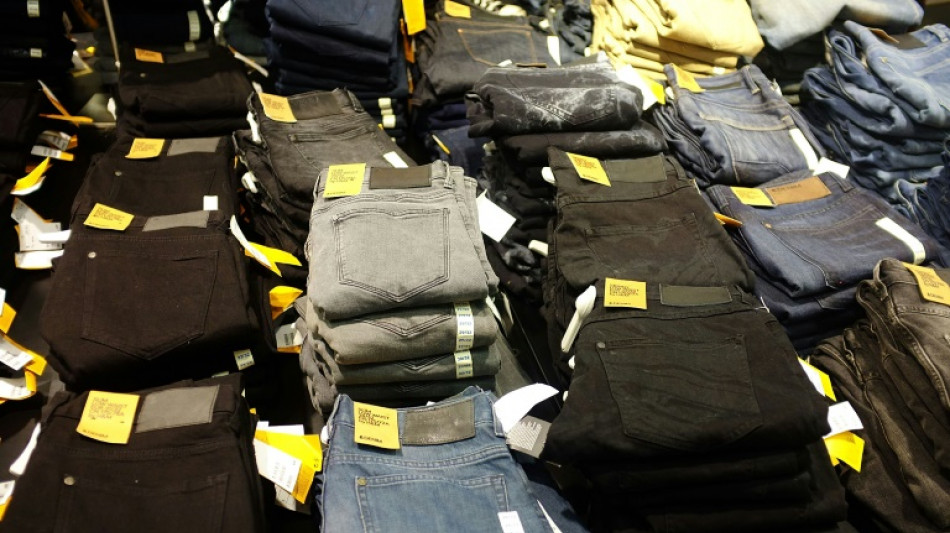
Can the multi-billion-dollar denim industry keep producing blue jeans in every shape, size and silhouette, while shrinking oversized levels of hazardous pollution? Research published Tuesday suggests a new dye could be a step in the right direction.

Text size:

Scientists have been searching for ways to make a more sustainable form of indigo, used for centuries to colour textiles, but which in its modern synthetic form needs toxic chemicals, large quantities of water and is linked to substantial carbon dioxide emissions.

But a study published in the journal Nature Communications suggests ditching the classic dye altogether.

Using Indican -- a colourless compound also derived form indigo-producing plants -- could reduce the environmental and societal impacts associated with dying jeans by around 90 percent because it does not need toxic chemicals, researchers said.

"It's been known for some years that indigo could be replaced by this other chemical called indican, because you can use it without any strong chemicals," study author Ditte Hededam Welner, a researcher at the Novo Nordisk Foundation Center for Biosustainability Enzyme Engineering and Structural Biology, told AFP.

The researchers engineered a variant of an enzyme found in the indigo-producing plant that could produce indican on an industrial scale.

While they said production of indican would still require polluting petrochemicals, so would not be significantly better than producing synthetic indigo, the benefits come when the dye is put to use.

Indican in powdered form can be dissolved in water then used on fabric and activated with either an enzyme or exposure to light.

The study found light-driven dyeing could cut the environmental damage of traditional indigo dyeing by 73 percent, while using the enzyme could slash the impacts by up to 92 percent.

In both cases, the classic blue jean colour turns up the same as when conventional indigo is used.

Researchers suggest that, if indican were to replace indigo to dye the nearly four billion jeans traded annually, there would be a significant reduction in production of toxic waste and global CO2 emissions.

The authors, who have a published patent for their study, acknowledged limitations to their work, including a lack of facilities to simulate indican production at scale.

Indican could also be slightly more expensive than traditional dye, they said.

But the study said growing consumer demand for sustainable clothing could still make indican "a commercially viable route".

(A.Lehmann--BBZ)