Challenges ahead: Key issues facing Pakistan's next leader

Whoever becomes Pakistan's next prime minister following the dismissal of Imran Khan Sunday will inherit the same issues that bedevilled the former international cricket star.
A poorly performing economy, rising militancy and shaky relations with former allies will be top of the agenda for the next administration.
The incoming government will need to stave off "multiple challenges on domestic and foreign relations levels", said Professor Jaffar Ahmed, director of the Institute of Historical and Social Research.
Following are the key issues ahead for the incoming premier of the country of 220 million people:
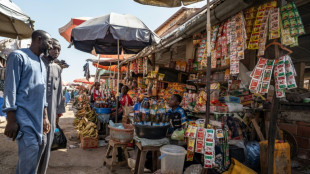
- The economy -
Crippling debt, galloping inflation and a feeble currency have combined to keep growth stagnant for the past three years with little prospect of genuine improvement.
"We don't have any direction," said Nadeem ul Haque, vice-chancellor of the Pakistan Institute of Development Economics (PIDE), a research organisation in Islamabad.
"Radical policy reforms are needed to turn around the economy."
Inflation is ticking along at over 12 percent, foreign debt is at $130 billion -- or 43 percent of GDP -- and the rupee has dipped to 190 to the dollar, a decline of nearly a third since Khan took power.
A $6 billion International Monetary Fund (IMF) bailout package signed by Khan in 2019 has never been fully implemented because the government reneged on agreements to cut or end subsidies on certain goods and improve revenue and tax collection.
"The IMF package must go on," said Ehsan Malik, head of the Pakistan Business Council.
On the bright side, remittances from Pakistan's vast diaspora have never been higher, although the cash flows have put Pakistan on the radar of the Financial Action Task Force, the global money-laundering and terrorist-funding watchdog.
"This is a hanging sword which could fall on the country any time," Jaffar said.
- Rise of militancy -
Pakistan's Taliban, a separate movement that shares common roots with the militants who took power in Afghanistan last year, have stepped up attacks in recent months.
They have threatened an offensive against government forces during Ramadan -- which started Sunday -- and in the past have been blamed for a string of murderous attacks.
Khan attempted to bring militants back into the mainstream, but talks with the Tehreek-e-Taliban Pakistan (TTP) militants got nowhere last year before a month-long truce collapsed.
Afghanistan's Taliban say they will not allow the country to be used as a base for foreign militants, but it remains to be seen if they will genuinely put a stop to the activities of thousands of Pakistani Islamists based there -- or where they will go if they are kicked out.
There are no easy solutions even for the incoming government, experts say.
"The insurgency challenge would remain as big and crucial for the new government," said political analyst Rafiullah Kakar.
In mineral-rich Balochistan, Pakistan's largest province, separatists have been demanding more autonomy and a greater share of the wealth for years, and the region is riven by sectarian strife and Islamist violence.
Kakar suggested a two-pronged approach -- "confidence-building measures and political reconciliation" in Balochistan, but taking off the kid gloves for the Taliban "once and all".
- Foreign relations -
Khan claims the United States orchestrated his removal by conspiring with the opposition, and the next government will have to work hard to patch up relations with Washington -- a key arms supplier countering Russia's trade with India.
Khan angered the West by continuing with a visit to Moscow on the day Russia invaded Ukraine, and was also one of the few world leaders to attend the opening of the Beijing Winter Olympics when others boycotted in protest at China's human rights record.
Still, army chief General Qamar Javed Bajwa allayed some fears last weekend by saying good relations with the United States remain high on Pakistan's agenda -- and the military holds huge sway regardless of which civilian administration is in power.
"The incoming government... needs to put in hard effort to undo the damage," said Tauseef Ahmed Khan, a political analyst and journalism teacher.
(A.Berg--BBZ)