
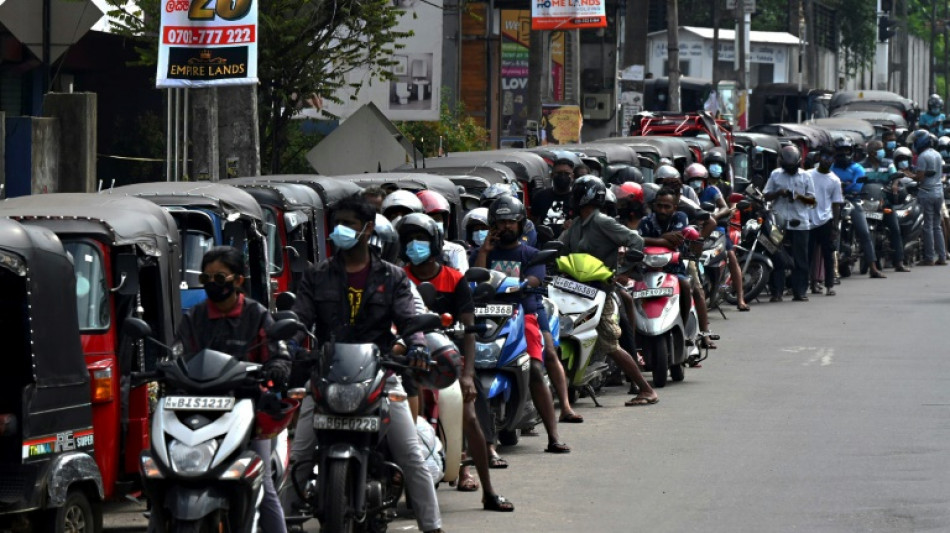
Crisis-hit Sri Lanka defaults on foreign debt / Photo: Ishara S. KODIKARA - AFP

Sri Lanka announced a default on its $51 billion foreign debt Tuesday as the island nation grapples with its worst economic crisis in memory and escalating protests demanding the government's resignation.
Acute food and fuel shortages, as well as long daily electricity blackouts, have brought widespread suffering to the country's 22 million people in the most painful downturn since independence in 1948.
The government has struggled to service foreign loans and Tuesday's decision comes ahead of negotiations for an International Monetary Fund bailout aimed at preventing a more catastrophic hard default that would see Sri Lanka completely repudiate its debts.
"Sri Lanka will suspend repayments for an interim period pending an orderly restructuring," Treasury Secretary Mahinda Siriwardena told reporters.
Just under half of Sri Lanka's debt is market borrowings through international sovereign bonds (ISB), including one worth $1 billion that was maturing on July 25.
China is Sri Lanka's largest bilateral lender and owns about 10 percent of the island's public debt, followed by Japan and India.
The government has borrowed heavily from Beijing since 2005 for infrastructure projects, many of which became white elephants.
Sri Lanka also leased its strategic Hambantota port to a Chinese company in 2017 after it became unable to service the $1.4 billion debt from Beijing used to build it.
This sparked concerns from Western countries and neighbour India that the strategically located South Asian nation was falling victim to a debt trap.
Chinese foreign ministry spokesman Zhao Lijian said Tuesday's default would not stop Beijing from lending support to Sri Lanka's beleaguered economy.
"China has always done its best in providing assistance to Sri Lanka's economic and social development. We will continue to do so in the future," he said.
- 'Last resort' -
Sri Lanka's snowballing economic crisis began with an inability to import essentials, after the coronavirus pandemic torpedoed vital revenue from tourism and remittances.
The government imposed a wide import ban to conserve dwindling foreign currency reserves and use them to service the debts it has now defaulted on.
But the resulting shortages have stoked public anger, with long queues seen around the island each day to buy scarce supplies of petrol, gas and kerosene for cooking stoves.
"It’s been depressing to be so frightened of the future and where it’s going," protester Vasi Samudra Devi told AFP at an anti-government rally in Colombo Monday.
"There are already people who are suffering... We are all here because we are being affected by the economic problems."
Crowds have attempted to storm the homes of government leaders and security forces have dispersed protesters with tear gas and rubber bullets.
Thousands of people were camped outside President Gotabaya Rajapaksa's seafront office in the capital Colombo in the fourth straight day of protests calling for him to step down.
Economists say the crisis has been made worse by government mismanagement, years of accumulated borrowing and ill-advised tax cuts.
International rating agencies also downgraded Sri Lanka last year, effectively blocking the country from accessing foreign capital markets to raise new loans and meet demand for food and fuel.
Sri Lanka's finance ministry said Tuesday's default was "a last resort in order to prevent further deterioration of the republic's financial position".
Creditors were free to capitalise any interest payments due to them or opt for payback in Sri Lankan rupees, the ministry added.
The government is seeking around $3 billion in IMF support over the next three years to revive the economy, finance minister Ali Sabry told parliament on Friday.
Ministry officials told AFP last week the government was preparing a programme for sovereign bond holders and other creditors to take a haircut and avoid a hard default.
Sri Lanka had sought debt relief from India and China this year, but both countries instead offered more credit lines to buy commodities from them.
Estimates showed Sri Lanka needed $7 billion to service its debt load this year, against just $1.9 billion in reserves at the end of March.
(O.Joost--BBZ)



