Berliner Boersenzeitung - Military spending pushes Russian economic growth up

EUR -
AED 4.101954
AFN 72.601367
ALL 90.804754
AMD 405.221216
ANG 1.99908
AOA 1025.349828
ARS 1726.423899
AUD 1.623304
AWG 2.010489
AZN 1.894261
BAM 1.955902
BBD 2.259174
BDT 139.867323
BGN 1.95222
BHD 0.42322
BIF 3355.840496
BMD 1.116938
BND 1.434117
BOB 13.304697
BRL 6.23598
BSD 1.121859
BTN 105.43052
BWP 15.390668
BYN 3.358871
BYR 21891.994178
BZD 2.256198
CAD 1.58545
CDF 2585.712994
CHF 0.922111
CLF 0.027928
CLP 1099.177027
CNY 7.450371
CNH 7.453794
COP 3694.564422
CRC 507.424295
CUC 1.116938
CUP 26.924169
CVE 110.270773
CZK 24.354788
DJF 199.740057
DKK 7.47625
DOP 68.043258
DZD 152.48414
EGP 59.554492
ERN 16.754077
ETB 179.994487
FJD 2.525677
FKP 0.832292
GBP 0.836642
GEL 2.906546
GGP 0.832292
GHS 13.136688
GIP 0.832292
GMD 82.653562
GNF 9938.475849
GTQ 8.572449
GYD 235.072307
HKD 8.76312
HNL 30.15713
HRK 7.560568
HTG 147.044407
HUF 364.349789
IDR 20259.030123
ILS 3.555159
IMP 0.832292
INR 104.641833
IQD 1700.673814
IRR 2128968.509939
ISK 136.823788
JEP 0.832292
JMD 178.047728
JOD 0.791943
JPY 177.379852
KES 145.123759
KGS 97.676047
KHR 4575.260024
KMF 493.687026
KPW 1005.244587
KRW 1490.470597
KWD 0.347424
KYD 0.934841
KZT 500.851738
LAK 25250.530776
LBP 100457.611658
LKR 372.826182
LRD 190.708277
LSL 18.391087
LTL 3.298029
LVL 0.675625
LYD 7.191377
MAD 10.943273
MDL 20.158424
MGA 5126.7474
MKD 61.561175
MMK 2345.231838
MNT 4022.598159
MOP 9.064293
MRU 45.255167
MUR 52.406537
MVR 17.197943
MWK 1945.284431
MXN 20.775569
MYR 4.549319
MZN 71.383815
NAD 18.391498
NGN 1503.432278
NIO 41.047706
NOK 10.607894
NPR 168.688077
NZD 1.989781
OMR 0.429461
PAB 1.121859
PEN 3.823197
PGK 5.024268
PHP 70.53131
PKR 310.260744
PLN 4.39655
PYG 6924.308637
QAR 4.089414
RON 5.345225
RSD 117.672859
RUB 92.930538
RWF 1659.772039
SAR 4.196356
SBD 9.036867
SCR 15.62102
SDG 671.834968
SEK 11.019382
SGD 1.430949
SHP 0.83694
SLE 25.577639
SLL 23421.646337
SOS 641.127827
SRD 41.936638
STD 23118.371415
STN 24.501063
SVC 9.816426
SYP 14522.433745
SZL 18.396963
THB 37.527307
TJS 10.309647
TMT 3.909285
TND 3.35074
TOP 2.689319
TRY 56.099802
TTD 7.60833
TWD 36.706504
TZS 2951.513298
UAH 51.024415
UGX 4577.239646
USD 1.116938
UYU 45.39197
UZS 13433.342509
VES 1005.792492
VND 28623.782388
VUV 134.033855
WST 3.105204
XAF 655.957
XAG 0.021298
XAU 0.000275928649
XCD 3.018582
XCG 2.021788
XDR 0.789733
XOF 655.957
XPF 119.331742
YER 264.148544
ZAR 18.443557
ZMK 10053.789655
ZMW 22.853718
ZWL 359.653734
SSP 6417.721368
MXV 2.334945
  • CMSD

    -0.1200

    19.81

    -0.61%

  • JRI

    0.0000

    10.77

    0%

  • BCC

    -1.8200

    74.15

    -2.45%

  • CMSC

    -0.2228

    19.53

    -1.14%

  • BCE

    0.2000

    20.34

    +0.98%

  • RIO

    0.0100

    94.17

    +0.01%

  • AZN

    -2.7400

    161.47

    -1.7%

  • GSK

    -1.1800

    48.17

    -2.45%

  • RBGPF

    0.0000

    65

    0%

  • NGG

    0.8800

    75.82

    +1.16%

  • RYCEF

    -0.7300

    19.08

    -3.83%

  • BTI

    -0.4500

    54.4

    -0.83%

  • BP

    0.4700

    43.99

    +1.07%

  • RELX

    -0.0600

    33.18

    -0.18%

  • VOD

    -0.1800

    16.15

    -1.11%

Military spending pushes Russian economic growth up
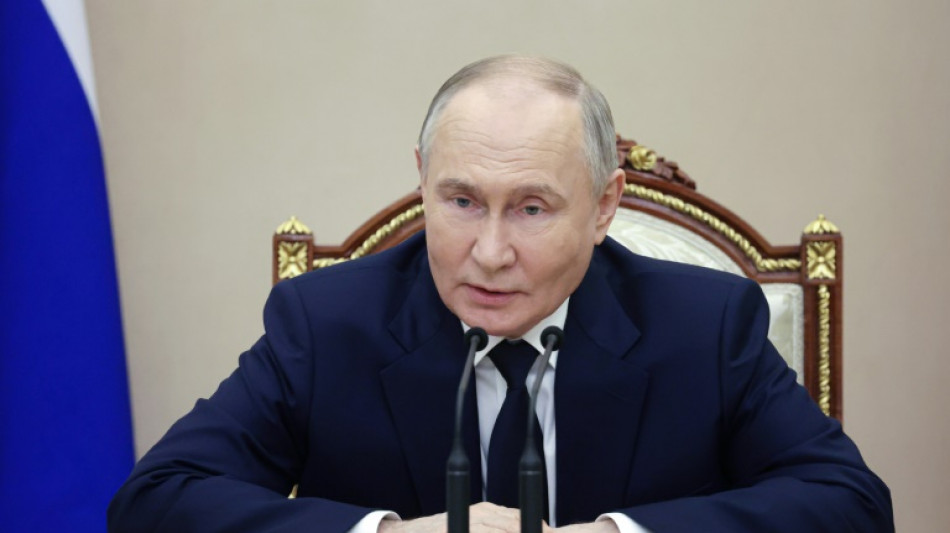
Military spending pushes Russian economic growth up / Photo: Vyacheslav Prokofyev - POOL/AFP

Military spending pushes Russian economic growth up

Russia's economy grew 5.4 percent in the first quarter of 2024, official statistics published Friday showed, as President Vladimir Putin denied military spending on his Ukraine offensive was reaching unsustainable levels.

Text size:

The Kremlin has heavily militarised Russia's economy since sending troops into Ukraine in February 2022, with the vast outlays helping to power growth and cushion the blow of Western sanctions.

But it has also set off inflation and comparisons with runaway defence spending that hobbled the Soviet Union in the 1980s.

The Rosstat statistics agency said the first quarter growth was up from 4.9 percent in the fourth quarter of last year.

The inflation rate also picked up over the month, however, to 7.8 percent.

On a state visit to China, Putin denied that Russia's vast military spending -- which he said had passed eight percent of GDP -- had hit unsustainable levels.

"It is not critical yet. In the Soviet Union in 1985-1986, defence spending was 13 percent" of GDP, he said.

"Taking into account the state of the economy, macroeconomic indicators and budget revenue forecasts, combined defence and security spending of eight-and-a-bit percent is not critical," he added.

Earlier in the week, Putin had said Russia's military spending was a "great resource" that should be used "carefully and effectively."

He said Friday that experts believe Russia's state finances still have room to accomodate even higher expenditure.

Russian troops last week launched a major new offensive on Ukraine's northeastern Kharkiv region. Putin has signalled he sees Moscow's path to victory on the battlefield by outspending Ukraine and its Western backers.

- Inflation problems -

The reorientation of Russia's crucial energy exports to the likes of China and India has helped it weather Western sanctions that many analysts predicted would push Russia into a deep recession.

China has become Russia's most important economic ally over the last two years.

Putin on Friday blasted US attempts to put pressure on Beijing over its ties with Moscow.

He called US threats of sanctions on Chinese banks and companies that deal with Russia "illegitimate" and said lenders in both countries were working to overcome problems with cross-border payments.

The United States has targeted companies in third countries, including China, that it says are helping Russia purchase sanctioned goods for its military.

While helping to secure strong headline growth, Russia's increased military spending has caused some economic difficulties at home.

Inflation climbed from 7.7 percent to 7.8 percent in April, Rosstat said on Friday -- ahead of analysts' expectations and further from the government's official 4.0-percent target.

The central bank has hiked its key interest rate to 16 percent in a bid to combat rising prices.

And parts of the economy not supported by the offensive -- such as the services and IT sectors --- are seeing record labour shortages. Many young men have been drafted, left the country or recruited by the booming weapons industry.

(K.Lüdke--BBZ)