
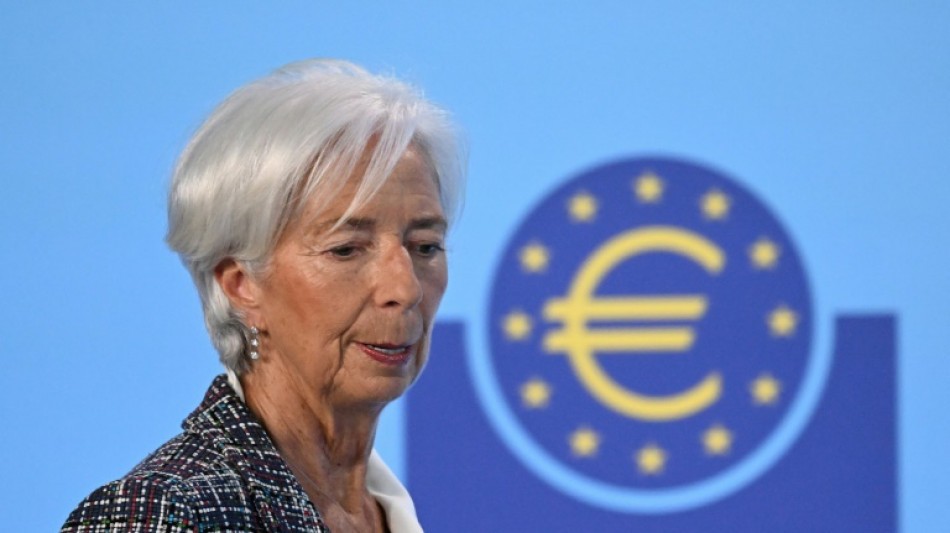
ECB cuts rates again as inflation slows / Photo: Kirill KUDRYAVTSEV - AFP/File

The European Central Bank cut its key interest rate again Thursday as inflation cools but warned of continuing price pressures and gave no indication of the path ahead.
The Frankfurt-based central bank reduced its key deposit rate a quarter point to 3.5 percent, as expected, providing further relief to eurozone households and businesses.
It was policymakers' second cut, after a move in June, since a record hiking cycle that began in mid-2022 to a tame a surge in consumer prices.
Inflation rates have been falling back in recent times, and are now only a whisker off the ECB's two-percent target.
"Recent inflation data have come in broadly as expected," said the ECB in a statement.
But it warned the path ahead would be bumpy, saying that "inflation is expected to rise again in the latter part of this year, partly because previous sharp falls in energy prices will drop out of the annual rates."
The ECB also cited continued pressure from fast-rising wages although it said that labour cost pressures were easing.
The central bank for the 20 countries that use the euro left its inflation forecasts unchanged from its last projections in June, forecasting the figure would drop below two percent in 2026.
However, it slightly lowered its growth outlook, predicting the eurozone would expand 0.8 percent this year down from a previous projection of 0.9 percent.
But, as expected, the ECB statement gave no guidance on its next moves -- in line with its recent policy that it will not foreshadow future decisions.
It repeated language from previous statements that it would "keep policy rates sufficiently restrictive for as long as necessary to" bring inflation to two percent, following a "data-dependent and meeting-by-meeting approach".
- Economic gloom -
Investors now await ECB chief Christine Lagarde's post-meeting press conference for clues.
Despite the lack of guidance, ING bank's Carsten Brzeski said he expected "the ECB to eventually step up the pace of further rate cuts" although not until next year.
While concerns remain about sticky inflation, policymakers have grown more confident that inflation is now on a more sustained downward trajectory.
Eurozone inflation fell to its lowest level in more than three years in August, according to official data.
Consumer price rises slowed to 2.2 percent compared to the same month last year, down from 2.6 percent in July, leaving the figure just a whisker off the ECB's target.
Inflation rates had peaked at 10.6 percent in October 2022 after Russia's invasion of Ukraine and post-pandemic supply chain woes sent food and energy costs soaring.
A lacklustre performance in some parts of the eurozone has also fuelled calls for more cuts to take pressure off the single currency area.
While signs in the first half of the year were positive, recent indicators have pointed to a deteriorating outlook.
The eurozone's largest economy, Germany, shrank unexpectedly in the second quarter, adding to indications that a hoped-for rebound will fail to materialise this year.
Meanwhile, wage growth, a key area of concern for the ECB, slowed markedly in the second quarter, easing fears that high labour costs could spark a resurgence in inflation.
The US Federal Reserve looks poised to start cutting rates at its meeting next week, following recent weak data and market turmoil.
This will boost confidence among ECB policymakers about forging ahead with their own cuts.
(H.Schneide--BBZ)



