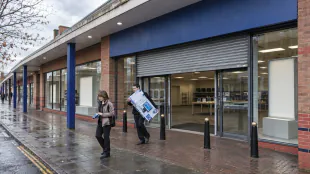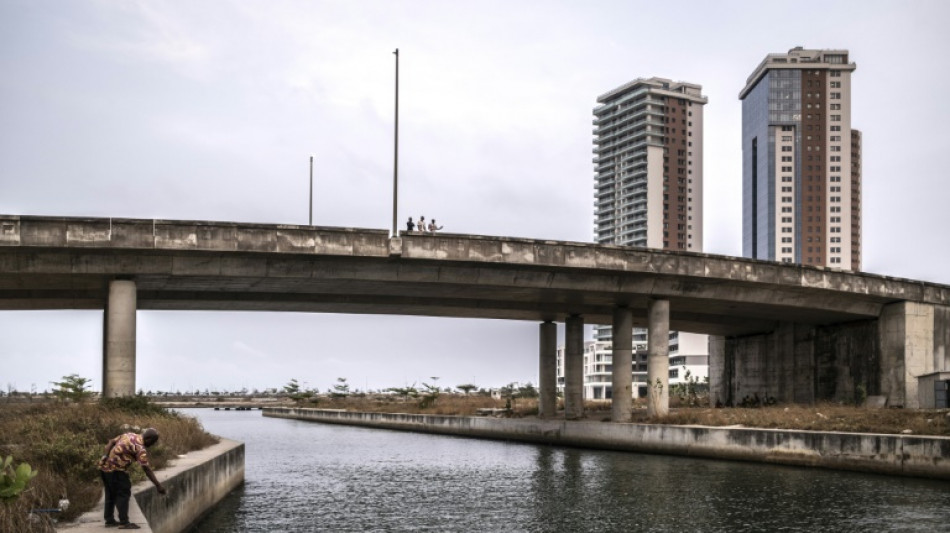
Nigerians displaced as rents double in inflation-hit Lagos / Photo: OLYMPIA DE MAISMONT - AFP

Nigeria's economic crisis is hitting renters in Lagos hard as landlords pass down the costs of spiralling inflation -- pushing residents further out, upending children's education and adding to workers' already infamous commutes.
With a population of more than 20 million, the country's sprawling, ever-growing economic capital has for years struggled to keep up with housing demand, with some 3,000 people added to its population per day.
But government-led economic reforms, including the floating of the naira currency and the removal of a fuel subsidy, have sent a shock through the economy.
In a city that scions of oil wealth, a solid middle class and millions of informal workers all call home, rents are spiking on both Lagos' richer islands and the cheaper -- and poorer -- mainland.
"I might just have to find a way to plead with my landlord," said Yemisi Odusanya, a 40-year-old cookbook author and food blogger.
After giving birth to twins last year, she's doubtful she can find a better deal elsewhere for her family of seven, even after her landlord in Lekki raised the rent 120 percent.
"I'm planning to pack out," Bartholomew Idowu, a transportation worker, said emphatically, though he wasn't sure where he and his children would move.
The mainland resident's landlord hit him with a 28-percent rent increase, from 350,000 naira ($232) per year to 450,000 -- a significant sum in a country where the GDP per capita is $835.
- Children changing schools -
The government recently revised its inflation data, knocking down official year-on-year inflation in January to 24.48 percent, from December's 34.80 percent figure.
That's been of little consolation to ordinary Nigerians.
"The way out at the moment is to look for a way to pay," said Dennis Erezi, a journalist, noting that his 31-percent rent increase is still cheaper than moving.
Jimoh Saheed, a personal trainer, had to leave his one-room flat in a middle-class neighbourhood in Ikoyi when his landlord more than doubled his rent to 2.5 million naira a year and a half ago.
Moving to the mainland meant he was further from his clients and his two children had to change schools and now pay for transport since they no longer live close enough to walk to class.
Late last year, his new landlord raised his rent by 25 percent.
"This is affecting me emotionally, it's affecting me mentally, and in fact, physically," said the 39-year-old, who said his earnings have not kept up with the pace of inflation despite taking on more work.
Lawyers say that rent hikes cannot be unilaterally imposed and are supposed to be negotiated between parties.
But laws are rarely enforced without the threat of a lawsuit, attorney Valerian Nwadike told AFP, noting an uptick in tenant-landlord disputes in the past year.
- Luxury market -
The government hopes its economic reforms will eventually pay dividends, but for nearly two years Nigerians have slogged through the worst economic crisis in a generation.
There are also structural issues at play: high interest rates mean mortgages are out of reach for most, and developers face a bureaucratic regulatory environment, said housing analyst Babatunde Akinpelu.
Lagos is also home to an outsize number of Nigeria's jobs -- leading to an unending stream of people pouring in.
Even as cranes and construction sites whir across the city, many new developments are targeted to the high-end market -- foreigners, Nigerians in the diaspora or oil sector workers, many of whom earn in dollars.
The result is a bifurcated housing market, where increased supply in the luxury sector doesn't trickle down to the rest of the housing stock, said economist Steve Onyeiwu.
"Most of (Lagos's) landlords are exposed to dollar-denominated expenses," like loans or mortgages for properties abroad, even as the naira's value has collapsed, said a director at Island Shoreline, a property management company, adding his own landlord recently tried to raise his rent 100 percent.
Improved public transit, such as the new rail line connecting Lagos and Ibadan, might alleviate pressure but for now there's a "snowball effect" of rising prices, he noted, asking that his name not be used given the sensitivity of rent hikes.
With leases typically paid up front for anywhere between one and three years, both landlords and renters try to negotiate a good deal to hedge against inflation.
But the current spike in rents is "alarming," said real-estate agent Ismail Oriyomi Akinola, noting 200 percent jumps on the wealthy Victoria Island.
"Good shelter is very key to every individual," he said. "Not only for the rich."
(A.Lehmann--BBZ)