Berliner Boersenzeitung - Eurozone inflation eases in March as tariff threat looms

EUR -
AED 4.324078
AFN 78.156455
ALL 96.379162
AMD 449.150672
ANG 2.108055
AOA 1079.694068
ARS 1708.500149
AUD 1.75356
AWG 2.119649
AZN 2.006287
BAM 1.952954
BBD 2.371744
BDT 143.900331
BGN 1.954992
BHD 0.444315
BIF 3482.525812
BMD 1.177419
BND 1.511897
BOB 8.155083
BRL 6.523373
BSD 1.177584
BTN 105.798847
BWP 15.47938
BYN 3.437192
BYR 23077.421216
BZD 2.368339
CAD 1.609515
CDF 2590.323216
CHF 0.929196
CLF 0.027189
CLP 1066.628886
CNY 8.275497
CNH 8.24724
COP 4352.919706
CRC 588.143051
CUC 1.177419
CUP 31.201615
CVE 110.104573
CZK 24.229468
DJF 209.251448
DKK 7.469879
DOP 73.812452
DZD 152.735306
EGP 55.997721
ERN 17.661292
ETB 183.212274
FJD 2.671805
FKP 0.871677
GBP 0.871897
GEL 3.161418
GGP 0.871677
GHS 13.100856
GIP 0.871677
GMD 87.722283
GNF 10292.004112
GTQ 9.021855
GYD 246.359997
HKD 9.149391
HNL 31.039774
HRK 7.533605
HTG 154.185345
HUF 387.52882
IDR 19743.204818
ILS 3.759065
IMP 0.871677
INR 105.763881
IQD 1542.65229
IRR 49598.794737
ISK 148.013853
JEP 0.871677
JMD 187.836315
JOD 0.834837
JPY 184.312657
KES 151.828691
KGS 102.935942
KHR 4720.102566
KMF 492.161742
KPW 1059.677503
KRW 1695.566878
KWD 0.361657
KYD 0.981366
KZT 605.228157
LAK 25484.759399
LBP 105451.105449
LKR 364.528866
LRD 208.42543
LSL 19.598344
LTL 3.476614
LVL 0.71221
LYD 6.372715
MAD 10.743846
MDL 19.754134
MGA 5385.130767
MKD 61.559154
MMK 2472.68793
MNT 4189.040208
MOP 9.432417
MRU 46.631057
MUR 54.149966
MVR 18.191576
MWK 2041.91617
MXN 21.056287
MYR 4.766787
MZN 75.249321
NAD 19.598344
NGN 1708.542033
NIO 43.336856
NOK 11.784544
NPR 169.278354
NZD 2.01891
OMR 0.452931
PAB 1.177579
PEN 3.962526
PGK 5.08559
PHP 69.146905
PKR 329.867269
PLN 4.215821
PYG 7980.372258
QAR 4.292246
RON 5.090342
RSD 117.390933
RUB 93.035947
RWF 1715.093752
SAR 4.416152
SBD 9.599962
SCR 17.031149
SDG 708.222127
SEK 10.76567
SGD 1.511851
SHP 0.88337
SLE 28.346418
SLL 24689.901467
SOS 671.818279
SRD 45.136968
STD 24370.20541
STN 24.464354
SVC 10.303987
SYP 13020.361774
SZL 19.582468
THB 36.557112
TJS 10.821886
TMT 4.132742
TND 3.425908
TOP 2.834944
TRY 50.514125
TTD 8.010295
TWD 36.975725
TZS 2908.226435
UAH 49.677618
UGX 4250.806394
USD 1.177419
UYU 46.022943
UZS 14192.321185
VES 339.201398
VND 30955.534754
VUV 142.081671
WST 3.283365
XAF 654.999856
XAG 0.015016
XAU 0.00026
XCD 3.182035
XCG 2.122308
XDR 0.815855
XOF 655.002633
XPF 119.331742
YER 280.756095
ZAR 19.622096
ZMK 10598.192172
ZMW 26.583154
ZWL 379.128582
  • RBGPF

    0.0000

    81.26

    0%

  • SCS

    0.0200

    16.14

    +0.12%

  • CMSC

    0.0700

    23.09

    +0.3%

  • BTI

    0.0300

    57.27

    +0.05%

  • RYCEF

    -0.0300

    15.5

    -0.19%

  • NGG

    0.1500

    77.64

    +0.19%

  • GSK

    0.1200

    49.08

    +0.24%

  • RELX

    0.0200

    41.11

    +0.05%

  • RIO

    1.3500

    82.24

    +1.64%

  • BCE

    0.0400

    23.05

    +0.17%

  • AZN

    0.4500

    92.9

    +0.48%

  • VOD

    0.0200

    13.12

    +0.15%

  • BP

    -0.0400

    34.27

    -0.12%

  • CMSD

    -0.0300

    23.11

    -0.13%

  • JRI

    0.0000

    13.47

    0%

  • BCC

    0.4200

    75.13

    +0.56%

Eurozone inflation eases in March as tariff threat looms
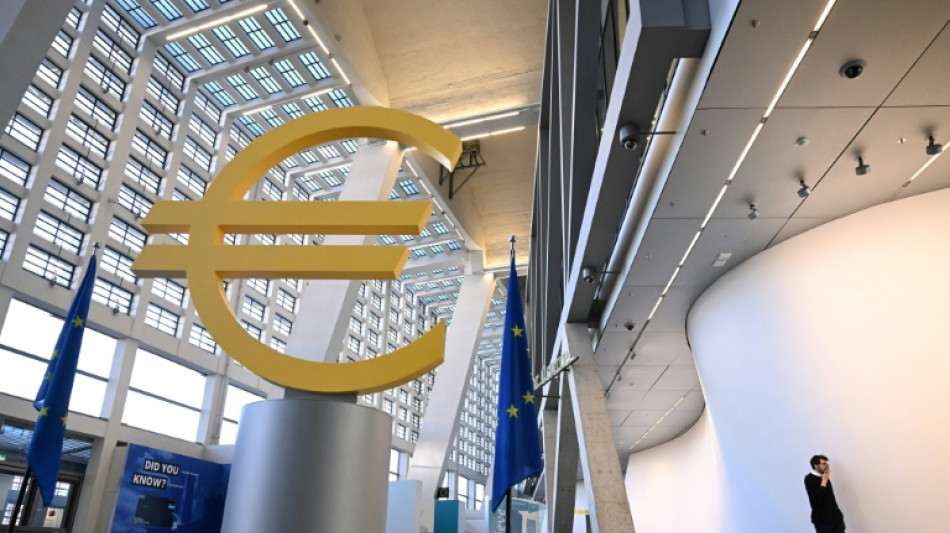
Eurozone inflation eases in March as tariff threat looms / Photo: Kirill KUDRYAVTSEV - AFP

Eurozone inflation eases in March as tariff threat looms

Inflation in the eurozone slowed further in March, official data showed on Tuesday, indicating possible breathing room for policymakers despite the threat of turbulence from US trade tariffs.

Text size:

Inflation in the single currency area reached 2.2 percent, calmed by an easing of energy tariffs and prices in the services sector, the EU's Eurostat statistics agency said.

That was down slightly from the 2.3 percent figure for February, bringing the rate close to the European Central Bank's two-percent target.

Inflation has gradually eased since a peak in October 2022 following Russia's invasion of Ukraine, which sent energy prices soaring.

The European Central Bank has pivoted from hiking interest rates to tackle inflation, to lowering them to boost the eurozone's floundering economy.

Last month it lowered its benchmark deposit rate by a quarter of a percentage point to 2.5 percent, but its head Christine Lagarde warned of risks from US tariff threats and massive German spending plans.

In March inflation in prices for services eased to 3.4 percent from 3.7 percent in February, Eurostat said.

In energy, the rate was negative 0.7 percent, from 0.2 percent the month before. Food-price inflation accelerated slightly however.

The key measure of underlying inflation -- stripping out the effect of volatile energy and food prices -- also eased, from 2.6 to 2.4 percent.

Economist Jack Allen-Reynolds at investment research group Capital Economics said the March fall in inflation "strengthens the case for the ECB to cut interest rates at the meeting on 17th April", again by a quarter-point.

- Trade tensions threat -

Economists warn that US President Donald Trump's announcement of sweeping trade tariffs on other countries risks driving inflation up again and curbing growth.

Trump is scheduled to unveil his latest wave of tariffs on Wednesday but has not indicated their full size or scope.

He introduced 25-percent tariffs on imported steel and aluminium last month and has vowed duties of the same size on vehicles shipped to the United States from Wednesday.

ING bank economist Bert Colijn said the new inflation figures could justify a new rate reduction in spite of the high uncertainty created by the tariff threat.

Lagarde, however, cautioned on Monday that it was too soon to declare victory in the fight against inflation.

"Unfortunately we are facing a lot of uncertainty," she told French radio station France Inter, warning that the threat of new tariffs "leads to changes".

The eurozone inflation data "gives the central bank additional room to prioritize growth without abandoning its inflation mandate," said Daniela Sabin Hathorn, senior market analyst at Capital.com, in a note.

However, concerns over the economic impact from the trade tensions "may encourage the ECB to stay on a gradual but steady path toward monetary easing", she added.

(G.Gruner--BBZ)