Five things to know about Nigeria's oil sector / Photo: PIUS UTOMI EKPEI - AFP

Africa's biggest oil refinery will on Friday start direct and free shipping of fuel to retailers in Nigeria, a move expected to disrupt the oil sector in the continent's largest crude producer.
Nigeria's Dangote Refinery says that the plan will boost efficiency by cutting down on intermediaries while providing more competitive options for consumers and retailers such as petrol stations.
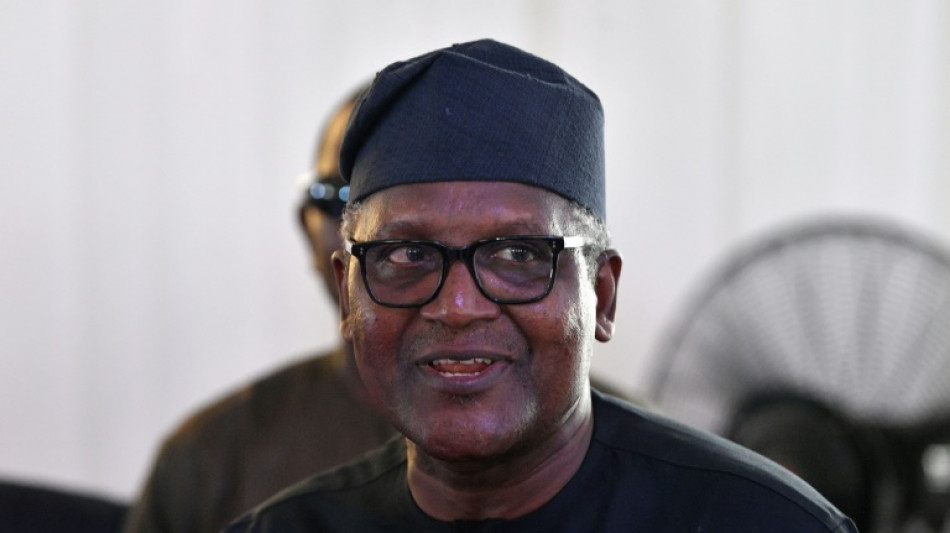
Owned by the country's richest man, Aliko Dangote, the 650,000 barrel-per-day capacity refinery launched in 2023, helping knock down prices after a steep hike following the removal of fuel subsidies by the government.
Here are some things to know about Nigeria's oil industry:
- Key economic sector -
Crude was first discovered in Nigeria in 1956 in the southern Niger Delta region. The west African oil giant pumps an average of 1.5 million barrels per day, according to OPEC, but it is still short of its two million bpd target.
Oil accounts for around 62 percent of Nigeria's export earnings and forms a huge chunk of government revenue.
- Longstanding energy crisis -
The industry has for decades been plagued by problems, amongst them high crude oil production costs due to ageing infrastructure, oil theft, corruption and environmental pollution.
Producing crude in Nigeria costs around $30 per barrel, according to the Nigerian National Petroleum Corporation Limited, compared to around $10 in Saudi Arabia. High extraction costs, as well as volatile global oil prices, make it increasingly difficult for Nigeria to stay competitive internationally.
Persistent oil theft -- known locally as bunkering -- has created an unstable environment for investment, causing international oil companies to dump onshore assets.
There are four government-operated refineries with a total capacity of 445,000 bpd, but they have long been hampered by poor maintenance and graft.
State owned oil firm NNPC has long been the subject of allegations of corruption, political interference and mismanagement.
Several of its executives are being investigated by the anti-graft police.
In January, US authorities returned to Nigeria nearly $53 million in illicit money recovered from an ex-petroleum minister.
For decades, Nigeria has been shipping crude to Europe for refining, and the country experienced sporadic fuel shortages until the Dangote refinery came on board, resulting in improved supplies.
Prior to the Dangote refinery coming online, the industry had "largely been structured around (the) interests of well-monied and politically connected middlemen", and it was not in their interests for refining to happen domestically, said SBM Intelligence analyst Ikemesit Effiong.
Upon taking office, President Bola Tinubu scrapped fuel subsidies that were bleeding billions of dollars out of the state coffers. Petrol pump prices jumped more than fivefold, but have since gradually dropped.
- Bypassing traditional distributors -
Dangote is rolling out 4,000 compressed natural gas-powered trucks to distribute petroleum nationwide, in a market where more than 20,000 diesel-powered tankers have operated for decades.
Aside from removing logistics bottlenecks, the initiative will "significantly lower distribution costs and improve fuel availability", and alleviate "inflationary pressures", said Dangote's group spokesman Anthony Chiejina.
But not everyone is happy with the game-changing initiative in the industry. The Independent Petroleum Marketers Association of Nigeria fears the creation of a monopoly.
"In theory, this plan should reduce the cost of petrol distribution," but the drop in the pump prices may not be significant, said Clement Isong, head of the Major Energy Marketers Association of Nigeria.
- Other players -
Some major players acknowledge that Dangote's entry into the industry has impacted their earnings.
Oando group saw its revenue plummet 15 percent in the first six months of 2025, with its group chief executive Wale Tinubu -- who is the president's nephew -- writing that the entity's declining revenue was as a result of slowing petrol imports "into the country due to rising local refining capacity from the Dangote Refinery, a positive development that enhances Nigeria's energy security and self-sufficiency".
TotalEnergies Marketing Nigeria also reported a dip in half-year revenue.
A second privately-owned refinery, BUA is under construction by another Nigerian billionaire, Abdulsamad Rabiu.
- Pollution, accidents -
Nigeria's oil sector has for decades been tainted by environmental pollution where pipeline spills make fishing and farming difficult.
Oil companies blame most of the leaks on sabotage by local criminal gangs vandalising pipelines to steal the crude.
Accidents involving fuel trucks are common in the west African nation, where people often rush to the site of petrol truck wrecks to scoop up spilled fuel -- underscoring the economic precarity many live in despite the oil riches.
(O.Joost--BBZ)