Berliner Boersenzeitung - German court rules against OpenAI in copyright case

EUR -
AED 4.314905
AFN 76.950809
ALL 96.894649
AMD 448.484753
ANG 2.102866
AOA 1077.246113
ARS 1692.513794
AUD 1.765109
AWG 2.11455
AZN 2.001739
BAM 1.959745
BBD 2.366654
BDT 143.599084
BGN 1.958332
BHD 0.442789
BIF 3483.133528
BMD 1.17475
BND 1.517549
BOB 8.119311
BRL 6.345182
BSD 1.175061
BTN 106.264472
BWP 15.569277
BYN 3.464059
BYR 23025.098532
BZD 2.363247
CAD 1.616973
CDF 2626.741258
CHF 0.934401
CLF 0.027257
CLP 1069.293089
CNY 8.287278
CNH 8.285435
COP 4465.95281
CRC 587.780778
CUC 1.17475
CUP 31.130873
CVE 110.486954
CZK 24.280794
DJF 208.777019
DKK 7.469712
DOP 74.700063
DZD 152.496496
EGP 55.847969
ERN 17.621249
ETB 183.601633
FJD 2.668802
FKP 0.874984
GBP 0.878261
GEL 3.17636
GGP 0.874984
GHS 13.489098
GIP 0.874984
GMD 85.757162
GNF 10219.529752
GTQ 9.000118
GYD 245.833849
HKD 9.144236
HNL 30.936147
HRK 7.535086
HTG 154.019406
HUF 385.281605
IDR 19558.411503
ILS 3.785978
IMP 0.874984
INR 106.422182
IQD 1539.292245
IRR 49468.71976
ISK 148.406611
JEP 0.874984
JMD 188.138748
JOD 0.832944
JPY 182.987864
KES 151.519697
KGS 102.732332
KHR 4704.450651
KMF 493.39538
KPW 1057.270504
KRW 1734.424735
KWD 0.360285
KYD 0.979267
KZT 612.831101
LAK 25474.174418
LBP 105225.584989
LKR 363.089401
LRD 207.396634
LSL 19.82481
LTL 3.468732
LVL 0.710595
LYD 6.382822
MAD 10.810317
MDL 19.863904
MGA 5205.45711
MKD 61.625782
MMK 2467.289893
MNT 4167.28041
MOP 9.422428
MRU 47.025468
MUR 53.944961
MVR 18.103341
MWK 2037.593269
MXN 21.158045
MYR 4.817067
MZN 75.070901
NAD 19.82481
NGN 1705.925294
NIO 43.247062
NOK 11.894132
NPR 170.023556
NZD 2.023284
OMR 0.45169
PAB 1.175061
PEN 3.956164
PGK 5.065175
PHP 69.377252
PKR 329.307237
PLN 4.224237
PYG 7892.889418
QAR 4.282503
RON 5.091488
RSD 117.375184
RUB 94.048395
RWF 1710.235649
SAR 4.408189
SBD 9.668887
SCR 17.653169
SDG 706.616398
SEK 10.887741
SGD 1.516673
SHP 0.881367
SLE 28.315781
SLL 24633.916369
SOS 670.346642
SRD 45.284305
STD 24314.951639
STN 24.549316
SVC 10.281655
SYP 12990.831918
SZL 19.817811
THB 37.075541
TJS 10.798693
TMT 4.111625
TND 3.435115
TOP 2.828516
TRY 50.157362
TTD 7.974019
TWD 36.777783
TZS 2901.632708
UAH 49.649039
UGX 4176.407654
USD 1.17475
UYU 46.112634
UZS 14156.438508
VES 310.997263
VND 30902.97153
VUV 142.715862
WST 3.270441
XAF 657.277388
XAG 0.018998
XAU 0.000273
XCD 3.174821
XCG 2.117754
XDR 0.816669
XOF 657.277388
XPF 119.331742
YER 280.031057
ZAR 19.809343
ZMK 10574.163237
ZMW 27.11447
ZWL 378.268997
  • SCS

    0.0200

    16.14

    +0.12%

  • CMSC

    -0.1300

    23.3

    -0.56%

  • BCC

    0.2500

    76.51

    +0.33%

  • RBGPF

    0.0000

    81.17

    0%

  • JRI

    -0.0200

    13.7

    -0.15%

  • NGG

    0.2400

    74.93

    +0.32%

  • RIO

    -1.0800

    75.66

    -1.43%

  • CMSD

    -0.1500

    23.25

    -0.65%

  • GSK

    -0.0700

    48.81

    -0.14%

  • AZN

    -0.4600

    89.83

    -0.51%

  • BCE

    0.3100

    23.71

    +1.31%

  • RYCEF

    -0.2500

    14.6

    -1.71%

  • VOD

    0.0500

    12.59

    +0.4%

  • RELX

    0.1000

    40.38

    +0.25%

  • BTI

    -1.2700

    57.1

    -2.22%

  • BP

    -0.2700

    35.26

    -0.77%

German court rules against OpenAI in copyright case
German court rules against OpenAI in copyright case / Photo: MARCO BERTORELLO - AFP

German court rules against OpenAI in copyright case

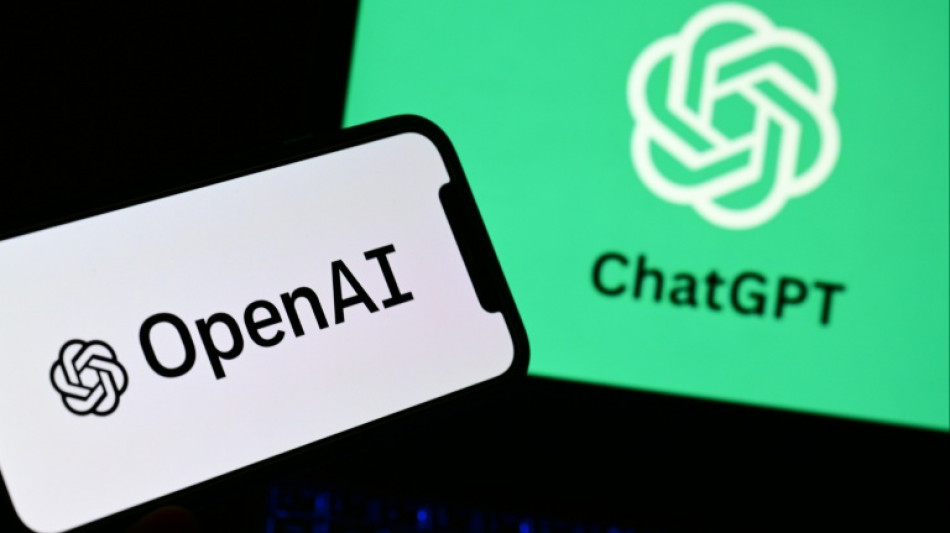
A German court ruled Tuesday that OpenAI has infringed copyright law by using song lyrics to feed its chat models in a case that could have wide implications for European artists.

Text size:

The Munich court found that the maker of ChatGPT was not entitled to use song lyrics to train its artificial intelligence without licences, and that the artists who wrote them are entitled to compensation.

"Both the memorisation in the language models and the reproduction of the song lyrics in the chatbot's outputs constitute infringements of copyright law," the court ruled.

The case was filed in November 2024 by German music rights body GEMA on behalf of the artists behind nine German songs.

GEMA, which represents more than 100,000 composers, songwriters and publishers, accused OpenAI of reproducing protected song lyrics without having purchased licences or paid the creators.

San Francisco-based OpenAI argued it had not broken the law because its language models do not store or copy specific data but rather reflect in their settings what they have learnt, according to the court.

With regard to the AI chatbot, it is users who are the producers of its output and are responsible for it, OpenAI argued.

But the court on Tuesday ruled that the plaintiffs were entitled to compensation "both on the basis of the reproduction of the texts in the language models and their reproduction in the outputs".

In a statement on Tuesday, OpenAI said that "we disagree" with the ruling and that the company was "considering next steps".

"The decision is for a limited set of lyrics and does not impact the millions of people, businesses and developers in Germany that use our technology every day," it said.

"We respect the rights of creators and content owners and are having productive conversations with many organisations around the world, so that they can also benefit from the opportunities of this technology."

- 'Milestone victory' -

OpenAI has faced several court cases in the United States, with media groups and authors among those claiming that the company's ChatGPT chatbot has been trained on their work without permission.

But GEMA's challenge is the first major case of its kind in Europe, the music rights group said.

Law firm Raue, which represented GEMA in the case, said the ruling "sets an important precedent for the protection of creative works and sends a clear signal to the global tech industry".

The ruling has provided "legal certainty for creative artists, music publishers and platforms throughout Europe and is likely to have an impact far beyond Germany", it said in a statement.

Kai Welp, the head of GEMA's legal department, said it was "crucial for authors receive remuneration for the commercial exploitation of their works so that they can make a living".

"It is to be hoped that today's decision will increase the willingness of AI companies to negotiate and that, in this way, fair remuneration for our members can be agreed," Welp said.

The verdict could also have implications for other types of creative content, according to GEMA.

The German Journalists' Association also welcomed the ruling, hailing it as "a milestone victory for copyright law".

(T.Renner--BBZ)