Berliner Boersenzeitung - Wildlife trade body rejects new eel protections

EUR -
AED 4.234647
AFN 72.643117
ALL 95.757309
AMD 435.408728
ANG 2.064091
AOA 1057.36486
ARS 1614.346342
AUD 1.657376
AWG 2.078408
AZN 1.958576
BAM 1.951805
BBD 2.325839
BDT 141.699943
BGN 1.970952
BHD 0.432714
BIF 3418.203011
BMD 1.15307
BND 1.476877
BOB 7.979562
BRL 6.142287
BSD 1.154836
BTN 107.960008
BWP 15.747244
BYN 3.503552
BYR 22600.165943
BZD 2.322546
CAD 1.583482
CDF 2623.233322
CHF 0.910977
CLF 0.02668
CLP 1053.47892
CNY 7.940499
CNH 7.975581
COP 4262.368236
CRC 539.395868
CUC 1.15307
CUP 30.556347
CVE 110.039751
CZK 24.519569
DJF 205.639061
DKK 7.471402
DOP 68.54968
DZD 151.575728
EGP 59.993636
ERN 17.296045
ETB 181.99598
FJD 2.553415
FKP 0.86425
GBP 0.867287
GEL 3.130599
GGP 0.86425
GHS 12.588232
GIP 0.86425
GMD 84.754467
GNF 10122.279909
GTQ 8.845893
GYD 241.602302
HKD 9.0294
HNL 30.56696
HRK 7.534383
HTG 151.499883
HUF 394.348104
IDR 19591.634159
ILS 3.620064
IMP 0.86425
INR 108.33689
IQD 1512.803324
IRR 1517007.312332
ISK 143.810774
JEP 0.86425
JMD 181.43176
JOD 0.817567
JPY 183.967079
KES 149.033754
KGS 100.833527
KHR 4614.554106
KMF 492.361081
KPW 1037.767304
KRW 1744.899987
KWD 0.353497
KYD 0.96233
KZT 555.193531
LAK 24798.023914
LBP 103421.202089
LKR 360.239473
LRD 211.327417
LSL 19.480655
LTL 3.404715
LVL 0.69748
LYD 7.392867
MAD 10.790871
MDL 20.11066
MGA 4815.289368
MKD 61.514082
MMK 2420.814966
MNT 4112.942181
MOP 9.321419
MRU 46.226376
MUR 53.69826
MVR 17.826655
MWK 2002.561585
MXN 20.74707
MYR 4.542518
MZN 73.682844
NAD 19.480823
NGN 1564.415464
NIO 42.493018
NOK 11.085554
NPR 172.734917
NZD 1.989824
OMR 0.440697
PAB 1.154821
PEN 3.992527
PGK 4.984796
PHP 69.617751
PKR 322.430976
PLN 4.281665
PYG 7542.56054
QAR 4.222856
RON 5.092994
RSD 117.210073
RUB 97.493633
RWF 1680.289628
SAR 4.329659
SBD 9.284125
SCR 15.845265
SDG 692.995016
SEK 10.832917
SGD 1.480346
SHP 0.865101
SLE 28.336616
SLL 24179.307368
SOS 659.960522
SRD 43.225694
STD 23866.214565
STN 24.449951
SVC 10.104317
SYP 127.488051
SZL 19.487785
THB 38.115291
TJS 11.091795
TMT 4.047275
TND 3.410619
TOP 2.776315
TRY 51.114334
TTD 7.834894
TWD 37.054472
TZS 2998.28211
UAH 50.591177
UGX 4365.064806
USD 1.15307
UYU 46.533738
UZS 14079.180219
VES 524.289984
VND 30370.702591
VUV 137.475997
WST 3.145334
XAF 654.628344
XAG 0.018232
XAU 0.000269
XCD 3.116229
XCG 2.081222
XDR 0.814158
XOF 654.617013
XPF 119.331742
YER 275.125069
ZAR 19.826569
ZMK 10379.012321
ZMW 22.547845
ZWL 371.28797
  • RBGPF

    -13.5000

    69

    -19.57%

  • NGG

    -3.5400

    81.99

    -4.32%

  • CMSC

    -0.2000

    22.65

    -0.88%

  • BCC

    -1.5600

    68.3

    -2.28%

  • CMSD

    -0.2420

    22.658

    -1.07%

  • JRI

    -0.3900

    11.77

    -3.31%

  • GSK

    -0.5300

    51.84

    -1.02%

  • AZN

    -5.3300

    183.6

    -2.9%

  • RELX

    -0.4600

    33.36

    -1.38%

  • BCE

    0.0600

    25.79

    +0.23%

  • RIO

    -2.5000

    83.15

    -3.01%

  • RYCEF

    -1.2600

    15.34

    -8.21%

  • BTI

    -1.3500

    57.37

    -2.35%

  • VOD

    -0.0900

    14.33

    -0.63%

  • BP

    -1.0800

    44.78

    -2.41%

Wildlife trade body rejects new eel protections
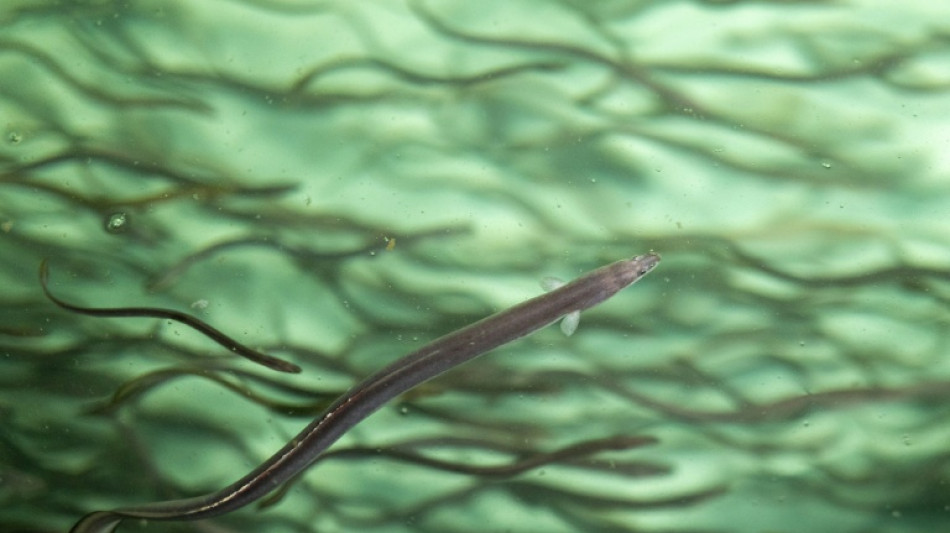
Wildlife trade body rejects new eel protections / Photo: Philip FONG - AFP/File

Wildlife trade body rejects new eel protections

The world's top wildlife trade body rejected new protections for eels on Thursday in a secret ballot at talks in Uzbekistan.

Text size:

The proposal had been fiercely opposed by top eel consumers, particularly Japan, but also failed to win backing from countries worried about new trade regulations.

The vote came at a meeting of signatories to the Convention of International Trade in Endangered Species of Wild Fauna and Flora (CITES), a 50-year agreement protecting the world's most endangered animals and plants, and regulating trade in 36,000 species.

Eel populations are falling worldwide, scientists say, largely due to factors linked to human activity such as the pollution of waterways, destruction of wetlands, hydroelectric dams, and fishing.

European eels are considered critically endangered and their trade has been restricted by CITES since 2009.

But because eels cannot be bred in captivity, much of the trade is in wild-caught baby eels, with one species virtually indistinguishable from another.

The European Union and Panama sought to bring all 17 eel species under CITES Appendix II, placing new restrictions on trade.

"Every eel we eat comes from the wild, making them vulnerable to overfishing and illegal trade," the EU's representative warned.

The "harvest for international trade is a major cause of international decline."

The proposal was rejected out of hand by Japan, which called it unscientific and "excessive," backed by multiple countries including African nations who warned it would place undue administrative burdens on their authorities.

In a sign of the pressures around the issue, the proposal was voted on by secret ballot, a relatively uncommon procedure at the gathering, with nearly 75 percent of votes against.

The result was "not very surprising," said Oliver Tallowin, senior programme officer for wildlife use and trade at the International Union for the Conservation of Nature.

Japan's opposition had been made clear early on in a submission running over 100 pages.

There are also differing views on the pressures other eel species face, said Tallowin.

"International trade has to be a threat to the species and... that was something we couldn't say with any sense of certainty," he told AFP.

For Andrew Kerr of the Sustainable Eel Group, "the short-term commercial and financial side won the debate massively."

Kerr, who has called eel trafficking the "greatest wildlife crime" on the planet, said the vote was a "real pity," but there were some silver linings.

A separate resolution proposing measures including more data gathering on eels and conservation capacity-building will be debated later Thursday at the talks in Samarkand.

"We've had a missed opportunity this morning, but then the fact that everyone's talking about eel, that's a huge victory too," Kerr said.

The resolution could gather data that would allow more protection of all eel species in the future, added Tallowin.

"Once something has been rejected... that doesn't mean its going to go away."

Votes are finalised later in the meeting, though it is unusual for them to be revised.

(U.Gruber--BBZ)