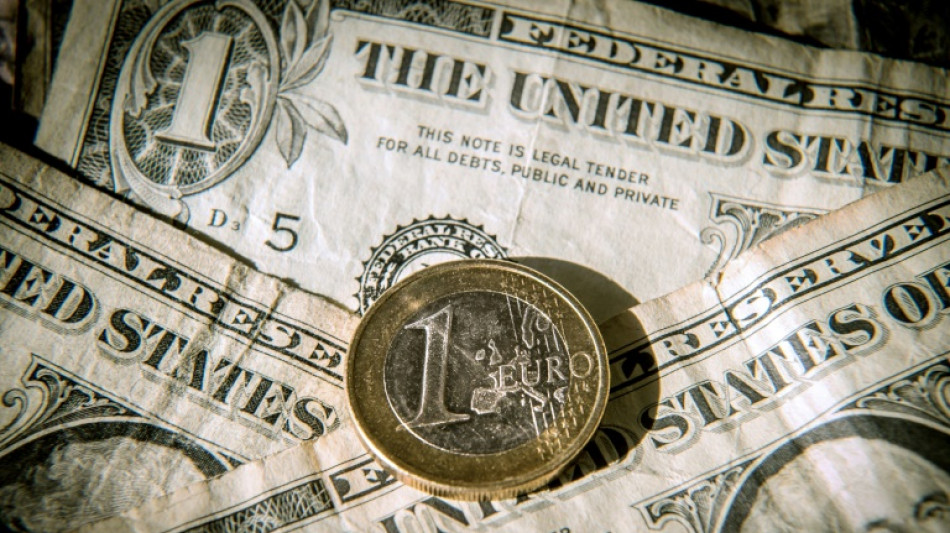
What's next for the euro after slump against dollar? / Photo: PHILIPPE HUGUEN - AFP/File

The euro's plunge against the dollar, triggered by the Ukraine war and mounting risks to the EU economy, has driven the two currencies to parity for the first time in two decades.
The European single currency sank to $0.9952 on Thursday -- a level not seen since the end of 2002, the year it was officially introduced.
But traders believe the euro could recover, provided it clears several hurdles in the coming months.
The first to get over is to avoid the risk of a halt in Russian gas supplies to Europe, which would cause electricity prices to soar and force eurozone countries to limit some industrial activity.
"If gas flows from Russia normalise, or at least stop falling, following the end of the Nord Stream 1 maintenance shut-down next week, this should somewhat decrease market fears of an imminent gas crisis in Europe," Esther Reichelt, an analyst at Commerzbank, told AFP.
With Russian gas giant Gazprom having warned it cannot guarantee that the pipeline will function properly, European countries fear that Moscow will use a technical reason to permanently halt deliveries and put pressure on them.
French President Emmanuel Macron even said on Thursday that Russia was using energy "as a weapon of war".
If Nord Stream 1 "doesn't turn back on, the euro falls as the economic shock waves will be felt worldwide as the European energy crisis could very well trigger a recession," warned Stephen Innes, an analyst at SPI Asset Management.
- ECB wake-up call -
"Recession would inevitably mean that the market becomes even more concerned about fragmentation risks in the eurozone," added Jane Foley, a foreign exchange specialist at Rabobank.
Like other central banks, the European Central Bank (ECB) is seeking to avoid stifling the economy by raising rates too sharply.
But it also has to worry about a possible fragmentation of the debt market, with large differences in borrowing rates across the eurozone.
The ECB has so far maintained an ultra-loose monetary policy to support the economy, while the US Federal Reserve has instead raised rates and promises to continue to do so to counter inflation.
It will announce its monetary policy decision on Thursday, and has indicated that it will raise rates for the first time in 11 years.
"If the ECB is aiming to give the euro a boost, it will have to deliver a 50-bp hike in July and/or signal that 75-bp moves are on the cards for September," S&P analysts said in a note.
"Speedier policy adjustments now would help anchor inflation expectations, reducing the risk of needing a restrictive policy stance further down the line," they added.
- Fed slowdown -
For economists at Berenberg, the euro's fall is more attributable to the strength of the dollar, which has "appreciated strongly against a broad basket of currencies since mid-2021".
The dollar has benefited from the Fed's tightening of monetary policy as it tries to limit inflation, which hit record highs again in June.
"Markets are speculating that the Fed may raise rates by 100bp instead of 75bp at its next meeting on 27 July," noted Berenberg.
"If so, this could strengthen the dollar further."
UniCredit added: "Towards year-end, prospects of declining inflation and more-balanced messaging from central banks as the cyclical peak of official rates nears should support a return of risk appetite and ease USD demand."
Should that happen, the euro could move away from parity in the last few months of 2022, they say.
(K.Müller--BBZ)