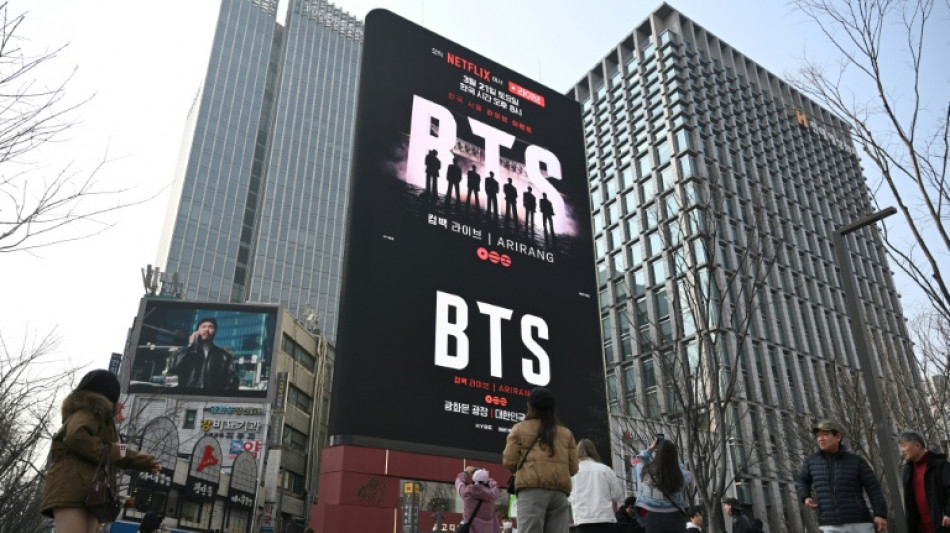
Behind the BTS comeback, the dark side of K-pop / Photo: Jung Yeon-je - AFP

K-pop oozes with talent, flair and hard work, but the spectacularly successful South Korean music industry also has a dark side -- sometimes with tragic results.
Ahead of BTS's comeback concert on Saturday, AFP looks at the intense competition, the gruelling training, the tight control over stars' lives and the sometimes obsessive fan behaviour in the industry.
- 300 groups -
South Korean record labels launch dozens of new groups every year in the hope they will become the next BTS or Blackpink, but with some 300 outfits already out there, the big time is elusive.
The tiny minority of the thousands of young hopefuls who make it past the audition phase can then face 15-hour days of gym sessions, singing lessons, promotional shoots and dance practice.
They sometimes sleep not at home but in bunk beds in shared houses, with tight control over the lives, including what they eat, their weight and their looks.
In a 2020 interview with AFP, former Nine Muses member Ryu Sera likened it to a "factory-like mass-production system", with people treated like "replaceable products".
But industry bosses argue that the competitive structure is what keeps K-pop so successful.
"We can't help those who were given an opportunity for self-improvement but couldn't keep up with the others," Blitzers manager Oh Chang-seok told AFP in 2021.
The balance of power between labels and K-pop stars was once heavily skewed, with "slave contracts" mandating unequal profit-sharing and binding artists for well over a decade.
After a legal battle involving idol group TVXQ, the fair trade commission revised standard contracts, with changes introduced in 2009 that cap initial deals at seven years.
- No dating -
Fans can become obsessive, and anger over rumours that their beloved stars may be romantically involved has become a hallmark of the industry.
When Jung Kook of BTS was rumoured to be dating Aespa member Winter, fans sent a truck carrying a billboard to the headquarters of BTS label HYBE accusing him of "deceit".
Karina of Aespa faced similar trouble when she acknowledged her relationship with an actor in 2024, drawing the ire of fans who also dispatched a truck.
"Do you not receive enough love from your fans?" it read.
Karina delivered her "sincere apologies" in a handwritten letter, vowing she would "not disappoint" her fans again. Shortly afterwards, the couple broke up.
Others have taken things to dangerous extremes.
In 2024, Sunwoo from The Boyz was assaulted when a fan hid in an emergency stairwell to confront him. The group's label said it had also detected a tracking device on their vehicle.
This month, a Brazilian woman was indicted on charges of stalking BTS's Jung Kook. She allegedly rang his doorbell and left a letter 23 times in one month -- "out of love".
Kim Seong-sheen, a professor of creative convergence education at Hanyang University in Seoul, blames the way the industry has structured the relationship between groups and fans.
"Fans have come to occupy the role not of simple consumers but of participants who invest their emotions and time," Kim told AFP.
"The industry has long operated on the premise of controlling idols' private lives and sustaining an illusion of intimacy to maintain that engagement."
- Cyberbullying -
The industry has seen a number of suspected suicides, most recently in 2023 when Moonbin, 25, from boy band ASTRO, was found dead at his home.
While mental health professionals caution it is rare that there is only one trigger factor, some performers have been subjected to intense cyberbullying and harsh scrutiny of their personal lives, both by fans and their management.
Bang Si-hyuk, creator of BTS and chairman of HYBE, questioned in a 2023 CNN interview whether such criticism was "justifiable", suggesting conditions were no better in Western pop.
Cultural commentator Kim Do-hoon said a deeper problem lies in the industry's hierarchical structure between management and singers.
Unlike many groups elsewhere, K-pop bands are assembled by agencies that invest time and capital to train them in a top-down system.
BTS was created in the same manner.
"This is a very hierarchical system that, at its core, has not changed over the years," he said.
(L.Kaufmann--BBZ)