Indonesia trims meals programme: what next? / Photo: CHAIDEER MAHYUDDIN - AFP

Indonesia will make cuts to its free school meals programme from Tuesday as it seeks to set aside billions of dollars to counteract budget pressures brought on by the Middle East war and soaring oil prices.
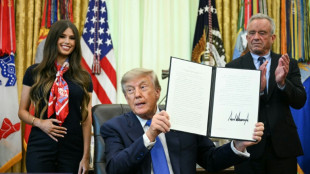
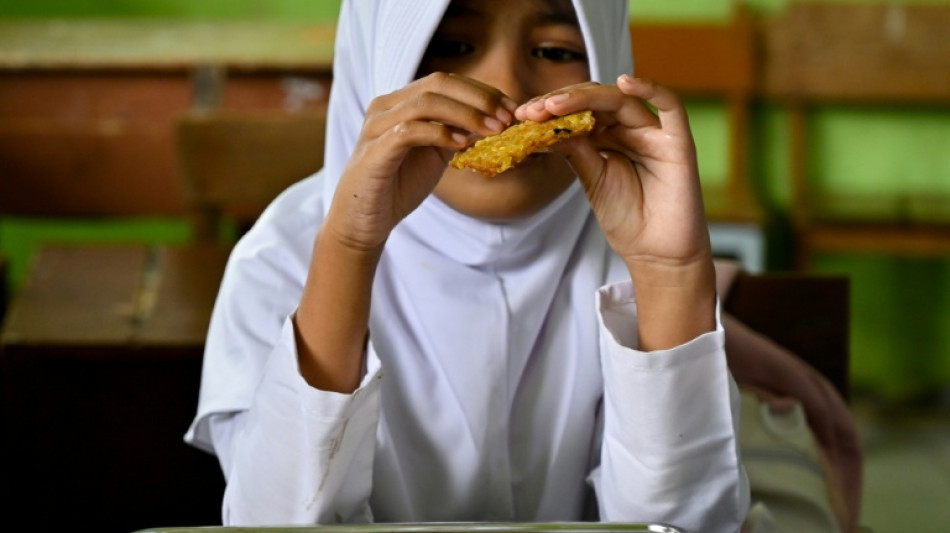
The programme, which feeds an estimated 60 million children and pregnant and breastfeeding women at a cost of nearly a tenth of the annual budget, is President Prabowo Subianto's signature project.
Here's what we know:
- What is being cut? -
At a cabinet meeting over the weekend, ministers and Prabowo decided to trim the programme from six days per week to five in primary and secondary schools starting Tuesday.
In regions with high malnutrition rates, meals will remain available on Saturdays, when many Indonesian schools are open in Southeast Asia's biggest economy.
The move will save "around 40 trillion rupiah ($2.3 billion)," Nanik Sudaryati Deyang, deputy head of the government's National Nutrition Agency, told AFP on Sunday.
The cut may be reviewed if conditions change.
Launched in January 2025, the initiative was touted by the government as a way to tackle a malnutrition and stunting crisis in the country of 284 million people.
The program has a target of ultimately feeding 83 million people, but it has come under the spotlight after thousands of recipients contracted food poisoning.
- A harbinger of more to come? -
The Indonesian government is also weighing options for curbing fuel consumption as the war in the Middle East has disrupted global energy supply.
The country produces crude but is a net importer of the commodity. It heavily subsidises fuel and natural gas for domestic consumers.
The government has so far defended the subsidy, which at $12.3 billion represents about five percent of the total annual budget for 2026.
Observers say the government's hand may be forced given that Indonesia is required by law to keep its fiscal deficit under three percent of gross domestic product.
The 2026 fuel subsidy calculation was premised on a global oil price of $70 per barrel, but prices have since topped $100.
Firman Noor, a political researcher with the government-funded National Research and Innovation Agency (BRIN), told AFP the cut to the meal programme "indicates that the pressure on our financial strength stemming from the war is already beginning to be felt".
"This is a warning that we must get prepared like other countries. And just be frank, we need an adjustment because we never know when the war will end, which will surely drive oil prices higher."
Previous subsidy cuts have led to mass riots.
- Is it enough? -
Earlier this month, presidential spokesman Prasetyo Hadi said the government was seeking to set aside as much as 80 trillion rupiah to shield its economy from the Middle East fallout, without disclosing further details.
Measures under consideration include ordering government workers to work from home one day per week, cutting back on official travel and encouraging bicycle, electronic car and public transport use to preserve valuable fuel.
Analysts said savings from trimming the free meals programme were not nearly enough if the government intends to meet its fiscal deficit limit.
"Without changes in big budget (programmes), I don't see steps taken by the government, such as cutting back on free meals from six to five days or one day work-from-home per week, as adequate to tackle" the widening deficit, said Deni Friawan, a researcher of the Centre for Strategic and International Studies (CSIS).
(F.Schuster--BBZ)