Berliner Boersenzeitung - Africa faces 86 mn tonne fuel shortfall by 2040: AFC

EUR -
AED 4.240283
AFN 75.643139
ALL 93.094256
AMD 422.352587
AOA 1058.771704
ARS 1730.023285
AUD 1.63661
AWG 2.078287
AZN 1.963678
BAM 1.954647
BBD 2.326027
BDT 142.695791
BHD 0.435539
BIF 3446.491854
BMD 1.154604
BND 1.477828
BOB 13.742949
BRL 5.89818
BSD 1.154819
BTN 110.002085
BWP 15.557684
BYN 3.433374
BYR 22630.23127
BZD 2.322629
CAD 1.608715
CDF 2621.520005
CHF 0.935021
CLF 0.026857
CLP 1057.028242
CNY 7.790803
CNH 7.788944
COP 3626.829396
CRC 524.286063
CUC 1.154604
CUP 30.596996
CVE 110.200445
CZK 24.256603
DJF 205.19644
DKK 7.475383
DOP 67.329684
DZD 153.292172
EGP 57.593019
ERN 17.319055
ETB 186.736684
FJD 2.552799
FKP 0.856429
GBP 0.854539
GEL 3.013044
GGP 0.856429
GHS 13.558116
GIP 0.856429
GMD 84.79306
GNF 10142.014915
GTQ 8.811876
GYD 241.859367
HKD 9.058183
HNL 30.955464
HRK 7.534892
HTG 151.00089
HUF 364.360007
IDR 20548.480914
ILS 3.461675
IMP 0.856429
INR 110.149244
IQD 1512.900644
IRR 1587262.48399
ISK 142.200999
JEP 0.856429
JMD 183.400182
JOD 0.818601
JPY 183.765575
KES 149.371215
KGS 100.970056
KHR 4682.236882
KMF 491.861472
KRW 1638.093882
KWD 0.356784
KYD 0.962428
KZT 538.409938
LAK 26081.495637
LBP 103417.370529
LKR 387.049915
LRD 208.44699
LSL 18.686173
LTL 3.409244
LVL 0.698408
LYD 7.359657
MAD 10.769391
MDL 20.071155
MGA 4946.038367
MKD 61.538518
MMK 2424.147592
MNT 4149.938168
MOP 9.332452
MRU 46.320264
MUR 54.266267
MVR 17.838475
MWK 2002.500925
MXN 19.78762
MYR 4.72698
MZN 73.784969
NAD 18.686092
NGN 1572.200735
NIO 42.494923
NOK 10.960081
NPR 176.001612
NZD 1.961423
OMR 0.443936
PAB 1.154824
PEN 3.900932
PGK 5.105943
PHP 70.21377
PKR 320.61412
PLN 4.302747
PYG 6873.943494
QAR 4.209934
RON 5.243863
RSD 117.377574
RUB 95.258975
RWF 1696.484164
SAR 4.323825
SBD 9.312682
SCR 16.005496
SDG 693.337446
SEK 10.954516
SGD 1.478545
SLE 28.403026
SOS 660.004796
SRD 43.586867
STD 23897.964135
STN 24.485338
SVC 10.104993
SZL 18.682813
THB 38.090399
TJS 10.66506
TMT 4.052659
TND 3.385317
TRY 55.117197
TTD 7.833343
TWD 37.226959
TZS 3059.685731
UAH 51.803481
UGX 4301.498821
USD 1.154604
UYU 46.522948
UZS 13779.808478
VES 872.606011
VND 30198.658106
VUV 137.820893
WST 3.156359
XAF 655.564455
XAG 0.017498
XAU 0.000262
XCD 3.120374
XCG 2.081363
XDR 0.815312
XOF 655.57013
XPF 119.331742
YER 275.249226
ZAR 18.696635
ZMK 10392.81161
ZMW 21.601252
ZWL 371.7819
  • RBGPF

    0.8600

    70.6

    +1.22%

  • CMSC

    -0.1738

    21.57

    -0.81%

  • CMSD

    -0.1300

    21.69

    -0.6%

  • RYCEF

    -0.1000

    20.9

    -0.48%

  • BTI

    -2.2800

    57.05

    -4%

  • BCE

    -0.2100

    22.54

    -0.93%

  • AZN

    0.4900

    161.91

    +0.3%

  • GSK

    -0.8000

    52.16

    -1.53%

  • RELX

    0.1000

    35.62

    +0.28%

  • NGG

    -1.4000

    79.48

    -1.76%

  • RIO

    0.8100

    101.91

    +0.79%

  • BCC

    -1.8500

    84.75

    -2.18%

  • JRI

    -0.0800

    12.73

    -0.63%

  • VOD

    -0.4400

    15.75

    -2.79%

  • BP

    1.2500

    42.88

    +2.92%

Africa faces 86 mn tonne fuel shortfall by 2040: AFC
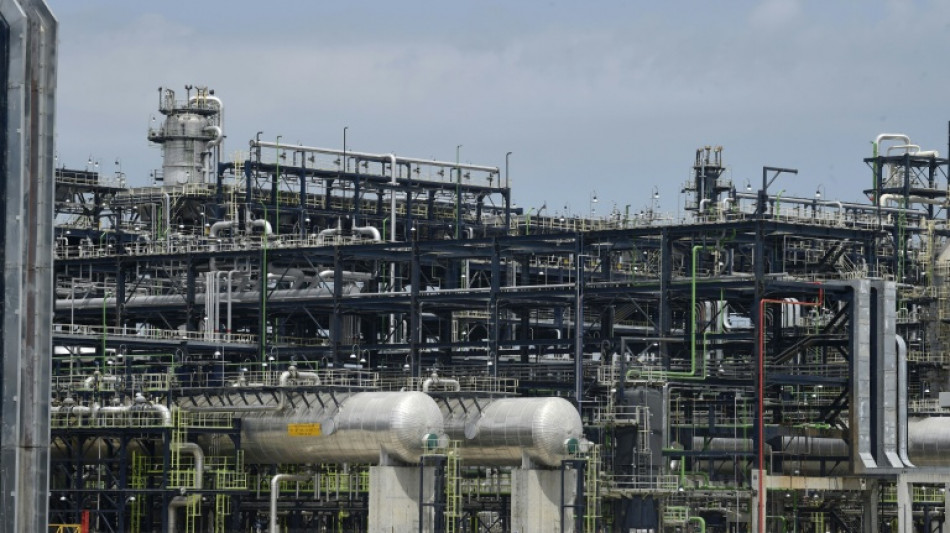
Africa faces 86 mn tonne fuel shortfall by 2040: AFC / Photo: PIUS UTOMI EKPEI - AFP

Africa faces 86 mn tonne fuel shortfall by 2040: AFC

The Iran war has exposed Africa's vulnerability to fuel chokepoints and is heading for a 86 million tonne fuel shortfall by 2040, the Africa Finance Corporation (AFC) said Thursday.

Text size:

Africa imports over 70 percent of its refined fuel and some $230 billion worth of essential goods, including fuel, food, plastics, steel, and fertiliser each year, the AFC said in a report released in Nairobi.

Its dependence on fuel imports will continue to rise from 74 million tonnes in 2023 to 86 million tonnes in 2040, said the report by the pan-African finance institution.

That is equivalent to almost three of the giant refineries run in Nigeria by the Dangote group -- by far the biggest in Africa.

"Not only is it importing fuel, but on the eastern side of the continent, those imports are vulnerable to chokepoints -- we've all learned about the Strait of Hormuz this year, and it's not the only chokepoint," said the AFC's chief economist Rita Babihuga-Nsanze at the report's launch.

The Strait of Hormuz, which accounts for a fifth of global fuel transport, has been effectively shut down by the war in the Middle East, leaving import-dependent countries in east Africa facing critical shortages.

Kenyan President William Ruto, speaking at the AFC summit, said the war showed the need for Africa to stop relying on outsiders.

"Our ambitions will remain unrealised if we continue to depend on external capital whose primary interest is securing raw materials for their own industries," said Ruto.

"We cannot continue to export raw materials and import finished products made from them," he added.

- Infrastructure -

Kenya last year announced an infrastructure splurge, including 50 new hydroelectric dams and 10,000 megawatts of additional power generation within seven years, as well as plans to revamp roads, rail and airports.

"While historical injustices from colonialism to inequities in the global economic order are real, we must also acknowledge that other regions have faced similar challenges, but they have risen above them," Ruto told the summit.

"We are constrained only by the extent that we accept the status quo through acquiescence, complacency, and limited ambition."

Fixing Africa's energy shortfall requires new hubs and better performance from existing assets, the AFC report said.

Babihuga-Nsanze highlighted the example of Zambian dams that were not designed to cope with new drought conditions, and two gigawatts of Angolan hydropower that was not connected to the regional grid and therefore went to waste.

She also highlighted the shortages of fertiliser due to the Mideast war, since a high proportion comes from the Gulf.

Such vulnerabilities are "strange", said Babihuga-Nsanze, given that Africa has 80 percent of the world's phosphate reserves -- a key fertiliser source -- yet only produces 20 percent of the global stock.

"There's a real opportunity for Africa to step in the gap here," she said.

(T.Burkhard--BBZ)