Berliner Boersenzeitung - New wave of anti-LGBTQ laws sweeps Africa

EUR -
AED 4.229931
AFN 73.136344
ALL 94.043196
AMD 424.098629
ANG 2.062159
AOA 1056.766288
ARS 1654.812476
AUD 1.637547
AWG 2.073213
AZN 1.95705
BAM 1.940962
BBD 2.320957
BDT 141.459817
BGN 1.947531
BHD 0.434342
BIF 3444.988935
BMD 1.151785
BND 1.476314
BOB 7.991905
BRL 5.863508
BSD 1.15239
BTN 108.913395
BWP 15.440959
BYN 3.19041
BYR 22574.986
BZD 2.317682
CAD 1.624806
CDF 2672.141339
CHF 0.920293
CLF 0.025922
CLP 1020.204933
CNY 7.78313
CNH 7.790472
COP 3956.381475
CRC 524.887416
CUC 1.151785
CUP 30.522303
CVE 109.822789
CZK 23.959489
DJF 204.695076
DKK 7.41305
DOP 67.494536
DZD 153.048008
EGP 57.483513
ERN 17.276775
ETB 182.413974
FJD 2.572743
FKP 0.857074
GBP 0.865499
GEL 3.04647
GGP 0.857074
GHS 13.012521
GIP 0.857074
GMD 84.079942
GNF 10109.791704
GTQ 8.783926
GYD 241.057201
HKD 9.025755
HNL 30.749431
HRK 7.532904
HTG 150.499483
HUF 346.283748
IDR 20442.571251
ILS 3.383766
IMP 0.857074
INR 108.624265
IQD 1508.83835
IRR 1583704.374934
ISK 143.201465
JEP 0.857074
JMD 182.25671
JOD 0.816638
JPY 184.588518
KES 149.179398
KGS 100.723324
KHR 4621.529325
KMF 489.508408
KPW 1036.606903
KRW 1741.343426
KWD 0.354863
KYD 0.960358
KZT 561.978985
LAK 25373.823324
LBP 103142.346813
LKR 386.06204
LRD 209.797442
LSL 18.652994
LTL 3.400922
LVL 0.696703
LYD 7.342652
MAD 10.648272
MDL 20.109272
MGA 4837.496941
MKD 61.144393
MMK 2418.111518
MNT 4120.310224
MOP 9.297722
MRU 46.163595
MUR 54.283904
MVR 17.806878
MWK 1999.499056
MXN 19.892099
MYR 4.681781
MZN 73.601486
NAD 18.661125
NGN 1565.413627
NIO 42.166964
NOK 11.073029
NPR 174.260327
NZD 1.987875
OMR 0.442859
PAB 1.15239
PEN 3.930478
PGK 5.053745
PHP 69.536726
PKR 320.539677
PLN 4.201331
PYG 7032.240938
QAR 4.193076
RON 5.191137
RSD 116.412124
RUB 84.047533
RWF 1713.85608
SAR 4.321376
SBD 9.285027
SCR 16.257587
SDG 691.646113
SEK 10.925188
SGD 1.476623
SHP 0.859924
SLE 28.507014
SLL 24152.359778
SOS 658.253797
SRD 42.998468
STD 23839.624055
STN 24.648199
SVC 10.083006
SYP 127.309212
SZL 18.655324
THB 37.47275
TJS 10.682536
TMT 4.042765
TND 3.35371
TOP 2.773222
TRY 53.491481
TTD 7.828156
TWD 36.348609
TZS 3023.439046
UAH 51.610206
UGX 4263.407715
USD 1.151785
UYU 46.524738
UZS 13827.178761
VES 686.505781
VND 30321.89191
VUV 137.353615
WST 3.155562
XAF 650.980478
XAG 0.016647
XAU 0.000267
XCD 3.112757
XCG 2.076905
XDR 0.810508
XOF 650.758731
XPF 119.331742
YER 274.844725
ZAR 18.791079
ZMK 10367.437479
ZMW 20.368291
ZWL 370.8743
  • CMSC

    -0.0450

    22.32

    -0.2%

  • RBGPF

    -1.7300

    61.14

    -2.83%

  • BCE

    -0.5400

    23.28

    -2.32%

  • RIO

    -3.0700

    102.67

    -2.99%

  • NGG

    -1.6000

    80.68

    -1.98%

  • RYCEF

    -0.1600

    18.43

    -0.87%

  • VOD

    -0.3600

    14.53

    -2.48%

  • CMSD

    0.0300

    22.29

    +0.13%

  • RELX

    -0.7900

    32.01

    -2.47%

  • AZN

    -0.8200

    177.89

    -0.46%

  • GSK

    -0.0700

    52.15

    -0.13%

  • BP

    -1.0100

    40.14

    -2.52%

  • BCC

    -0.7500

    70.81

    -1.06%

  • JRI

    -0.1900

    12.62

    -1.51%

  • BTI

    -1.8900

    59.49

    -3.18%

New wave of anti-LGBTQ laws sweeps Africa
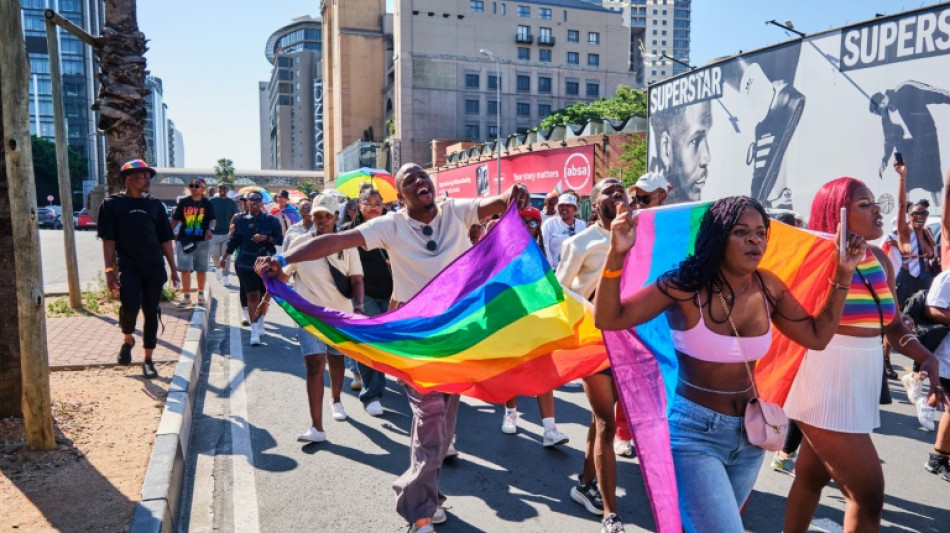
New wave of anti-LGBTQ laws sweeps Africa / Photo: Zinyange Auntony - AFP/File

New wave of anti-LGBTQ laws sweeps Africa

A string of west African countries have outlawed same-sex relations in recent months, further eroding LGBTQ rights on a continent where they were already under attack.

Text size:

Of Africa's 54 countries, only about 20 do not currently criminalise same-sex relations.

Here is a look at the wave of anti-LGBTQ sentiment sweeping the continent and some of the forces driving it, from politicians playing to their homophobic base to the geopolitics of rejecting supposedly "Western values".

- What are the laws? -

Uganda set the tone in 2023, adopting one of the world's harshest anti-LGBTQ laws, including the death penalty for "aggravated homosexuality".

Various countries have recently followed suit.

In September 2025, Burkina Faso criminalised same-sex relations with prison terms of up to five years.

In February, neighbouring Niger did the same, adopting a new penal code with harsh sentences including jail terms of up to 20 years for same-sex marriage.

In March, Senegal adopted a law doubling sentences for same-sex relations, to five to 10 years.

And in May, Ghana's parliament passed a bill imposing prison terms of up to three years for same-sex relations, or up to five years for "promoting" them.

- Why? -

"Politicians in this country know that their society is very highly homophobic, so they want something that is going to put them in their good books," Ugandan rights activist Agather Atuhaire told AFP.

"LGBT+ people are scapegoats" who get used by politicians to "deflect attention from thorny subjects", said French-Senegalese expert Marame Kane.

Senegal's new law came two years into the term of President Bassirou Diomaye Faye and ex-prime minister Ousmane Sonko, a moment when they were called upon "to deliver at least some results" in the debt-saddled country, where discontent is rising, said writer and sociologist El Hadj Souleymane Gassama.

In a region where homophobia runs deep, "they fell back on the one subject that draws broad unanimity, regardless of political divisions," he said.

Religion also plays a role, in countries with large Muslim or Christian majorities where conservative values hold sway.

And funding from US conservative movements may have helped "precipitate" Senegal's law, added Kane.

- Why now? -

The issue is also geopolitical.

"LGBT+ people are a symbol of Western dominance in Africa", where they are often brandished as an example of supposedly foreign values being imposed on local culture, said Ivorian anthropologist Stephane Ballet Djedje.

He linked the laws to mounting anti-Western sentiment -- seen, for example, in France's strained ties with its former west African colonies, particularly the military juntas that have seized power in recent years in Burkina Faso, Mali and Niger.

More broadly, he cited a recent rise of conservatism worldwide that seeks to "restore the traditional order".

International reaction to the new laws has largely been muted -- although in Ghana, President John Dramani Mahama faces pressure to "reconcile the very powerful domestic forces" behind the bill and international institutions such as the World Bank, said international relations expert Ishmael Hlovor.

burs-bam/pid/jhb/kjm

(K.Müller--BBZ)