'Be more honest': Markets crave clarity from cryptic Fed chair / Photo: Brendan SMIALOWSKI - AFP

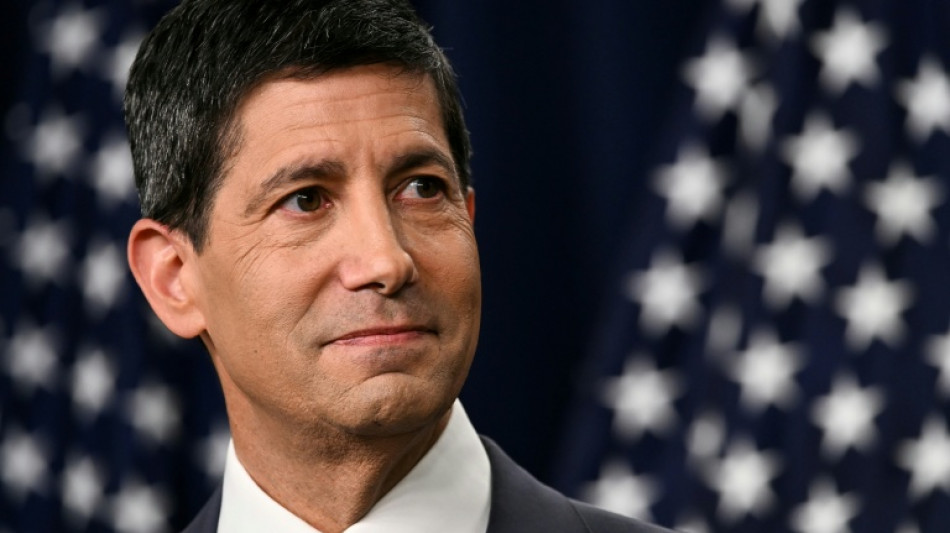
US Federal Reserve Chair Kevin Warsh will have to soothe investors frazzled by his cryptic communication style in a key speech on Friday, analysts say, or risk having his leadership undercut by other policymakers filling the void.
Warsh, appointed by US President Donald Trump and in office since May, will speak at 8:00 am local time (1400 GMT) at a remote yet storied venue for monetary policy watchers: Jackson Hole, Wyoming.
Since 1982, policymakers and prominent economists have gathered in this remote valley ringed by mountains in Grand Teton National Park -- known to most people more for its bison than for spirited debates on macroeconomics.
It is one of the most important central banking conferences in the world, and the Fed chair's speech to kick off proceedings is closely watched by his peers in the audience and investors worldwide.
Since taking office, Warsh has delivered on his promise to drastically reduce Fed communications.
He has axed forward guidance on the direction interest rates may take in the world's largest economy, and refused to share his views on the economic outlook and how surging inflation and other challenges should be tackled.
"What markets are looking for is really a greater sense of transparency and credibility when it comes to policymaking," said Gregory Daco, chief economist at EY-Parthenon.
"Because some of the communication from Fed Chair Warsh has been cryptic, and sometimes inconsistent."
- 'Moving the goalposts' -
The world's largest economy has delivered robust growth despite travelling through tumultuous waters, including shocks from Trump's tariffs and his war on Iran, which has sent global energy prices skyrocketing.
Both policies have fuelled inflation in the United States, which has remained above the Fed's long-term two-percent target for more than half a decade.
On Wednesday, the Fed's preferred inflation gauge clocked in at 3.7 percent, down 0.4 percentage points from May, when it hit a three-year high.
Warsh has stressed his institution's "resolute commitment" to bringing inflation back to target, but has also hinted at changing the measures that the Fed uses to gauge prices.
That "sounds very much like you're moving the goalposts," said Daco.
"He needs to be a little bit more transparent and honest" when it comes to his views and what his plans for the central bank are, he added.
Bernard Yaros, lead US economist at Oxford Economics, told AFP that while the market craves more from Warsh, he's unlikely to provide it.
"It seems like he's really sticking to the 'less is more' communication strategy," he said.
Since taking over at the Fed, Warsh has formed a number of task forces to recommend potentially major reforms at the central bank.
The task forces will examine the macroeconomic impacts of AI, what data the Fed looks at, its balance sheet policy, its inflation framework and its communications.
- 'Political shadow' -
In his second term, Trump has launched unprecedented attacks on the Fed's independence, pursuing a criminal case against Warsh's predecessor Jerome Powell -- who remains on the board -- and attempting to oust another governor, Lisa Cook.
Warsh has said he would defend the Fed's independence to set rates, but has stayed silent on both cases, even after Trump's latest attempt to fire Cook earlier this month.
The US president has angrily and repeatedly demanded that the Fed lower interest rates, despite surging inflation, and claimed that this is what Warsh "wants."
Warsh has remained silent, too, on the Trump administration's planned intervention in bond markets, with the Treasury secretary announcing an increase in bond buybacks in an effort to curb rising long-term yields.
The move runs directly counter to Warsh's statements on rising bond yields, which he described in July as a market reaction that was doing some of the financial tightening work for the Fed.
For Daco, if Warsh continues to remain cryptic in his statements, "the political shadow" will only grow.
"There's always going to be that impression of, what is the Fed chair doing? Is it in the best interests of the administration or the best interest of the economy?"
And if Warsh remains silent, Yaros said, markets will treat him as just another vote on the rate-setting committee.
"His silence gives a lot more agency to these other members, and whenever there's a void, markets will fill it with the commentary from these other monetary policymakers," he said.
(A.Lehmann--BBZ)