Berliner Boersenzeitung - Chip industry activists call for South Korea to recognise cancer cases

EUR -
AED 4.095701
AFN 72.480008
ALL 90.882712
AMD 401.805034
ANG 1.995737
AOA 1023.635334
ARS 1721.721299
AUD 1.622157
AWG 2.007127
AZN 1.900047
BAM 1.951697
BBD 2.245579
BDT 138.86805
BGN 1.948955
BHD 0.420772
BIF 3356.362879
BMD 1.115071
BND 1.428792
BOB 13.374482
BRL 6.138357
BSD 1.114956
BTN 104.659009
BWP 15.359741
BYN 3.339105
BYR 21855.38619
BZD 2.242466
CAD 1.573756
CDF 2586.964483
CHF 0.914881
CLF 0.027698
CLP 1090.127033
CNY 7.444774
CNH 7.440667
COP 3625.685911
CRC 505.646021
CUC 1.115071
CUP 26.76054
CVE 110.842372
CZK 24.346956
DJF 198.170808
DKK 7.480457
DOP 67.740985
DZD 152.081196
EGP 59.957114
ERN 16.726061
ETB 179.75372
FJD 2.514764
FKP 0.833961
GBP 0.834821
GEL 2.893653
GGP 0.833961
GHS 13.029646
GIP 0.833961
GMD 83.077063
GNF 9876.743229
GTQ 8.520088
GYD 233.749058
HKD 8.744552
HNL 30.190584
HRK 7.547925
HTG 146.132606
HUF 363.51345
IDR 20192.258205
ILS 3.552538
IMP 0.833961
INR 104.869336
IQD 1688.217076
IRR 2108992.359359
ISK 136.919964
JEP 0.833961
JMD 176.947992
JOD 0.790629
JPY 176.744329
KES 144.903869
KGS 97.510486
KHR 4549.488945
KMF 492.86165
KPW 1003.563608
KRW 1520.737678
KWD 0.346765
KYD 0.929309
KZT 499.776184
LAK 25094.667032
LBP 99854.583719
LKR 370.763872
LRD 189.90075
LSL 18.465996
LTL 3.292514
LVL 0.674496
LYD 7.170329
MAD 10.880307
MDL 19.93044
MGA 5123.750363
MKD 61.556144
MMK 2341.311039
MNT 4015.078679
MOP 9.000882
MRU 44.882019
MUR 52.442198
MVR 17.176258
MWK 1936.878232
MXN 20.768572
MYR 4.528864
MZN 71.257178
NAD 18.465992
NGN 1502.23485
NIO 40.823159
NOK 10.548462
NPR 167.454215
NZD 2.010586
OMR 0.428348
PAB 1.115031
PEN 3.838635
PGK 5.008941
PHP 70.369926
PKR 308.456482
PLN 4.399568
PYG 6968.50605
QAR 4.062245
RON 5.343646
RSD 117.7359
RUB 91.352798
RWF 1644.729318
SAR 4.18675
SBD 8.974739
SCR 15.631155
SDG 670.719139
SEK 11.033072
SGD 1.430194
SHP 0.835103
SLE 25.591287
SLL 23382.48045
SOS 637.267002
SRD 41.908265
STD 23079.712667
STN 24.8382
SVC 9.75549
SYP 14498.149201
SZL 18.465983
THB 37.411034
TJS 10.285553
TMT 3.902748
TND 3.329048
TOP 2.684822
TRY 55.9111
TTD 7.561104
TWD 36.546782
TZS 2946.578434
UAH 50.509358
UGX 4560.432794
USD 1.115071
UYU 44.855697
UZS 13380.84906
VES 999.456181
VND 28526.296796
VUV 133.25575
WST 3.108617
XAF 655.957
XAG 0.021465
XAU 0.000274244363
XCD 3.013535
XCG 2.009331
XDR 0.788413
XOF 655.957
XPF 119.331742
YER 263.853652
ZAR 18.419263
ZMK 10036.978597
ZMW 22.65679
ZWL 359.052318
SSP 6406.644798
MXV 2.336546
  • CMSD

    -0.1200

    19.81

    -0.61%

  • JRI

    0.0000

    10.77

    0%

  • BCC

    -1.8200

    74.15

    -2.45%

  • CMSC

    -0.2228

    19.53

    -1.14%

  • BCE

    0.2000

    20.34

    +0.98%

  • RIO

    0.0100

    94.17

    +0.01%

  • AZN

    -2.7400

    161.47

    -1.7%

  • GSK

    -1.1800

    48.17

    -2.45%

  • RBGPF

    0.0000

    65

    0%

  • NGG

    0.8800

    75.82

    +1.16%

  • RYCEF

    -0.7300

    19.08

    -3.83%

  • BTI

    -0.4500

    54.4

    -0.83%

  • BP

    0.4700

    43.99

    +1.07%

  • RELX

    -0.0600

    33.18

    -0.18%

  • VOD

    -0.1800

    16.15

    -1.11%

Chip industry activists call for South Korea to recognise cancer cases
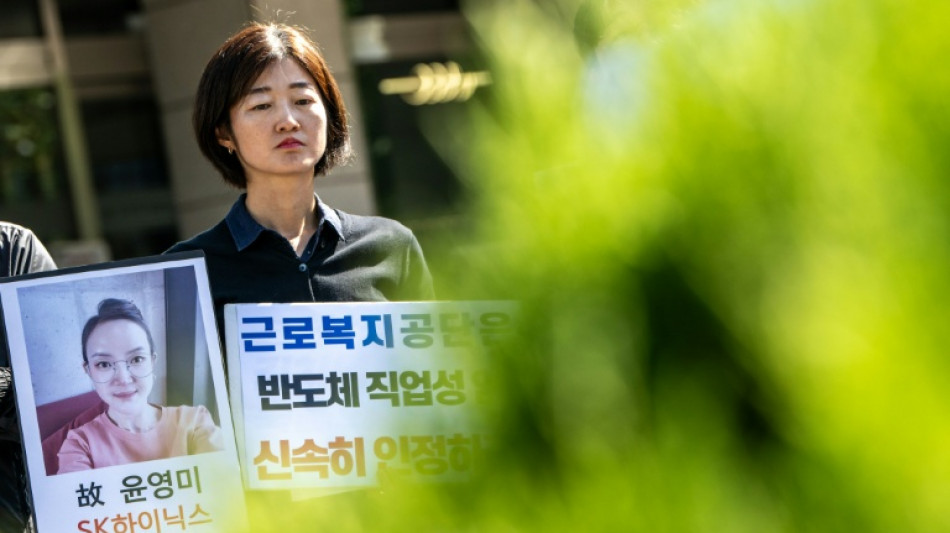
Chip industry activists call for South Korea to recognise cancer cases / Photo: Philip FONG - AFP

Chip industry activists call for South Korea to recognise cancer cases

South Korean activists campaigning for workplace safety in the nation's booming semiconductor industry called on the government on Wednesday to recognise the cancer diagnoses of three former SK hynix employees as work-related illnesses.

Text size:

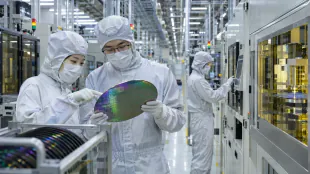
SK hynix, along with fellow South Korean tech giant Samsung Electronics, has emerged as a key player in the booming artificial intelligence industry, with its cutting-edge memory chips crucial to powering the sector's rapid growth.

Establishing direct links between semiconductor work and certain cancers can be contentious, with research inconclusive. But fabrication and assembly plant workers can face exposure to solvents, acids, toxic metals and chemical gases, according to the US Occupational Safety and Health Administration.

Samsung issued a public apology in 2018 to workers -- many of them young women -- who had developed cancer after working at some of its factories, paying out 150 million won per case (about $130,000 at the time) after a decade-long dispute.

Supporters for the Health and Rights of People in the Semiconductor Industry (SHARPS)one of the groups that had pressured Samsung, said on Wednesday chemicals classified as carcinogens were being used by SK hynix.

"We have confirmed that several substances on SK hynix's own list of prohibited chemicals are in fact being used, including nickel and its compounds," Lee Sang-soo, a SHARPS activist, told a news conference, citing data reported by SK hynix to the environment ministry.

SK hynix said in a statement sent to AFP it was "taking various measures to more objectively identify the characteristics of disease occurrence" and was fully cooperating with government inquiries.

The company, which did not address the specific claims, said it had taken "proactive industrial health measures including the development of a comprehensive support and compensation plan".

The husband of a former SK hynix worker who died from breast cancer called on the Korea Workers' Compensation & Welfare Service to recognise his wife's illness as work-related.

"I believe the nature of her job meant that she was inevitably exposed to various hazardous substances," Kim Yong-il, the husband of Yoon Young-mi, told the briefing outside the offices of the service, which is a government agency.

Yoon began working at SK hynix's Icheon chip plant in 1996 and was diagnosed with cancer in 2018. She died in April.

"The company and the relevant authorities must protect workers' right to health when it comes to occupational diseases in the semiconductor industry," Kim said.

Agency representative Ko Seong-yong of the Korea Workers' Compensation & Welfare Service told AFP that authorities would "process their cases as fast as possible".

"An epidemiological investigation is necessary. While it is difficult to give an exact timeframe, it could take around a year before a decision is made," he said.

(A.Lehmann--BBZ)