10 years after Chibok, agony of abductions plagues Nigeria / Photo: Audu MARTE - AFP/File

Ten years have passed but whenever Mary Shettima hears footsteps at the door, she thinks her kidnapped daughter has come home.
Yana Galang is waiting for her daughter too -- she keeps her clothes laid out ready for her return.
A decade after Nigeria's most infamous mass abduction, almost 100 of the 276 Chibok girls seized from their school by Islamist Boko Haram militants are still thought to be held captive.
The kidnapping sparked a huge global outcry and focused attention on victims of a bloody jihadist insurgency that has displaced more than two million people.
But the anniversary of the April 14, 2014 attack comes amid a resurgence of large-scale abductions in Nigeria, with no end in sight to the conflict that has killed more than 40,000 people in the northeast.
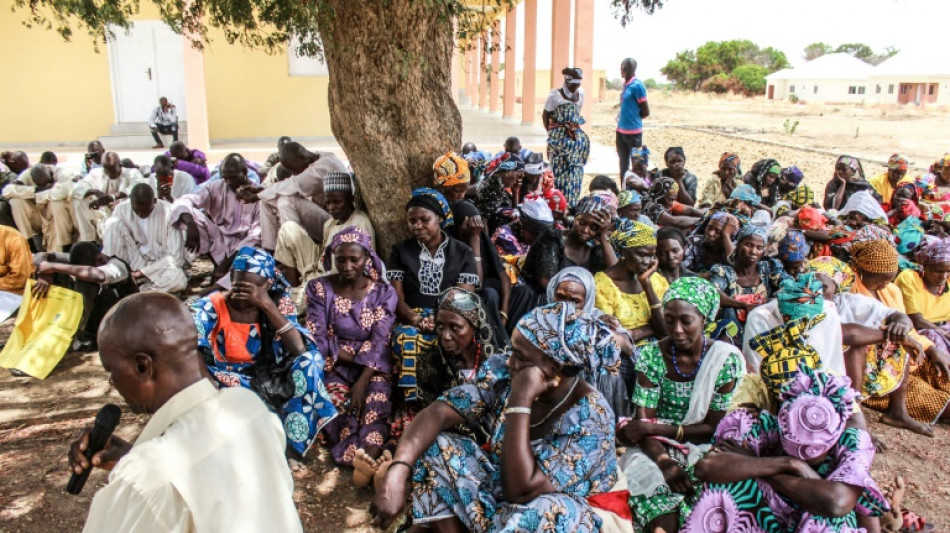
Sitting in the quiet town of Chibok shaded by baobab trees, mothers of the missing girls told AFP of their pain hearing other children had been seized.
"I think of their parents and break down crying," said Shettima, whose abducted daughter Margaret turns 29 this year.
Victims fear the world has forgotten the crisis.
"I feel completely weak knowing others are still going through this," said Asabe, who was taken from the school aged 14 and freed after three years.
"When will it be safe again?" she asked, holding back tears.
- 'Important to keep teaching' -
Travel to Chibok remains difficult for security reasons and AFP was accompanied by a military escort on the six-hour journey along dust tracks.
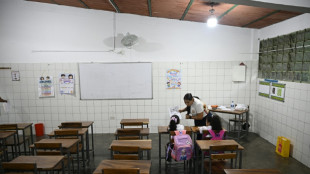
The army has reinforced the town and a concrete and barbed wire barrier now surrounds the Government Girls Secondary School, which reopened in 2021.
From their new classrooms, pupils can see the charred wreckage of the old dormitories, torched as the girls were rounded up during the night.
Dust whirlwinds sweep across the horizon and barrel through the creaking buildings.
Freed captive Hauwa, who was 16 at the time of the raid, remembers how the militants stormed in across the savannah on motorbikes.
"They were screaming and shooting in the air. I was terrified -- I kept thinking they were going to kill us. I said what I thought would be my last prayers."
AFP is not publishing the former captives' full names for their safety.
Standing in the ruins, Vice Principal Bature Sule, 54, said many parents in the mostly Christian town were glad their children had the chance to return to the classroom.
"It's important we keep teaching here," he said.
Boko Haram opposes Western-style education and was behind the first wave of school kidnappings in Nigeria around a decade ago.
Abductions by it and other groups have since spiralled across the country.
More than 1,680 pupils were kidnapped in Nigerian schools from early 2014 to the end of 2022, according to the charity Save the Children.
Not far from Chibok, the almost 15-year insurgency rumbles on.
Jihadists operate in the surrounding towns and residents often hear gunfire. In its latest weekly update, the army said it killed more than 50 militants.
The military has now regained control of large areas once held by Boko Haram, which has also been weakened by infighting with its rival, Islamic State West Africa Province.
Kidnapping for ransom is still a favoured tactic to raise funds and in recent weeks Nigeria has been hit by two major abductions.
More than 130 children were seized from their school in northwestern Kaduna state, while over 100 people were kidnapped in Ngala, in the same state as Chibok, most of them women and children.
- A second chance -
The authorities have not lived up to promises to secure every girl's return or to put a stop to mass kidnappings.
Soon after the 2014 Chibok attack, 57 girls managed to escape. Since then, over 100 have been rescued or released in deals with the jihadists.
Many are trying to rebuild their lives and make up for their lost education.
In Yola, around half a day's drive south of Chibok, AFP spoke to several former captives now studying at the American University of Nigeria.
Grace, who was 17 at the time of the attack, hopes to become a nurse.
"They destroyed my life," she said. "I thought it would be so much better than this -- I would have finished my education by now."
Like many of the captives, she was taken to the Sambisa forest, a jihadist stronghold, where food was scarce and the girls would run for cover when army jets swooped overhead.
Many of her schoolfriends had to marry their captors. Others, like Grace, were made to work as slaves.
After three years, she was freed under a deal facilitated by the Red Cross.
"I couldn't stop crying," she said, recalling her relief and joy.
But her friend Hauwa cannot hide her anger.
Now 26 and studying for a media degree, she thinks of those who have not had a second chance.
"Some of our schoolmates are not yet free and still students are being kidnapped.
"I think about them every day. It's like the government doesn't care about these people."
In 2015, Nigeria backed international guidelines on keeping schools in conflict zones safe, but according to Save the Children, they remain largely unimplemented and rural schools are still vulnerable.
President Bola Ahmed Tinubu's spokesman did not respond to AFP's repeated requests for comment.
"The Nigerian government hasn't learnt anything -- they've completely moved on," said Jeff Okoroafor from the Bring Back Our Girls campaign group.
"That's why the kidnappers had the temerity to abduct schoolchildren from Kaduna."
But mothers in Chibok say they cannot move on and have received little support.
Dozens of parents have died since their daughters were taken and the stress from years of waiting only adds to the hardship of life in one of the world's poorest places.
"My daughter will be back soon," said Shettima, clasping her hands in her lap. "I live in hope."
(B.Hartmann--BBZ)