Berliner Boersenzeitung - Climate change spurring surge in dengue, chikungunya: WHO

EUR -
AED 4.245913
AFN 76.887634
ALL 93.218842
AMD 422.094755
AOA 1060.176801
ARS 1724.882567
AUD 1.638747
AWG 2.082489
AZN 1.97002
BAM 1.955776
BBD 2.321671
BDT 142.688227
BHD 0.434695
BIF 3451.157116
BMD 1.156136
BND 1.477082
BOB 13.69983
BRL 5.876989
BSD 1.152686
BTN 109.688637
BWP 15.558807
BYN 3.432357
BYR 22660.258427
BZD 2.318271
CAD 1.61333
CDF 2615.761404
CHF 0.93588
CLF 0.026829
CLP 1055.916879
CNY 7.801146
CNH 7.796152
COP 3633.55485
CRC 523.993489
CUC 1.156136
CUP 30.637594
CVE 110.26363
CZK 24.258158
DJF 205.267449
DKK 7.477932
DOP 67.289164
DZD 152.967099
EGP 57.380687
ERN 17.342035
ETB 186.049588
FJD 2.553384
FKP 0.8566
GBP 0.858527
GEL 3.017966
GGP 0.8566
GHS 13.526832
GIP 0.8566
GMD 84.980421
GNF 10123.874202
GTQ 8.794891
GYD 241.157003
HKD 9.066767
HNL 30.895616
HRK 7.536622
HTG 150.718127
HUF 363.096405
IDR 20580.370421
ILS 3.468234
IMP 0.8566
INR 110.076256
IQD 1509.981237
IRR 1590322.371805
ISK 142.598215
JEP 0.8566
JMD 183.057725
JOD 0.819746
JPY 182.445186
KES 149.158147
KGS 101.104505
KHR 4681.941823
KMF 492.514185
KRW 1627.677557
KWD 0.356853
KYD 0.960588
KZT 540.233287
LAK 26025.676609
LBP 103223.017367
LKR 386.635196
LRD 208.057415
LSL 18.726567
LTL 3.413768
LVL 0.699335
LYD 7.331909
MAD 10.743067
MDL 20.044751
MGA 4918.938878
MKD 61.524236
MMK 2427.596601
MNT 4159.0218
MOP 9.314584
MRU 46.338424
MUR 54.419742
MVR 17.862733
MWK 1998.775164
MXN 19.812061
MYR 4.728715
MZN 73.882892
NAD 18.726567
NGN 1577.963717
NIO 42.419473
NOK 10.99759
NPR 175.501819
NZD 1.966719
OMR 0.442445
PAB 1.152686
PEN 3.903651
PGK 5.093937
PHP 70.183258
PKR 320.014324
PLN 4.299905
PYG 6853.914834
QAR 4.213648
RON 5.244583
RSD 117.338542
RUB 94.338828
RWF 1694.978938
SAR 4.329446
SBD 9.325039
SCR 16.705092
SDG 694.263698
SEK 10.961095
SGD 1.477585
SLE 28.445176
SOS 658.791814
SRD 43.778814
STD 23929.673396
STN 24.499696
SVC 10.085875
SZL 18.722767
THB 38.210709
TJS 10.633568
TMT 4.058036
TND 3.386358
TRY 55.144784
TTD 7.812903
TWD 37.286072
TZS 3051.762079
UAH 51.625959
UGX 4293.946644
USD 1.156136
UYU 46.399423
UZS 13785.828699
VES 873.763846
VND 30295.956222
VUV 138.059733
WST 3.160483
XAF 655.948849
XAG 0.018188
XAU 0.000266
XCD 3.124515
XCG 2.077474
XDR 0.81579
XOF 655.948849
XPF 119.331742
YER 275.626884
ZAR 18.667336
ZMK 10406.612213
ZMW 21.75673
ZWL 372.275202
  • CMSC

    0.0240

    21.744

    +0.11%

  • RBGPF

    0.7600

    70.5

    +1.08%

  • RIO

    1.4500

    101.1

    +1.43%

  • BCC

    2.3400

    86.6

    +2.7%

  • BCE

    -0.0200

    22.75

    -0.09%

  • GSK

    0.7900

    52.96

    +1.49%

  • BP

    -0.6000

    41.63

    -1.44%

  • CMSD

    -0.1600

    21.82

    -0.73%

  • BTI

    0.6000

    59.33

    +1.01%

  • NGG

    0.4700

    80.88

    +0.58%

  • JRI

    0.1500

    12.81

    +1.17%

  • VOD

    0.1900

    16.19

    +1.17%

  • RELX

    0.0485

    35.52

    +0.14%

  • RYCEF

    0.2300

    20.85

    +1.1%

  • AZN

    1.4100

    161.42

    +0.87%

Climate change spurring surge in dengue, chikungunya: WHO
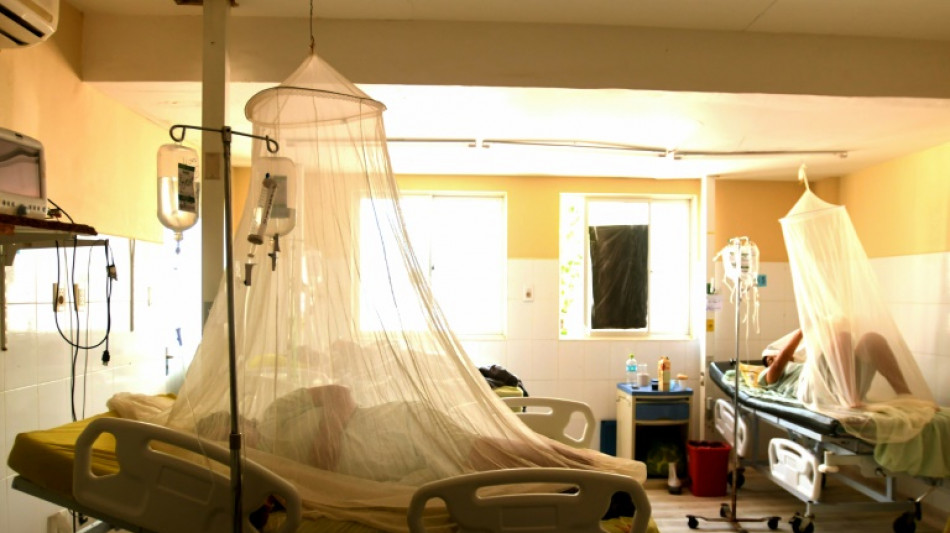
Climate change spurring surge in dengue, chikungunya: WHO / Photo: Rodrigo URZAGASTI - AFP/File

Climate change spurring surge in dengue, chikungunya: WHO

The World Health Organization warned Wednesday that dengue and other diseases caused by mosquito-borne arboviruses were spreading far faster and further amid climate change, warning global outbreaks could be looming.

Text size:

Experts with the United Nations health agency sounded the alarm over swelling numbers of cases of dengue and chikungunya, and warned new epidemics of zika could also be expected.

All three are caused by arboviruses carried by Aedes aegypti mosquitos, which have been spreading into new territory as the planet warms.

"Climate change has played a key role in facilitating the spread of the vector mosquitoes," said Raman Velayudhan, who coordinates WHO's dengue and arbovirus initiative.

He and colleague Diana Rojas Alvarez, WHO's technical lead on chikungunya and zika, stressed the need for urgent action to rein in the spread of the mosquitos, amid fears of larger outbreaks in new areas.

A full 129 countries are already at risk from dengue, including 100 countries where the disease is endemic.

And case numbers have grown exponentially in recent years, jumping from around half a million in 2000 to some 5.2 million in 2019, the worst year on record, Velayudhan told reporters.

Cases were not properly recorded during the Covid pandemic, but he warned that numbers remained high.

In parallel, chikungunya, which to date has been reported in 115 countries since it was discovered in the 1950, is experiencing a dramatic surge in the Americas, Rojas Alvarez told reporters.

So far this year, around 135,000 cases have been reported there, compared to 50,000 cases reported during the first half of 2022, she said.

- 'Alarming' -

Most concerning perhaps is the expanding geographic spread of both diseases, which are being reported further south in the Americas and are also moving into the northern hemisphere, including a number of European countries.

"The mosquitos and these diseases have with climate change been increasing ... by altitude and by latitude," Rojas Alvarez said, describing the situation as "alarming".

"This high transmission (in the Americas) could be an anticipation of what the next summer season in the northern hemisphere might look like," she warned.

The two diseases often cause just mild symptoms like fever, body ache and a rash.

But while most people who catch chikungunya experience symptoms for about a week, a full 40 percent will feel the effects for months and even years.

"It can cause lifelong disability," Rojas Alvarez warned.

With dengue, which comes in four closely related serotypes, people who are reinfected with another serotype often develop severe disease.

This "can lead to organ failure and death", Velayudhan warned, adding that "this is a big threat to the world, because most of the countries now have all four serotypes in circulation."

He called for countries to boost mosquito control and "be on the alert" to detect when the diseases are spreading.

"We really want to avoid any major outbreak."

(K.Lüdke--BBZ)