Chinese cities and factories lock down as outbreak spreads

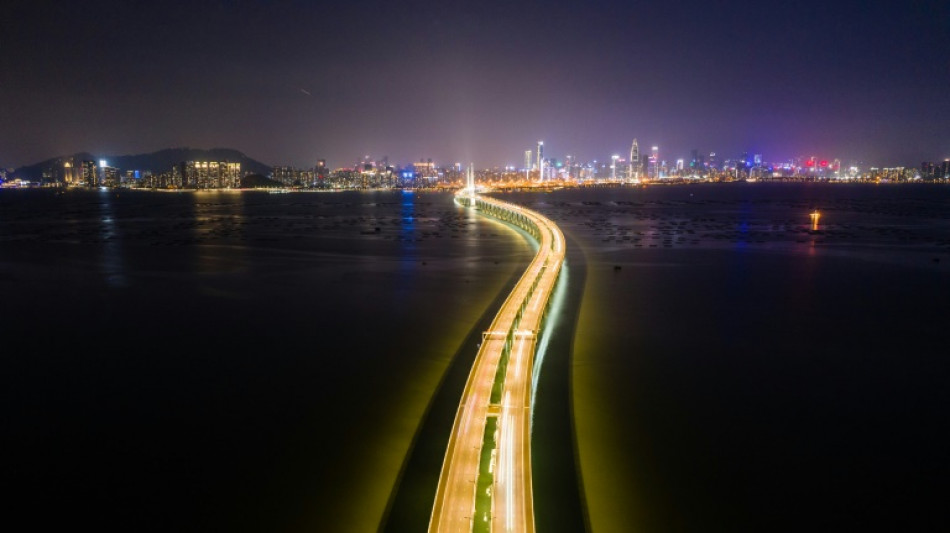
Seventeen million people in the Chinese tech hub of Shenzhen began their first full day under lockdown Monday, with restrictions also imposed in Shanghai and other major cities in an effort to extinguish the biggest threat to the nation's zero-tolerance Covid strategy.
The southern city took the measures on Sunday as authorities battled an Omicron flare-up in factories and neighbourhoods linked to nearby Hong Kong, which is recording scores of daily deaths as the virus runs rampant.
Shenzhen is one of ten areas nationwide to issue some level of stay-at-home order.
Health officials have warned tighter measures could be on their way, as concerns mount over the resilience of China's "zero-Covid" approach in the face of the highly-transmissible Omicron variant.
Authorities reported 2,300 new virus cases nationwide on Monday and almost 3,400 a day earlier, the highest daily figure in two years.
"There have been many small-scale clusters in urban villages and factories," Shenzhen city official Huang Qiang said at a Monday briefing.
"This suggests a high risk of community spread, and further precautions are still needed."
Photos shared with AFP by a Shenzhen resident showed entrances to a housing compound blocked by large plastic barriers, as residents swapped jokes on social media about their rush to grab laptops from offices before the lockdown.
Tech stocks tumbled on the Hong Kong exchange in early trading Monday, as concerns over the impact of the virus spread in Shenzhen -- a hub for iPhone maker Foxconn, as well as Huawei and Tencent -- spooked investors.
- Toughing it out -
In Shanghai, China's largest city, residential areas and offices in some neighbourhoods remained sealed off on Monday, as city authorities try to avoid a full lockdown.
The city reported around 170 new virus cases on Monday, enough to seed anxiety among businesses over the economic pain ahead.
A restauranteur with four outlets in different parts of the city, said he has to wade through a morass of hyper-local restrictions, giving an indication of how ordinary life in China is still spun on its head by a pandemic that has eased across much of the world.
"Different districts adopt different policies," he told AFP, requesting anonymity.
"I want to close one and keep the rest open, and see how it goes later. What else can I do except for tough it out?"
Other outbreak epicentres have been less lucky.
Jilin province in the country's northeast recorded over 1,000 new cases for the second day in a row.
At least five cities in the province have been locked down since the beginning of March, including the major industrial base of Changchun, whose nine million residents were confined at home Friday.
While the caseload is low in global terms, it is deeply alarming in China where authorities have been unrelenting in squashing clusters since early 2020.
In recent days, at least 26 officials in three provinces have been dismissed due to their poor handling of local outbreaks, state media reported.
China has so far managed to control sporadic domestic outbreaks through a combination of snap lockdowns, mass testing and travel restrictions but the latest outbreak is testing the limits of its playbook.
Top medical expert Zhang Wenhong said Monday that China cannot relax its zero-Covid policy just yet despite the low fatality rate of Omicron.
"It is very important for China to continue to adopt the strategy of community Covid-zero in the near future," Zhang wrote on social media. "But this does not mean that we will permanently adopt the strategy of lockdown and full testing."
(B.Hartmann--BBZ)