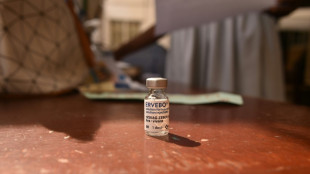
Anti-Covid drug may have led to virus mutations: study / Photo: PATRICIA DE MELO MOREIRA - AFP/File

An anti-Covid drug widely used across the world may have caused mutations in the virus, researchers said on Monday, but there was no evidence that the changes had led to more dangerous variants.
Pharmaceutical giant Merck's antiviral pill molnupiravir was one of the earliest treatments rolled out during the pandemic to prevent Covid becoming more severe in vulnerable people.
The drug, which is taken orally over a five-day course, works mainly by creating mutations in the virus with the goal of weakening and killing it.
However, a new UK-led study has shown that molnupiravir "can give rise to significantly mutated viruses which remain viable," lead author Theo Sanderson told AFP.
Sanderson, a geneticist at London's Francis Crick Institute, emphasised that there is no evidence that "molnupiravir has to date created more transmissible or more virulent viruses."
None of the variants that have swept the world were due to the drug, he added.
But "it is very difficult to predict whether molnupiravir treatment could potentially lead to a new widely circulating variant which people don't have prior immunity to," he added.
- Mutational signature -
For the study, which was published in the journal Nature, the researchers sifted through databases of more than 15 million genome sequences of SARS-CoV-2, the virus that causes the Covid disease.
The researchers used this data to track changes in how the virus mutated during the pandemic, finding signs of a particular "mutational signature" in patients they believe is linked to molnupiravir.
In 2022, as the drug was prescribed in huge numbers, there was a significant increase in patients who had this mutational signature, the study found.
This signature was more commonly found in countries where the drug was widely prescribed, such as the United States, UK, Australia and Japan.
But in countries where it was not approved, including Canada and France, it was rarer.
Merck refuted the study, saying the researchers had relied on "circumstantial associations" between where and when the sequences were taken.
"The authors assume these mutations were associated with viral spread from molnupiravir-treated patients without documented evidence of that transmission," Merck said in a statement sent to AFP.
Sanderson rebuffed this claim, saying the researchers had used "several independent lines of evidence to identify with confidence that molnupiravir drives this mutational signature".
That included a separate analysis of treatment data in England, which found that more than 30 percent of mutation events involving the signature were in people who had taken molnupiravir.
However, just 0.04 percent of people in England were prescribed the drug in 2022, the study said.
Other anti-Covid drugs do not work in the same manner, so would not cause these kinds of mutations, Sanderson said.
- 'Incredibly important' -
Experts not involved in the study seemed to side with the British researchers.
Stephen Griffin, a virologist at the UK's University of Leeds, said it was an "incredibly important, well-conducted piece of research".
Jonathan Ball, a virologist at the University of Nottingham, said the research showed a "strong link" between molnupiravir and the occasional, limited spread of highly mutated genomes.
"What isn't clear is if any of the transmitted viruses contained mutations which would change how they would behave -- for example if they were more or less transmissible, more pathogenic or less susceptible to our immunity," he added.
The experts emphasised that molnupiravir is not dangerous to people who are currently taking the drug.
They also did not call for the drug to be abandoned altogether.
Molnupiravir is already being used by itself "less and less" as its effectiveness had waned against vaccinated people who are not at risk, Griffin said.
While the existing research might suggest that molnupiravir should no longer be prescribed by itself, "it shouldn't be discarded and could still be valuable if we were to use it in drug combinations," he added.
Sales of molnupiravir, sold under the brand name Lagevrio, topped $20 billion last year. However sales fell 82 percent in the second quarter of 2023 compared to the same period last year, according to Merck.
(B.Hartmann--BBZ)