Berliner Boersenzeitung - Popular weight loss drugs linked to higher risk of stomach paralysis

EUR -
AED 4.246007
AFN 76.894412
ALL 93.248424
AMD 422.219573
AOA 1060.200548
ARS 1733.067587
AUD 1.635701
AWG 2.082538
AZN 1.960652
BAM 1.956405
BBD 2.322408
BDT 142.734126
BHD 0.434833
BIF 3452.267264
BMD 1.156162
BND 1.477557
BOB 13.704237
BRL 5.878856
BSD 1.153051
BTN 109.721073
BWP 15.563744
BYN 3.433447
BYR 22660.78355
BZD 2.319007
CAD 1.611742
CDF 2615.820009
CHF 0.934312
CLF 0.02682
CLP 1055.576434
CNY 7.801321
CNH 7.797096
COP 3650.340066
CRC 524.159776
CUC 1.156162
CUP 30.638304
CVE 110.296236
CZK 24.270279
DJF 205.33259
DKK 7.475775
DOP 67.310518
DZD 153.693346
EGP 57.714706
ERN 17.342436
ETB 186.10863
FJD 2.553443
FKP 0.857585
GBP 0.856156
GEL 3.018079
GGP 0.857585
GHS 13.528316
GIP 0.857585
GMD 84.980911
GNF 10126.955552
GTQ 8.797491
GYD 241.183453
HKD 9.070539
HNL 30.905421
HRK 7.534365
HTG 150.766609
HUF 363.454703
IDR 20538.069336
ILS 3.466464
IMP 0.857585
INR 110.147015
IQD 1510.466959
IRR 1590359.224806
ISK 142.612646
JEP 0.857585
JMD 183.115818
JOD 0.819729
JPY 183.485869
KES 149.56077
KGS 101.10619
KHR 4683.447881
KMF 492.524896
KRW 1640.253536
KWD 0.357104
KYD 0.960897
KZT 540.397715
LAK 26033.935768
LBP 103255.774835
LKR 386.757893
LRD 208.125242
LSL 18.73251
LTL 3.413847
LVL 0.699351
LYD 7.334236
MAD 10.746522
MDL 20.051112
MGA 4920.499886
MKD 61.581589
MMK 2427.420348
MNT 4155.540854
MOP 9.317581
MRU 46.35313
MUR 54.339702
MVR 17.862554
MWK 1999.409468
MXN 19.816182
MYR 4.732137
MZN 73.884528
NAD 18.732267
NGN 1574.207318
NIO 42.433118
NOK 10.993363
NPR 175.557514
NZD 1.96081
OMR 0.444544
PAB 1.153056
PEN 3.904873
PGK 5.095641
PHP 70.241488
PKR 320.115879
PLN 4.303664
PYG 6856.089901
QAR 4.214894
RON 5.236955
RSD 117.384082
RUB 95.549993
RWF 1695.516834
SAR 4.329547
SBD 9.325255
SCR 17.016079
SDG 694.270285
SEK 10.959668
SGD 1.478986
SLE 28.426733
SOS 659.000879
SRD 43.779826
STD 23930.227936
STN 24.507895
SVC 10.089119
SZL 18.728709
THB 38.135438
TJS 10.636896
TMT 4.05813
TND 3.387359
TRY 55.169782
TTD 7.815382
TWD 37.278161
TZS 3060.943464
UAH 51.642342
UGX 4294.417592
USD 1.156162
UYU 46.413947
UZS 13790.143929
VES 873.784093
VND 30253.302202
VUV 138.00696
WST 3.16062
XAF 656.157012
XAG 0.018007
XAU 0.000266
XCD 3.124586
XCG 2.078142
XDR 0.816049
XOF 656.157012
XPF 119.331742
YER 275.629091
ZAR 18.706951
ZMK 10406.850246
ZMW 21.763634
ZWL 372.283829
  • CMSC

    0.0240

    21.744

    +0.11%

  • BP

    -0.6000

    41.63

    -1.44%

  • BTI

    0.6000

    59.33

    +1.01%

  • RIO

    1.4500

    101.1

    +1.43%

  • AZN

    1.4100

    161.42

    +0.87%

  • BCE

    -0.0200

    22.75

    -0.09%

  • BCC

    2.3400

    86.6

    +2.7%

  • GSK

    0.7900

    52.96

    +1.49%

  • NGG

    0.4700

    80.88

    +0.58%

  • CMSD

    -0.1600

    21.82

    -0.73%

  • RBGPF

    0.7600

    70.5

    +1.08%

  • RYCEF

    0.2300

    20.85

    +1.1%

  • VOD

    0.1900

    16.19

    +1.17%

  • RELX

    0.0485

    35.52

    +0.14%

  • JRI

    0.1500

    12.81

    +1.17%

Popular weight loss drugs linked to higher risk of stomach paralysis
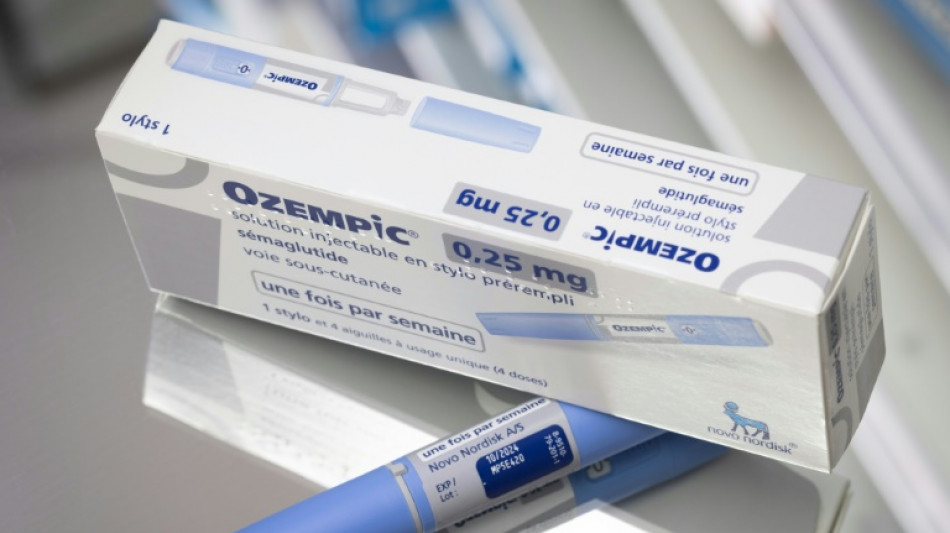
Popular weight loss drugs linked to higher risk of stomach paralysis / Photo: JOEL SAGET - AFP/File

Popular weight loss drugs linked to higher risk of stomach paralysis

Drugs like Ozempic, which have become increasingly popular for losing weight, heighten the risk of certain severe gastrointestinal problems including stomach paralysis, according to a large study published Thursday.

Text size:

The paper, published in the Journal of the American Medical Association (JAMA), looked at a class of drugs called GLP-1 agonists that includes the brands Wegovy, Ozempic, Rybelsus and Saxenda.

It then compared the rate of serious side effects to another class of weight loss drug, bupropion-naltrexone.

The GLP-1 agonists were associated with an almost four times increased risk of stomach paralysis, a nine times higher risk of pancreatitis and four times greater risk of bowel obstruction.

These conditions can cause hospitalization and require surgery, depending on their severity.

"Given the wide use of these drugs, these adverse events, although rare, must be considered by patients thinking about using them for weight loss," said lead author Mohit Sodhi, a medical student at the University of British Columbia in Canada, in a statement.

"The risk calculus will differ depending on whether a patient is using these drugs for diabetes, obesity or just general weight loss," he added. "People who are otherwise healthy may be less willing to accept these potentially serious adverse events."

Originally developed for managing Type 2 diabetes, GLP-1 agonists have soared in popularity in recent years as a means to lose weight, mainly through "off-label" use.

Saxenda and Wegovy were approved for weight loss in 2020 and 2021, but the clinical trials used to greenlight them involved too few people with too short a follow-up time to detect very rare events, the researchers said.

Epidemiologist and co-author Mahyar Etminan said that while there had been anecdotal reports of some patients using these drugs for weight loss and then having repeated episodes of nausea and vomiting as a result of stomach paralysis, the current study was the first to examine the question at a larger scale.

The authors trawled through US patient records searching for people prescribed liraglutide or semaglutide -- the two main GLP-1 agonists -- or bupropion/naltrexone, a non GLP-1 weight loss medication, to see how many went on to develop certain gastrointestinal conditions.

Their analysis included patients with a recent history of obesity, but excluded those with diabetes or who had been prescribed another antidiabetic drug. Just over 5,400 records were included in the final analysis.

"The results from this study highlight how important it is that patients access these drugs only through trusted medical professionals, and only with ongoing support and monitoring," said Simon Cork, a senior lecturer at Anglia Ruskin University, who was not involved in the research.

"It is vital that regulation is tightened to ensure that these drugs are only prescribed under the right circumstances."

(T.Burkhard--BBZ)