Berliner Boersenzeitung - Bird flu detected in Antarctica region for first time

EUR -
AED 4.309789
AFN 77.522604
ALL 96.452418
AMD 447.213117
ANG 2.100682
AOA 1076.126462
ARS 1685.7607
AUD 1.76051
AWG 2.115287
AZN 1.993253
BAM 1.955857
BBD 2.359259
BDT 143.144198
BGN 1.955587
BHD 0.442413
BIF 3462.00154
BMD 1.173529
BND 1.515151
BOB 8.094237
BRL 6.344691
BSD 1.171329
BTN 105.730101
BWP 16.534415
BYN 3.436801
BYR 23001.176619
BZD 2.355859
CAD 1.616367
CDF 2622.838325
CHF 0.932685
CLF 0.027349
CLP 1072.899254
CNY 8.282829
CNH 8.276686
COP 4463.225764
CRC 583.319594
CUC 1.173529
CUP 31.09853
CVE 110.268234
CZK 24.20638
DJF 208.585229
DKK 7.468916
DOP 75.01252
DZD 152.148165
EGP 55.781731
ERN 17.602941
ETB 182.402627
FJD 2.666029
FKP 0.874075
GBP 0.876409
GEL 3.166214
GGP 0.874075
GHS 13.447394
GIP 0.874075
GMD 85.667973
GNF 10188.29882
GTQ 8.971263
GYD 245.027187
HKD 9.133562
HNL 30.839036
HRK 7.533821
HTG 153.403192
HUF 382.819396
IDR 19544.428361
ILS 3.767053
IMP 0.874075
INR 106.032314
IQD 1534.445005
IRR 49417.324315
ISK 148.193336
JEP 0.874075
JMD 187.664705
JOD 0.831989
JPY 182.722635
KES 151.056581
KGS 102.625144
KHR 4689.117552
KMF 492.882831
KPW 1056.172054
KRW 1729.271869
KWD 0.359863
KYD 0.976129
KZT 609.927889
LAK 25405.745144
LBP 104895.276551
LKR 362.240624
LRD 206.746064
LSL 19.837382
LTL 3.465127
LVL 0.709856
LYD 6.362159
MAD 10.774816
MDL 19.948585
MGA 5195.130237
MKD 61.549725
MMK 2464.726504
MNT 4162.950817
MOP 9.388575
MRU 46.43356
MUR 54.064706
MVR 18.084166
MWK 2031.150919
MXN 21.161667
MYR 4.815044
MZN 74.986324
NAD 19.837382
NGN 1700.89023
NIO 43.101264
NOK 11.80824
NPR 169.168682
NZD 2.018951
OMR 0.451212
PAB 1.171334
PEN 3.947916
PGK 4.970125
PHP 69.353212
PKR 329.443459
PLN 4.224125
PYG 8005.200683
QAR 4.269125
RON 5.090303
RSD 117.395216
RUB 92.994803
RWF 1704.942741
SAR 4.403629
SBD 9.658842
SCR 17.671485
SDG 705.870976
SEK 10.85483
SGD 1.515513
SHP 0.880451
SLE 28.276841
SLL 24608.322975
SOS 668.216752
SRD 45.283569
STD 24289.689633
STN 24.500614
SVC 10.249301
SYP 12977.3351
SZL 19.831497
THB 37.154535
TJS 10.799917
TMT 4.107353
TND 3.434501
TOP 2.825577
TRY 50.089781
TTD 7.949233
TWD 36.643453
TZS 2879.53369
UAH 49.442839
UGX 4165.122162
USD 1.173529
UYU 46.121353
UZS 14080.412975
VES 310.674152
VND 30879.07961
VUV 142.567587
WST 3.267043
XAF 655.973445
XAG 0.018437
XAU 0.000275
XCD 3.171522
XCG 2.111062
XDR 0.81582
XOF 655.973445
XPF 119.331742
YER 279.74007
ZAR 19.796796
ZMK 10563.176488
ZMW 26.853673
ZWL 377.875994
  • SCS

    0.0200

    16.14

    +0.12%

  • BCC

    -0.7500

    76.26

    -0.98%

  • CMSC

    0.1300

    23.43

    +0.55%

  • NGG

    0.0500

    74.69

    +0.07%

  • CMSD

    0.1200

    23.4

    +0.51%

  • BP

    -0.3500

    35.53

    -0.99%

  • RIO

    0.5000

    76.74

    +0.65%

  • GSK

    0.4700

    48.88

    +0.96%

  • BTI

    -0.3900

    58.37

    -0.67%

  • AZN

    -1.2200

    90.29

    -1.35%

  • BCE

    0.2100

    23.4

    +0.9%

  • JRI

    0.0000

    13.72

    0%

  • RBGPF

    0.0000

    81.17

    0%

  • RYCEF

    -0.1000

    14.64

    -0.68%

  • RELX

    0.2000

    40.28

    +0.5%

  • VOD

    -0.0200

    12.54

    -0.16%

Bird flu detected in Antarctica region for first time
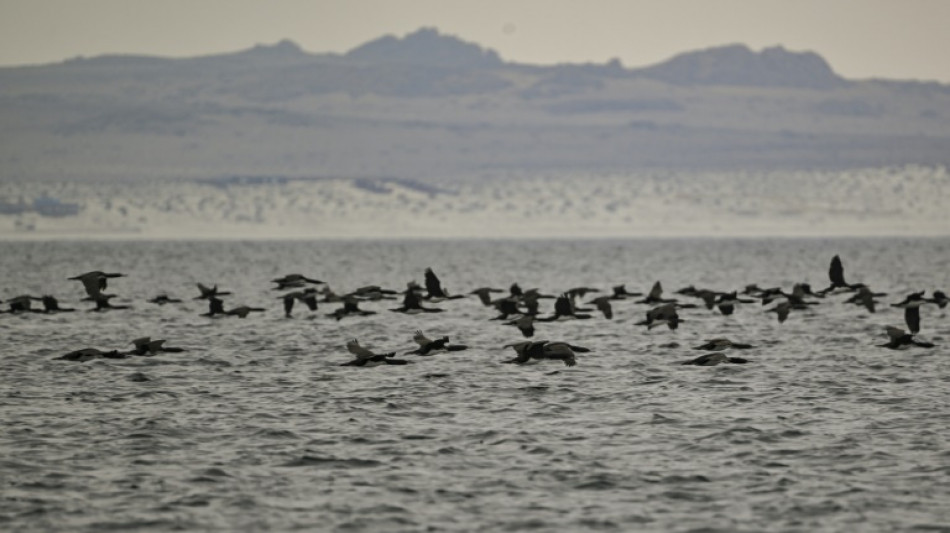
Bird flu detected in Antarctica region for first time / Photo: MARTIN BERNETTI - AFP/File

Bird flu detected in Antarctica region for first time

Bird flu has been detected in the Antarctica region for the first time, according to British experts, raising concerns the deadly virus could pose a threat to penguins and other local species.

Text size:

Scientists had been fearing that the worst outbreak of Highly Pathogenic Avian Influenza (HPAI) in history would reach Antarctica, a key breeding ground for many birds.

The British Antarctic Survey said its staff took samples from brown skua seabirds after they died on Bird Island in South Georgia, a British overseas territory east of South America's tip and north of Antarctica's main landmass.

The tests were sent to Britain and came back positive, the UK's polar research institute said in a statement on Monday.

The virus was most likely brought by birds returning from their migration to South America, where there has been a huge number of bird flu cases, it added.

Visitors to South Georgia and the South Sandwich Islands are under enhanced biosecurity measures, and scientific field work involving birds there has been stopped, the statement said.

There have been regular bird flu outbreaks since the virus first emerged in 1996.

Since mid-2021, much larger outbreaks started to spread southward to previously untouched areas including South America, leading to mass deaths among wild birds and tens of millions of poultry being culled.

- 'Devastating news' -

Michelle Wille, a bird flu expert at the University of Melbourne, said the spread of bird flu to the Antarctica region was "devastating news".

"The situation could change rapidly," she wrote on X, formerly Twitter.

Ian Brown, virology head at the UK's Animal and Plant Health Agency, warned last week that there was a risk migrating birds could spread the virus from South America to the Antarctica islands and then onto the main landmass.

This could be a "real concern" for populations of birds such as penguins that are unique to Antarctica, he told journalists.

Birds such as penguins that have never before been exposed to the virus would have no prior immunity, potentially making them more vulnerable.

In better news, the Animal Plant Health Agency also said last week that preliminary research had confirmed that the populations of two seabirds -- northern gannets and shag -- had shown immunity to bird flu.

Humans rarely catch bird flu, but when they do it is usually via direct contact with infected birds.

Earlier this month, a two-year-old girl died from bird flu in Cambodia, the third death recorded in the country this year.

The virus has also been detected in a growing number of mammals, raising fears it could mutate into a version that is more transmissible between humans.

(Y.Berger--BBZ)