Berliner Boersenzeitung - Medical AI paper predicts autonomous systems could outperform doctors in core clinical tasks by 2030

EUR -
AED 4.125482
AFN 71.893569
ALL 91.0039
AMD 404.558002
ANG 2.010545
AOA 1030.107049
ARS 1735.583297
AUD 1.619807
AWG 2.024828
AZN 1.910204
BAM 1.958466
BBD 2.263281
BDT 139.960554
BGN 1.963416
BHD 0.424164
BIF 3358.231968
BMD 1.123344
BND 1.434579
BOB 13.568473
BRL 6.183791
BSD 1.12373
BTN 106.108465
BWP 15.39496
BYN 3.352865
BYR 22017.550536
BZD 2.259977
CAD 1.57435
CDF 2600.542712
CHF 0.915868
CLF 0.027919
CLP 1098.822164
CNY 7.513489
CNH 7.486495
COP 3640.051542
CRC 509.577905
CUC 1.123344
CUP 26.968717
CVE 110.417297
CZK 24.332089
DJF 200.102436
DKK 7.474515
DOP 67.47977
DZD 152.90291
EGP 60.551405
ERN 16.850166
ETB 184.424845
FJD 2.531232
FKP 0.834686
GBP 0.834538
GEL 2.926316
GGP 0.834686
GHS 13.107846
GIP 0.834686
GMD 83.70208
GNF 9953.241063
GTQ 8.587845
GYD 235.440548
HKD 8.804768
HNL 30.201177
HRK 7.60393
HTG 147.273132
HUF 364.247802
IDR 20312.59455
ILS 3.596107
IMP 0.834686
INR 106.111844
IQD 1703.519314
IRR 2124640.828982
ISK 136.811552
JEP 0.834686
JMD 178.232661
JOD 0.796453
JPY 176.953143
KES 145.923453
KGS 98.235688
KHR 4572.306526
KMF 495.394853
KPW 1011.00993
KRW 1523.687494
KWD 0.348877
KYD 0.936475
KZT 505.2579
LAK 25290.432511
LBP 100627.803113
LKR 373.578621
LRD 191.030084
LSL 18.415172
LTL 3.316944
LVL 0.6795
LYD 7.193794
MAD 10.950909
MDL 20.091354
MGA 5094.936673
MKD 61.583069
MMK 2358.849304
MNT 4045.672704
MOP 9.080062
MRU 45.396392
MUR 52.516314
MVR 17.361247
MWK 1948.552923
MXN 21.089904
MYR 4.546283
MZN 71.792986
NAD 18.415172
NGN 1511.044247
NIO 41.355016
NOK 10.443256
NPR 169.767847
NZD 2.007709
OMR 0.431927
PAB 1.12373
PEN 3.87057
PGK 5.11881
PHP 70.830279
PKR 310.788734
PLN 4.40337
PYG 6923.426132
QAR 4.107666
RON 5.336228
RSD 117.599566
RUB 91.557495
RWF 1655.253601
SAR 4.216259
SBD 9.044852
SCR 15.559092
SDG 675.690666
SEK 11.0154
SGD 1.435527
SHP 0.837504
SLE 25.735739
SLL 23555.975653
SOS 642.17431
SRD 42.18947
STD 23250.961369
STN 24.532636
SVC 9.832387
SYP 14605.723731
SZL 18.408062
THB 37.566904
TJS 10.366213
TMT 3.942939
TND 3.348519
TOP 2.704743
TRY 56.343251
TTD 7.610361
TWD 37.208531
TZS 2968.433722
UAH 51.044897
UGX 4545.1882
USD 1.123344
UYU 45.26243
UZS 13409.256484
VES 1004.010383
VND 28850.292941
VUV 134.41388
WST 3.126448
XAF 655.957
XAG 0.021615
XAU 0.000273766094
XCD 3.035895
XCG 2.025157
XDR 0.794263
XOF 655.957
XPF 119.331742
YER 265.305896
ZAR 18.508674
ZMK 10111.448972
ZMW 22.783019
ZWL 361.716443
SSP 6454.193881
MXV 2.373304
  • CMSD

    -0.1200

    19.81

    -0.61%

  • JRI

    0.0000

    10.77

    0%

  • BCC

    -1.8200

    74.15

    -2.45%

  • CMSC

    -0.2228

    19.53

    -1.14%

  • BCE

    0.2000

    20.34

    +0.98%

  • RIO

    0.0100

    94.17

    +0.01%

  • AZN

    -2.7400

    161.47

    -1.7%

  • GSK

    -1.1800

    48.17

    -2.45%

  • RBGPF

    0.0000

    65

    0%

  • NGG

    0.8800

    75.82

    +1.16%

  • RYCEF

    -0.7300

    19.08

    -3.83%

  • BTI

    -0.4500

    54.4

    -0.83%

  • BP

    0.4700

    43.99

    +1.07%

  • RELX

    -0.0600

    33.18

    -0.18%

  • VOD

    -0.1800

    16.15

    -1.11%

Medical AI paper predicts autonomous systems could outperform doctors in core clinical tasks by 2030

Medical AI paper predicts autonomous systems could outperform doctors in core clinical tasks by 2030

A JAMA article argues that autonomous AI could surpass both doctors and doctor-AI teams in several core medical tasks by 2030, a forecast disputed by medical leaders.

Text size:

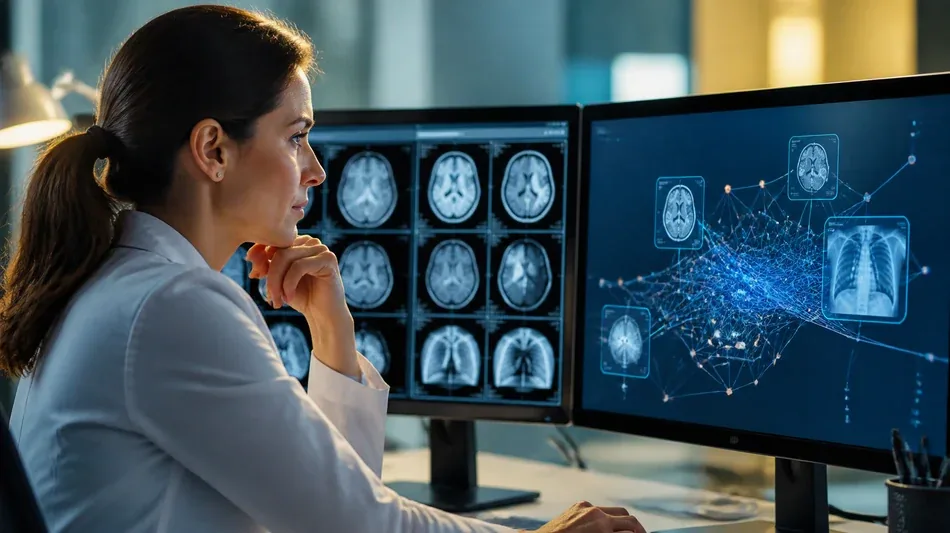
A paper published in the Journal of the American Medical Association has intensified debate over how far artificial intelligence could replace physicians in routine clinical work. The authors, including medical ethicist and oncologist Ezekiel Emanuel and investor Vinod Khosla, argue that autonomous AI is approaching a point where it could outperform both doctors and physicians working with AI on five fundamental tasks: taking medical histories, diagnosing disease, choosing tests, prescribing treatment and managing chronic conditions.The authors reviewed medical-AI studies published since January 1, 2024, and concluded that in many cases a superior autonomous system could surpass human-AI combinations by 2030. The paper discloses relevant financial interests and professional relationships, including Vinod Khosla's investments and the role of his son Neal Khosla, who runs the AI-enabled health service Curai Health.The conclusion is contested. American Medical Association chief executive John Whyte said some of the evidence is based on simulations rather than blinded real-world trials and does not uniformly support the paper's forecast. A Nature study published in February 2026 also found that many patients had difficulty interacting effectively with large language models in real-life settings.Robert Wachter, chair of medicine at the University of California, San Francisco, said the assumption that human-AI teams will always outperform AI alone may not hold in every situation. At the same time, he argued that physicians retain important roles in communication, empathy and helping patients make difficult choices. Medical educators are also considering whether heavy reliance on AI could weaken training in basic history-taking, physical examination and clinical judgment.The debate is therefore shifting from whether AI will be used in medicine to how responsibility should be divided between automated systems and clinicians. Even proponents of greater autonomy expect humans to remain essential in areas such as surgery, emergency care, procedures and conversations where trust and empathy are central.

(F.Schuster--BBZ)