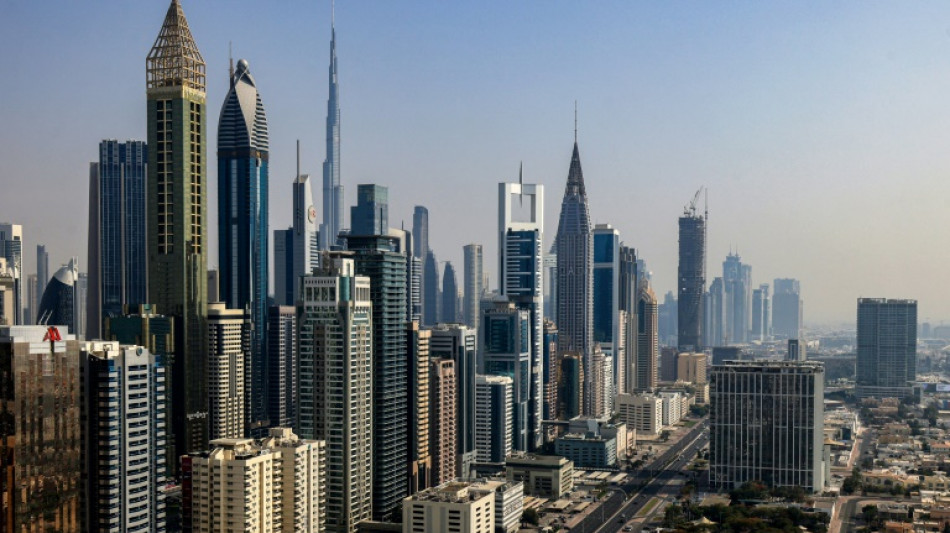
COP host UAE emissions plan 'insufficient': analysis / Photo: Karim SAHIB - AFP

New carbon-cutting plans by this year's UN climate talks host the United Arab Emirates were branded "insufficient" by an analysis on Thursday that slammed the oil-rich nation for undermining its own targets with plans to increase fossil fuel production.
The UAE, which will host the COP28 United Nations talks in November and December, released its updated climate plans last week, laying out a tougher target to reduce its greenhouse gas emissions by 19 percent by 2030 compared to 2019 levels.
But Climate Action Tracker, an analysis project run by non-profit climate organisations, said that while this marked an improvement on the UAE's previous plan, its intention to increase fossil fuel production would render it "unachievable".
"While the UAE has updated its target, when so many governments have not, it has a long way to go on a number of levels, including policies to meet its target, and weaning itself off fossil fuels," said Santiago Woollands of NewClimate Institute, one of the groups behind the analysis.
The world remains far off track on the Paris Agreement's goals to curb global warming to two degrees Celsius -- and preferably 1.5C.
Meanwhile, global temperatures have hit record highs this month and people across the planet have been pounded by floods, storms and crop-withering heatwaves.
- 'Not there yet' -
UN climate experts have said global emissions must be slashed by 43 percent by 2030 from 2019 levels to keep the 1.5C limit within reach.
Last week the UAE's climate change minister acknowledged that the country's updated Nationally Determined Contribution (NDC) fell short of the Paris goal, promising to do more in the future.
"We're not there yet," Mariam Almheiri said.
Climate Action Tracker welcomed improvements to the UAE's targets and reporting methods.
But it said there was a "worryingly large" gap between the country's current policies, its NDC and the kind of action needed to align with 1.5C -- and few details about how it would reach net-zero emissions by mid-century.
The target it has released looks just at domestic emissions, so does not include planet-warming pollution from oil exported by the UAE, which is currently producing about three million barrels per day according to OPEC.
State oil giant ADNOC also plans to invest $150 billion in oil and gas expansion, despite the warnings from UN climate experts that no new fossil fuel facilities are compatible with 1.5C.
The country does however include a target to triple renewable energy production and slash emissions in everything from industry to transport, including a new focus on electric cars.
ADNOC CEO Sultan Al Jaber, who will head up the climate talks, has said he expects fossil fuels to continue to play a role, albeit reduced and with the use of often controversial technologies to "abate", or neutralise, the emissions.
The latest plan mentions schemes to develop carbon capture and storage -- stopping carbon pollution from being released from power stations -- as well as directly sucking the carbon from the air.
But Climate Action Tracker raised concerns about a reliance on this technology, saying that it failed to specify "the scale of emissions reductions and removals this would represent".
(P.Werner--BBZ)