Berliner Boersenzeitung - Australia gives up fight to eradicate bee-killing parasite

EUR -
AED 4.229821
AFN 74.864237
ALL 93.228828
AMD 421.085566
AOA 1056.160267
ARS 1720.733086
AUD 1.637784
AWG 2.076039
AZN 1.954916
BAM 1.955775
BBD 2.318931
BDT 142.528208
BHD 0.434189
BIF 3440.726871
BMD 1.151756
BND 1.477381
BOB 13.98346
BRL 5.846768
BSD 1.151366
BTN 109.880188
BWP 15.656803
BYN 3.393457
BYR 22574.408206
BZD 2.315671
CAD 1.619057
CDF 2605.270629
CHF 0.931862
CLF 0.026904
CLP 1062.322075
CNY 7.777342
CNH 7.775035
COP 3736.43312
CRC 522.084371
CUC 1.151756
CUP 30.521521
CVE 110.263614
CZK 24.202703
DJF 205.024752
DKK 7.475452
DOP 67.149156
DZD 153.146465
EGP 57.871799
ERN 17.276333
ETB 185.837664
FJD 2.548778
FKP 0.857335
GBP 0.856578
GEL 3.006302
GGP 0.857335
GHS 13.488479
GIP 0.857335
GMD 85.229454
GNF 10111.872879
GTQ 8.78189
GYD 241.04383
HKD 9.033562
HNL 30.861746
HRK 7.534208
HTG 150.536801
HUF 362.376716
IDR 20712.019529
ILS 3.484118
IMP 0.857335
INR 109.655937
IQD 1508.281039
IRR 1583951.78019
ISK 141.999677
JEP 0.857335
JMD 182.047711
JOD 0.816595
JPY 181.232211
KES 149.014032
KGS 100.721368
KHR 4660.900938
KMF 492.951678
KRW 1642.904407
KWD 0.356388
KYD 0.959467
KZT 542.391408
LAK 26041.672617
LBP 103089.392874
LKR 386.57514
LRD 207.822876
LSL 18.980961
LTL 3.400835
LVL 0.696685
LYD 7.334908
MAD 10.727965
MDL 20.154309
MGA 4902.938363
MKD 61.529226
MMK 2418.302526
MNT 4128.236531
MOP 9.301781
MRU 46.030421
MUR 54.17888
MVR 17.794357
MWK 1996.448901
MXN 19.912067
MYR 4.713674
MZN 73.578865
NAD 18.981044
NGN 1570.371947
NIO 42.369467
NOK 10.994201
NPR 175.81079
NZD 1.956723
OMR 0.442841
PAB 1.151386
PEN 3.895551
PGK 5.083936
PHP 70.025536
PKR 319.707481
PLN 4.306816
PYG 6864.943499
QAR 4.197165
RON 5.250796
RSD 117.352727
RUB 93.295072
RWF 1695.341888
SAR 4.314394
SBD 9.295999
SCR 15.438728
SDG 691.053528
SEK 10.992758
SGD 1.476953
SLE 28.160726
SOS 657.991728
SRD 43.543221
STD 23839.013893
STN 24.499267
SVC 10.074873
SZL 18.977597
THB 38.375353
TJS 10.627028
TMT 4.031144
TND 3.382357
TRY 54.772537
TTD 7.816902
TWD 37.32091
TZS 3055.023466
UAH 51.483653
UGX 4311.870919
USD 1.151756
UYU 46.389618
UZS 13747.827169
VES 861.341978
VND 30249.131118
VUV 137.224539
WST 3.146845
XAF 655.948754
XAG 0.019431
XAU 0.000283
XCD 3.112677
XCG 2.075074
XDR 0.816719
XOF 655.948754
XPF 119.331742
YER 274.582072
ZAR 18.940458
ZMK 10367.187916
ZMW 21.786321
ZWL 370.864808
  • CMSC

    0.0300

    21.79

    +0.14%

  • RYCEF

    0.4500

    20.65

    +2.18%

  • BCC

    1.9500

    84.98

    +2.29%

  • RIO

    2.5100

    98.41

    +2.55%

  • BP

    -1.6850

    42.575

    -3.96%

  • GSK

    -0.2100

    51.3

    -0.41%

  • BTI

    -0.0500

    59.51

    -0.08%

  • JRI

    0.0400

    12.86

    +0.31%

  • CMSD

    0.0900

    22.11

    +0.41%

  • RELX

    0.3500

    36.51

    +0.96%

  • AZN

    -1.5000

    156.47

    -0.96%

  • VOD

    0.0450

    15.655

    +0.29%

  • BCE

    -0.1900

    21.6

    -0.88%

  • NGG

    -0.5800

    79.28

    -0.73%

  • RBGPF

    3.9500

    69.95

    +5.65%

Australia gives up fight to eradicate bee-killing parasite
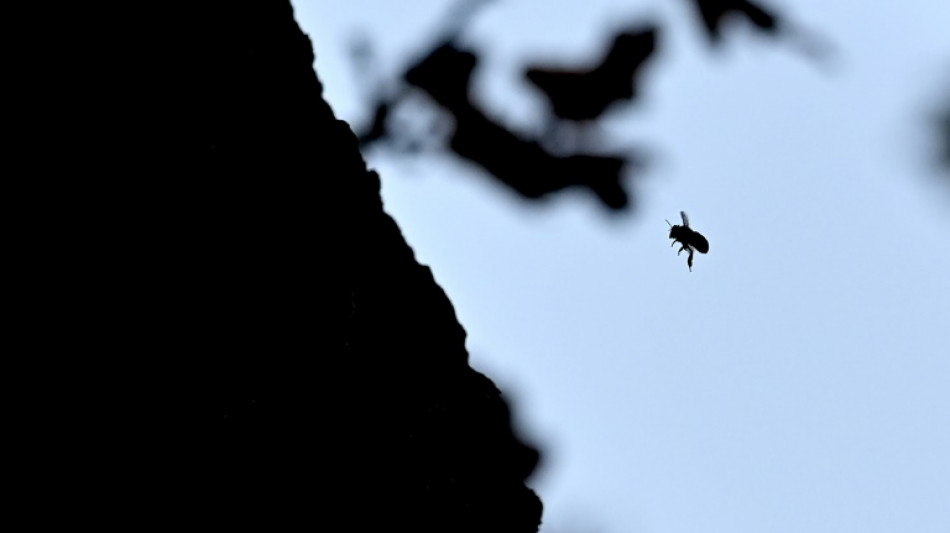
Australia gives up fight to eradicate bee-killing parasite / Photo: Ben STANSALL - AFP/File

Australia gives up fight to eradicate bee-killing parasite

Australia on Wednesday abandoned its fight to eradicate the destructive Varroa mite, an invasive parasite responsible for the collapse of honeybee populations across the planet.

Text size:

Desperate to keep Varroa out of the country, authorities have destroyed more than 14,000 infected beehives since the tiny red-brown pest was first detected north of Sydney in June 2022.

The government on Wednesday conceded its US$64 million eradication plan could not stop the mite from spreading, saying the country's beekeepers should now prepare to live with the incursion.

"The recent spike in new detections have made it clear that the Varroa mite infestation is more widespread and has also been present for longer than first thought," officials said in a statement.

Australia was one of the last major beekeeping countries to successfully keep Varroa at bay.

Smaller than a peppercorn, Varroa mites attach themselves to honeybees and slowly feast on their body tissue from the outside -- eventually spreading through hives and causing colony collapse.

They are the "most serious pest of honeybees worldwide", according to the Australian government.

Australian National University ecologist Saul Cunningham said the Varroa infestation would also damage agricultural industries reliant on pollination.

"Varroa mite will cause significant economic damage in agriculture, and so it is vital that we focus on adaptation to life with Varroa," Cunningham said.

Australia's native honeybees have proven resilient to Varroa mites but do not currently play a major role in honey production or agricultural pollination.

University of Sunshine Coast researcher Volker Herzig said the "final nail in the coffin" was a government decision that allowed beekeepers to transport their hives across state boundaries to help with pollination.

Every year, some 270,000 beehives are trucked into the state of Victoria to pollinate almond orchards -- an annual pilgrimage billed as the "largest movement of livestock" in Australia.

Herzig said Australia must "now find permanent solutions for managing our beehives", which "most other countries around the world" have been doing for years.

The government's decision was "quite a shock", said native bee researcher James Dorey of Flinders University.

"The impacts of this decision will be felt for decades to come in how beekeepers manage their hives and how farmers pollinate their crops," he said.

"In particular, farmers may not be able to rely on passive pollination from feral honeybees any longer."

(P.Werner--BBZ)