How Belize became a poster child for 'debt-for-nature' swaps / Photo: Pedro PARDO - AFP/File

When Covid hit Belize, its economy nosedived: closed borders meant fisheries and farmers had no export markets, and tourism centered on the tiny Central American nation's warm waters and wonders of biodiversity came to a halt.
"We lost approximately 14 percent of GDP," Prime Minister John Antonio Briceno told AFP in an interview. Nearly a third of the workforce of the country's 400,000 people were unemployed and there wasn't enough money "to keep the lights on," let alone maintain onerous debt repayments.
Then came a lifeline: environmental nonprofit The Nature Conservancy (TNC) offered to lend Belize money to pay off creditors if it promised to put part of the savings into marine protection.
So-called "debt-for-nature-swaps" are being hailed as an innovative financial tool for preserving ecosystems from climate change and overexploitation, even as critics warn their generosity is overstated and they are far from a cure-all.
Finalized in November 2021, a year after Briceno took office, the deal involved TNC buying back a $553 million "superbond" which held the government's entire commercial debt, negotiating a discount of 45 percent.
This was converted into a $364 million loan "blue bonds" in a sale arranged by Credit Suisse, unlocking $180 million for marine conservation over 20 years.
"For us, it was a win-win, it gave us a breather," said Briceno. Notably, the buyback reduced the country's debt-to-GDP ratio by more than 10 percent.
- Old idea, bigger scale -
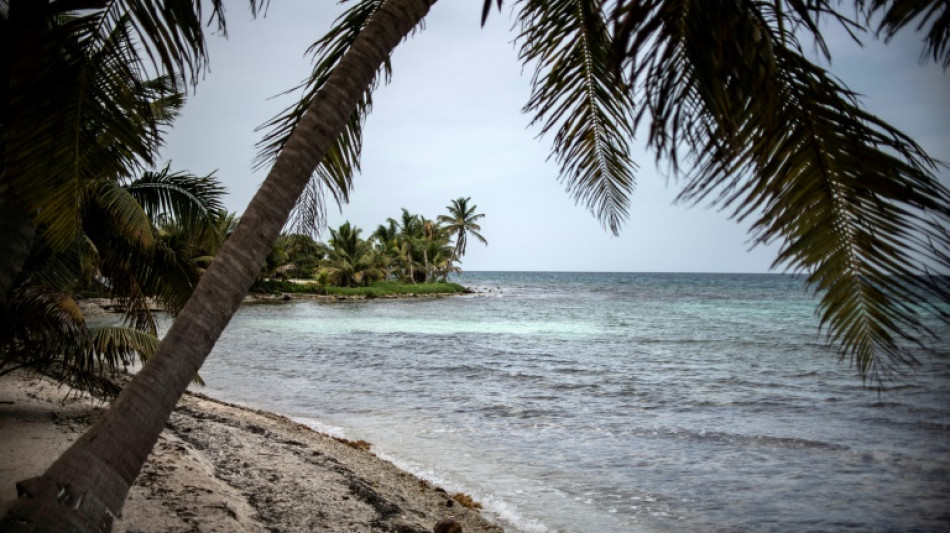
Belize's coastline is home to the largest barrier reef in the northern hemisphere, providing significant habitat for threatened species including manatees, turtles and crocodiles.
But warming oceans from climate change, excessive fishing, and coastal development all pose major challenges.
Under the terms of the deal, Belize agreed to expand protection to 30 percent of its territorial waters, and spend $4.2 million annually on marine conservation.
Since then, TNC signed similar agreements with Barbados and Gabon. Ecuador negotiated the biggest swap of all in May, reducing its debt obligations by about $1.1 billion to benefit the Galapagos Islands under an arrangement overseen by Pew Bertarelli Ocean Legacy Project.
Slav Gatchev, managing director of sustainable debt at TNC, told AFP that although the first debt-for-nature swaps happened in the 1980s, now they operate at a far larger scale.
"A third of the outstanding commercial debt to lower and middle income countries is in some form of distress," he said, meaning environmental ministry budgets are stretched and it's hard for governments to invest in nature.
He sees an opportunity to refinance up to $1 trillion of the commercial and bilateral debt, in turn generating $250 billion for climate and nature.
- Paper parks? -
Andre Standing, a researcher for groups including the Coalition for Fair Fisheries Arrangements, told AFP the Belize deal was only possible because the country was about to default and it was therefore better for creditors to accept a lump sum -- rather than the altruistic act it was portrayed as by some.
Moreover, he added, such deals do nothing to address the debt crisis plaguing developing countries.
"That's true, but it's not intended to," Esteban Brenes, who leads conservation finance for the World Wide Fund for Nature (WWF), which is also looking to organize new debt swaps, told AFP.
"We're going to take a piece of the debt and use some proceeds for something better, but by no means are we going to solve the big problem," he said.
Another concern has been that countries might agree to lofty commitments to secure concessions but then fall to "paper park syndrome" where protections exist only in theory.
But Gatchev said the commitments are legally binding and governments could incur fees for breaking them.
"Our reputation as the world's largest conservation organization is on the line here, and we have no incentive to sugarcoat lack of compliance," he stressed.
Briceno, for his part, said the high-profile deal had increased environmental consciousness among his people, who were now quick to report illegal mangrove dredging, for instance.
The debt restructure was "a very good start," he continued, but his country needed far more assistance from the Global North.
"Developed countries destroyed their environment to be able to have development: high-rises, big vehicles, nice fancy homes," said Briceno.
"Now we want the same and you're telling us 'we can't afford you to destroy what we have destroyed' -- then pay us."
(A.Lehmann--BBZ)