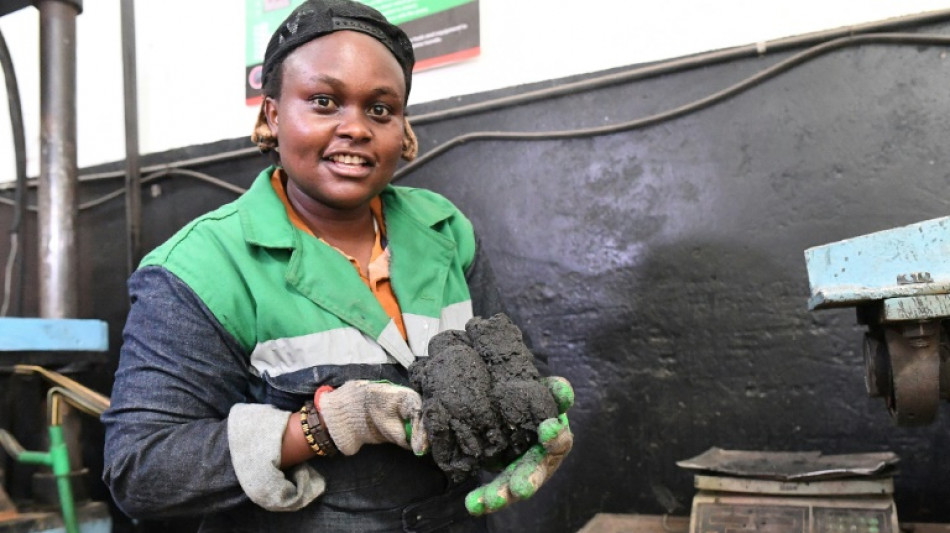
'Trash has value': Kenyan inventor turns plastic into bricks

"Plastic still has value," said Nzambi Matee of the mountains of discarded oil drums, laundry buckets, yoghurt tubs and other trash being shredded into colourful flakes at her Nairobi factory.
"I believe that plastic is one of the misunderstood materials."
The 30-year-old Kenyan engineer and inventor would know: her start-up recycles tonnes of plastic destined for landfill into eco-friendly bricks that are stronger, cheaper and lighter than concrete.
A creation of her own design, these sustainable paving blocks already line roads, driveways and sidewalks in Nairobi, but could soon also serve as an alternative building material for low-cost housing.
Every day her enterprise, Gjenge Makers, churns out 1,500 bricks made from industrial and household plastic that otherwise would be dumped in the city's overflowing garbage heaps.
The young entrepreneur quit a job in oil and gas -- the very industry that makes plastic from fossil fuels -- to explore recycling after being shocked at how little trash was being reused.
"In Nairobi we generate about 500 metric tonnes of plastic waste every single day, and only a fraction of that is recycled," said Matee, who bounds with energy around the factory floor in denim overalls and trainers.
"And that made me think -- what happens to this plastic?"
- Stronger, lighter, cheaper -
Most winds up in landfill, rivers and oceans, and less than 10 percent is recycled.
In Nairobi, one of Africa's fastest-growing capitals, Matee found an endless supply of raw material to work with, scouring the city's tips and industrial zones for unwanted plastic.
It took several years to perfect a prototype -- the machinery required was custom built and sourced from spare industrial parts -- but by 2019 production was steadily underway.
The shredded plastic is mixed with sand and subjected to extreme heat, producing a sludge that is moulded into different sized blocks.
The end result is a paver that is anywhere between two and seven times stronger than concrete, half the weight, and as much as 15 percent cheaper, says Matee.
It is also more durable.
Plastic is fibrous in nature, and the unique production process prevents air pockets from forming within the bricks. This results in greater compression strength than conventional paving stones that crack under heavy force or prolonged weather exposure.
"Because of that, it doesn't break," said Matee, clapping two of the plastic bricks together sharply.
In 2021, they recycled 50 tonnes of plastic but Matee hopes to double that amount this year as production expands.
- Big plans -
There are limitations.
Of the seven major types of plastic, only four can be recycled into bricks.
PET plastic -- the kind used in plastic bottles and a major scourge on the environment -- is not yet compatible, but they hope to change that.
"There is more that can be done, there is more that needs to be done. We are just a single drop in the ocean... small, small drops will make a big effect," Matee said.
They are trying to break into the affordable housing market by designing a block that can replace or complement bricks, mortar and other standard building materials.
A prototype is in the works, with plans to build a model home by the end of the year.
"We want to be the leaders in alternative building products. Our first area of attack is plastic," Matee said.
Her trailblazing work has attracted accolades, and earned another boost earlier this year after she designed a custom gavel for a major UN environment summit where the plastic trash crisis topped the agenda.
Gjenge Makers has also created over 100 direct and indirect jobs through recycling plastic –- helping both livelihoods and the environment in a way Matee says wasn't possible working with fossil fuels.
"Let's just say I sleep better," she said with a grin.
(Y.Yildiz--BBZ)