Berliner Boersenzeitung - Freshwater fish swim into trouble as climate change increases threat: IUCN

EUR -
AED 4.235181
AFN 72.652685
ALL 96.063881
AMD 433.704627
ANG 2.064353
AOA 1057.499887
ARS 1610.206312
AUD 1.624146
AWG 2.07579
AZN 1.96188
BAM 1.95537
BBD 2.316929
BDT 141.168957
BGN 1.971203
BHD 0.435402
BIF 3416.033994
BMD 1.153216
BND 1.47017
BOB 7.950252
BRL 5.990977
BSD 1.150367
BTN 106.247636
BWP 15.633122
BYN 3.450956
BYR 22603.041528
BZD 2.313921
CAD 1.579734
CDF 2612.035303
CHF 0.905875
CLF 0.026502
CLP 1046.440069
CNY 7.942028
CNH 7.93722
COP 4267.604159
CRC 539.286086
CUC 1.153216
CUP 30.560235
CVE 110.240758
CZK 24.440233
DJF 204.842982
DKK 7.472479
DOP 70.225166
DZD 152.359466
EGP 60.255785
ERN 17.298246
ETB 179.61526
FJD 2.546936
FKP 0.867021
GBP 0.863736
GEL 3.124951
GGP 0.867021
GHS 12.535243
GIP 0.867021
GMD 84.758236
GNF 10082.739062
GTQ 8.813062
GYD 240.707068
HKD 9.039458
HNL 30.451568
HRK 7.533156
HTG 150.916159
HUF 388.682936
IDR 19557.397004
ILS 3.574336
IMP 0.867021
INR 106.538457
IQD 1507.162036
IRR 1515326.355866
ISK 143.598865
JEP 0.867021
JMD 180.991769
JOD 0.817659
JPY 183.28126
KES 149.236476
KGS 100.848857
KHR 4616.964699
KMF 492.423264
KPW 1037.945396
KRW 1714.158155
KWD 0.353669
KYD 0.958785
KZT 554.36569
LAK 24689.463672
LBP 103028.590428
LKR 358.27966
LRD 210.543701
LSL 19.247284
LTL 3.405149
LVL 0.697569
LYD 7.364231
MAD 10.788828
MDL 20.070499
MGA 4789.199319
MKD 61.626525
MMK 2421.931154
MNT 4122.169257
MOP 9.286618
MRU 45.767333
MUR 53.762617
MVR 17.817532
MWK 1994.978598
MXN 20.357556
MYR 4.510246
MZN 73.701863
NAD 19.247284
NGN 1565.180636
NIO 42.340506
NOK 11.050817
NPR 169.998091
NZD 1.970189
OMR 0.443409
PAB 1.150547
PEN 3.932435
PGK 4.963908
PHP 68.738037
PKR 321.172143
PLN 4.261538
PYG 7457.196184
QAR 4.194778
RON 5.092836
RSD 117.427402
RUB 94.997468
RWF 1682.644573
SAR 4.329805
SBD 9.277836
SCR 15.960176
SDG 693.082886
SEK 10.703118
SGD 1.472432
SHP 0.865211
SLE 28.371698
SLL 24182.383878
SOS 656.361356
SRD 43.389742
STD 23869.251239
STN 24.494614
SVC 10.066743
SYP 127.863901
SZL 19.247763
THB 37.237966
TJS 11.027675
TMT 4.04779
TND 3.391554
TOP 2.776668
TRY 50.982781
TTD 7.80625
TWD 36.746662
TZS 3008.429877
UAH 50.542597
UGX 4343.044952
USD 1.153216
UYU 46.769715
UZS 13961.869212
VES 516.419716
VND 30326.131789
VUV 137.909859
WST 3.176199
XAF 655.818471
XAG 0.014671
XAU 0.000231
XCD 3.116625
XCG 2.073535
XDR 0.815493
XOF 655.710461
XPF 119.331742
YER 275.099806
ZAR 19.241988
ZMK 10380.331955
ZMW 22.441357
ZWL 371.335212
  • RBGPF

    0.1000

    82.5

    +0.12%

  • NGG

    -0.4700

    90.42

    -0.52%

  • VOD

    0.1500

    14.75

    +1.02%

  • CMSC

    -0.0400

    22.95

    -0.17%

  • GSK

    -0.3600

    53.41

    -0.67%

  • BCE

    0.1100

    26.01

    +0.42%

  • RIO

    -0.0600

    89.8

    -0.07%

  • RYCEF

    0.6900

    16.81

    +4.1%

  • BTI

    -0.3900

    60.55

    -0.64%

  • AZN

    -0.7200

    191.29

    -0.38%

  • RELX

    -0.1800

    34.29

    -0.52%

  • CMSD

    -0.0700

    22.88

    -0.31%

  • JRI

    -0.0800

    12.46

    -0.64%

  • BCC

    1.2000

    72.92

    +1.65%

  • BP

    0.9500

    43.85

    +2.17%

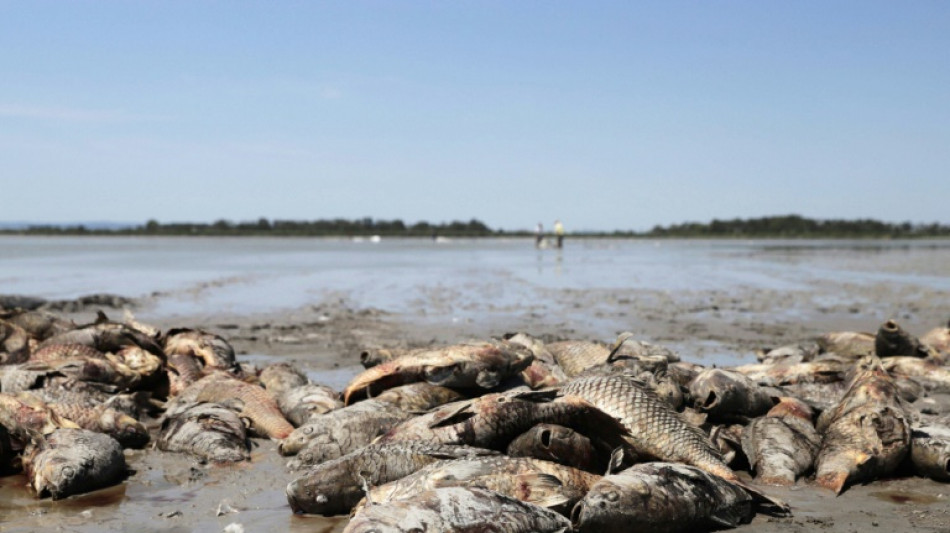
Freshwater fish swim into trouble as climate change increases threat: IUCN
Freshwater fish swim into trouble as climate change increases threat: IUCN / Photo: Alex HALADA - AFP

Freshwater fish swim into trouble as climate change increases threat: IUCN

A quarter of freshwater fish species worldwide are at risk of extinction, according to an update to the global red list of threatened species on Monday, highlighting the escalating impacts of human-caused climate change on the planet's wildlife.

Text size:

The assessment published by the International Union for Conservation of Nature (IUCN) also updated its list to reflect climate change threats to Atlantic Salmon, green turtles and Big leaf mahogany trees.

"Climate change is menacing the diversity of life our planet harbours and undermining nature's capacity to meet basic human needs," IUCN Director General Grethel Aguilar said in a statement.

Of the nearly 15,000 freshwater fish species assessed, 25 percent were at risk of extinction and of those at least 17 percent were suffering consequences of climate change, including fluctuating water levels and shifting seasons.

The IUCN ranks a species' risk of extinction along nine categories ranging from "not evaluated" to "extinct".

Atlantic salmon experienced a 23 percent decrease between 2006 and 2020, rising along the list from of "least concern" to "near threatened".

Global warming is affecting "all stages" of its lifecycle –- reducing prey, allowing invasive species to expand, and increasing deaths of young salmon due to water pollution linked mostly to logging and agriculture, IUCN said in a statement.

Green turtles in the Central South Pacific and East Pacific were classified as "endangered" and "vulnerable" respectively in the update.

Rising sea temperatures decrease hatching success and reduce the seagrass green turtles rely on for food. Rising sea levels flood nests and drown the young, while adult turtles are often caught and killed as a by-product of industrial fishing.

The big leaf mahogany tree was reclassified from "vulnerable" to "endangered" due to the unsustainable harvesting of sought-after timber and agricultural encroachment on the tropical forests where it grows.

But the updated list also showed the power of conservation efforts.

The scimitar-horned oryx improved from "extinct in the wild" to "endangered" after conservationists successfully reintroduced the species in Chad.

The previously "critically endangered" saiga antelope rose to "near threatened" on the list. Between 2015 and 2022 its population, living mostly in Kazakhstan, increased by 1,100 percent as a result of stringent anti-poaching measures and enforcement.

But both species are at risk of rising threats from climate change in the regions where they live.

The scimitar-horned oryx faces more frequent and severe droughts in the Sahel region of Africa. And in 2015 saiga antelopes suffered "mass mortality" due to "abnormally high temperatures and humidity" in the region, according to the authors.

"To ensure the results of conservation action are durable, we need to decisively tackle the interlinked climate and biodiversity crises," said IUCN President Razan Al Mubarak.

The IUCN Red List now includes 157,190 species, of which 44,016 are threatened with extinction.

The updated list comes as nations race against the clock to reach an agreement during this year's COP28 climate conference in Dubai, scheduled to end Tuesday.

(P.Werner--BBZ)