Berliner Boersenzeitung - Melting ice roads cut off Indigenous communities in northern Canada

EUR -
AED 4.276911
AFN 77.00261
ALL 96.561039
AMD 444.455439
ANG 2.084659
AOA 1067.918724
ARS 1670.580382
AUD 1.753592
AWG 2.099152
AZN 1.98201
BAM 1.955612
BBD 2.346285
BDT 142.406334
BGN 1.956282
BHD 0.439022
BIF 3441.169761
BMD 1.164578
BND 1.510655
BOB 8.078225
BRL 6.329131
BSD 1.164893
BTN 104.857487
BWP 15.497513
BYN 3.368991
BYR 22825.733483
BZD 2.342885
CAD 1.612865
CDF 2599.338258
CHF 0.937992
CLF 0.027397
CLP 1074.765709
CNY 8.235549
CNH 8.227437
COP 4451.018029
CRC 568.84541
CUC 1.164578
CUP 30.861323
CVE 110.254419
CZK 24.274232
DJF 207.440983
DKK 7.469133
DOP 74.682833
DZD 151.520998
EGP 55.351124
ERN 17.468674
ETB 181.088421
FJD 2.645691
FKP 0.873468
GBP 0.872491
GEL 3.138508
GGP 0.873468
GHS 13.308723
GIP 0.873468
GMD 85.589934
GNF 10126.028236
GTQ 8.923105
GYD 243.716611
HKD 9.061671
HNL 30.593578
HRK 7.535056
HTG 152.525363
HUF 384.021425
IDR 19437.858928
ILS 3.744486
IMP 0.873468
INR 104.745194
IQD 1525.597493
IRR 49057.858566
ISK 148.82132
JEP 0.873468
JMD 186.752078
JOD 0.825704
JPY 181.933909
KES 150.521616
KGS 101.84268
KHR 4663.572474
KMF 493.780761
KPW 1048.120262
KRW 1709.965829
KWD 0.357554
KYD 0.970811
KZT 595.26543
LAK 25263.683987
LBP 104326.769319
LKR 359.467046
LRD 205.609386
LSL 19.780687
LTL 3.438697
LVL 0.704442
LYD 6.33042
MAD 10.786908
MDL 19.751189
MGA 5194.501499
MKD 61.63435
MMK 2445.6481
MNT 4131.893999
MOP 9.335644
MRU 46.347949
MUR 53.745547
MVR 17.946518
MWK 2022.292297
MXN 21.261125
MYR 4.789875
MZN 74.418489
NAD 19.780687
NGN 1691.082209
NIO 42.865886
NOK 11.795012
NPR 167.772899
NZD 2.012281
OMR 0.447779
PAB 1.164888
PEN 3.916481
PGK 4.947009
PHP 69.07816
PKR 326.778058
PLN 4.238873
PYG 8011.265579
QAR 4.240204
RON 5.090026
RSD 117.41628
RUB 89.031619
RWF 1694.937342
SAR 4.370562
SBD 9.577286
SCR 15.828219
SDG 700.501887
SEK 10.920955
SGD 1.510499
SHP 0.873735
SLE 27.823965
SLL 24420.621214
SOS 665.555232
SRD 45.021424
STD 24104.418272
STN 24.497649
SVC 10.193066
SYP 12876.544773
SZL 19.775187
THB 37.066776
TJS 10.688028
TMT 4.076024
TND 3.421757
TOP 2.804025
TRY 49.586224
TTD 7.892276
TWD 36.271887
TZS 2853.216319
UAH 49.109787
UGX 4121.604462
USD 1.164578
UYU 45.505438
UZS 13967.719529
VES 300.002576
VND 30704.105269
VUV 141.895799
WST 3.247554
XAF 655.894056
XAG 0.019829
XAU 0.000277
XCD 3.147331
XCG 2.099508
XDR 0.815722
XOF 655.896872
XPF 119.331742
YER 277.810358
ZAR 19.844134
ZMK 10482.599985
ZMW 26.93853
ZWL 374.993718
  • RBGPF

    0.7600

    79.11

    +0.96%

  • CMSD

    -0.0800

    23.17

    -0.35%

  • RYCEF

    0.2100

    14.83

    +1.42%

  • SCS

    -0.0200

    16.12

    -0.12%

  • RIO

    -0.0400

    73.02

    -0.05%

  • CMSC

    -0.2100

    23.22

    -0.9%

  • RELX

    -0.8400

    39.48

    -2.13%

  • NGG

    -0.0800

    75.33

    -0.11%

  • GSK

    0.0600

    48.47

    +0.12%

  • VOD

    0.0300

    12.5

    +0.24%

  • BCC

    -1.2400

    71.81

    -1.73%

  • BCE

    -0.2100

    23.34

    -0.9%

  • BTI

    0.4000

    57.41

    +0.7%

  • BP

    -0.0500

    35.78

    -0.14%

  • AZN

    1.1000

    91.28

    +1.21%

  • JRI

    -0.0700

    13.72

    -0.51%

Melting ice roads cut off Indigenous communities in northern Canada
Melting ice roads cut off Indigenous communities in northern Canada / Photo: Anne-Sophie THILL - AFP/File

Melting ice roads cut off Indigenous communities in northern Canada

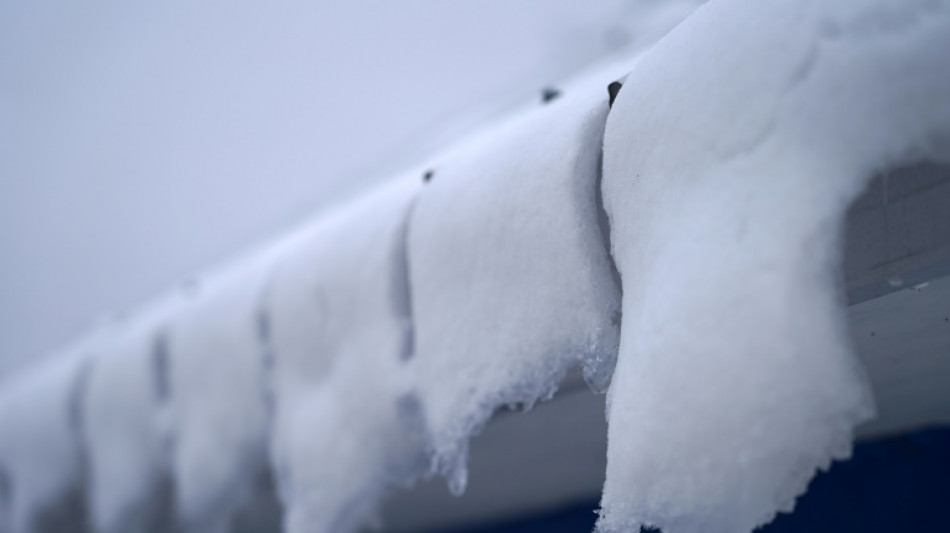
Melting ice roads cut off Indigenous communities in Canada's far north as unseasonably warm weather on Friday also saw its largest city, Toronto, break a winter heat record.

Text size:

Communities in Ontario and neighboring Manitoba provinces declared a state of emergency as the warm spell made the network of ice roads -- which across Canada spans more than 8,000 kilometers (5,000 miles) between dispersed populations -- unpassable.

Many remote communities in Canada's north depend on ice roads -- compacted snow and ice atop frozen ground, lakes and rivers -- for deliveries of essentials including fuel, equipment, non-perishable goods, as well as construction materials to build housing and infrastructure.

They allow trucks to reach areas in winter that are inaccessible at other times of the year.

"We're very concerned," Raymond Flett, chief of the Saint Theresa Point First Nation in northern Manitoba, told AFP.

The ice roads, he said, "are our lifeline. It's our only access."

The Nishnawbe Aski Nation said 30 Indigenous communities in northern Ontario were cut off and in desperate need of federal help.

"Winter temperatures have been significantly warmer than normal, exacerbated by the effects of climate change," it said in a statement, adding that many winter roads have become impassable for large loads and critical supplies.

Indigenous Services Minister Patricia Hajdu's office did not immediately reply to a request for comment.

Saint Theresa Point First Nation councilor Victor Walker warned that his community is "running out of supplies and fuel" and needs some 300 truckloads of gas, food and other essentials to get through the rest of the winter.

The community of about 5,000 people, he said, is considering flying in supplies but that comes with a hefty price tag that it can ill afford.

Environment Canada meteorologist Peter Kimbell said a cold blast could sweep across Manitoba and Ontario as early as next week.

He noted that winter warm spells are not unusual in Canada but "it is unusual to see this continued trend that we've seen all winter long."

Toronto on Friday broke a winter heat record as temperatures soared to 14.4 degrees Celsius (58 Fahrenheit). Its previous high was 10.6 degrees Celsius in 1938.

Several other cities in Ontario province were also flirting with new temperature highs including the nation's capital Ottawa.

"Records are being broken here and there across Ontario. A lot of places are also close to setting new records," Kimbell told AFP.

Temperatures in December and January, he said, have been about four degrees Celsius warmer than normal and so far February appears to be moving in that direction too.

Last year was the hottest on record, with the increase in Earth's surface temperature nearly crossing the critical threshold of 1.5 degrees Celsius, according to the Copernicus Climate Change Service.

That has resulted in intensified heatwaves, droughts and wildfires across the planet.

(H.Schneide--BBZ)