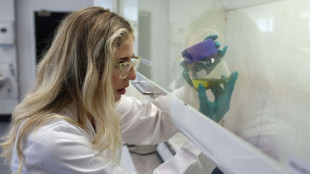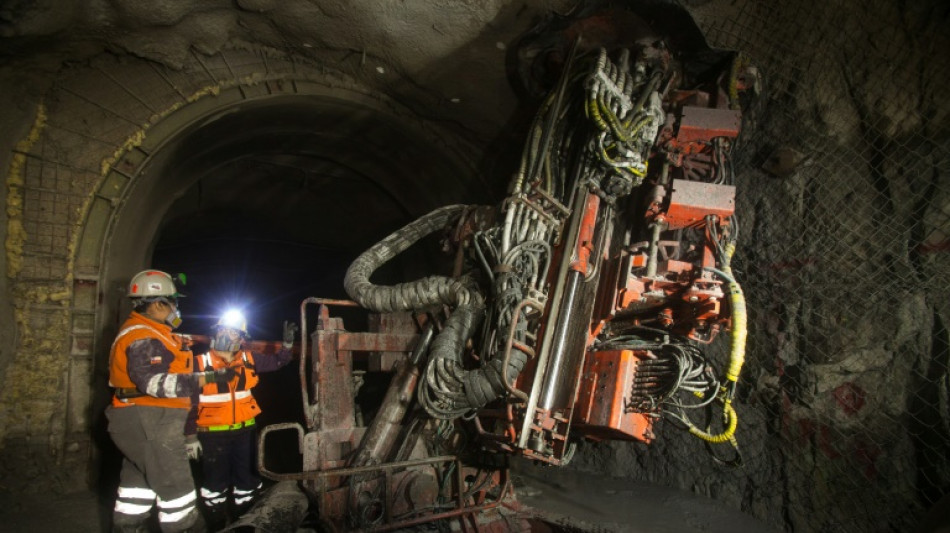
Chile on green hydrogen investment hunt in Europe / Photo: Glenn ARCOS - AFP

Chile is embarking on a European hunt for investors in solar, wind and green hydrogen technologies as it looks to decarbonise copper mines and other industries reliant on fossil fuels.
Marcos Kulka, CEO of H2Chile, a hydrogen association of 102 public and private companies, travelled to Europe to outline his government's energy strategy amid renegotiations of an EU-Chile trade and investment deal.
Kulka told AFP that, "given the resources it has", Chile can become carbon neutral by 2040 -- 10 years earlier than the global net-zero target set in the Paris Agreement on climate change.
Speaking on the sidelines of the Hyvolution energy trade show in Paris this month, Kulka said 24 percent of the reduction in emissions in Chile will come from hydrogen and its derivatives.
Hydrogen, which emits only water vapour when consumed, is touted for potential use in high-polluting heavy industries such as steel, metals, cement, and chemicals, as well as in shipping and transport.
But producing it at mass scale is a major challenge, as costs remain high and the infrastructure is lacking so far.
It is considered a "green" fuel when it is produced by using electricity generated by renewable energy to split water molecules.
Hydrogen can also be made through a more controversial method using natural gas, so-called "blue hydrogen" which needs to be paired with carbon capture equipment to be considered climate-friendly.
The International Energy Agency said last month that only seven percent of projects announced worldwide to use renewables to produce hydrogen this decade are expected to come online by 2030.
But Kulka said Chile "could become one of the cheapest hydrogen producers in the world".
The country plans to shut down its coal-fired plants by 2040 and replace them with renewable energy sources which will themselves be deployed to produce green hydrogen.
Chile is the world's top exporter of copper, a crucial metal for the energy transition as it conducts electricity.
But the mines are also emitters of greenhouse gases as their operations rely on fossil fuels.
To reduce copper's carbon footprint, the country can count on solar power near copper mining areas in the north and wind in the south, Kulka said.
He said Chile needs $60 billion in investment by 2050 for its green hydrogen plans.
- 'Irresponsible' -
The low cost of renewable energy has drawn interest from Austria Energy, French energy giants Engie, TotalEnergies and EDF, and a clutch of German, Dutch and Norwegian companies that want to import green hydrogen in Europe.
For now, however, Chile's installed green hydrogen capacity remains low at barely two megawatts, with a goal to reach 25 gigawatts by 2030, Kulka said.
Current global installed capacity stands at 1.1 GW, according to the Hydrogen Council.
Christian Sagal, a Chilean diplomat and investment commissioner in France, echoed warnings from climate campaigners that hydrogen alone is not enough in the energy transition.
He said it would be "irresponsible to say that green hydrogen will avoid" climate-related disasters such as the fires that killed more than 130 people in Chile in recent weeks.
Chile's green hydrogen plan is just "one of the possible answers" to "decarbonise (the country') economy and contribute to the much-needed reduction of global emissions".
- 'Moving fast' -
But Kulka argued that the country needs hydrogen to reduce emissions from its heavy mining trucks, the explosives used in mines, maritime transport and the chemical industry.
He said 64 industrial projects involving green hydrogen have been announced, with investments totalling close to $5 billion by 2025.
Chile plans to produce between one and three million tonnes of hydrogen within the next six years.
Chile is overhauling its its port infrastructure so that current oil and gas installations in use for imports can be rejigged to export ammonia, which can be converted into hydrogen.
"We are moving fast -- that's a lot of infrastructures to be built," Gloria Maldonado, director of Chile's national oil company ENAP, told AFP.
As Chile negotiates with the EU, 100 human rights and environmental associations have warned EU legislators in a joint statement against signing a new trade and investment deal.
The text "is strategic for the EU in order to have access to Chilean raw materials, but it must not be done at any price," said Mathilde Dupre, co-president of the Veblen research group, which signed the letter.
She said "the project offers very advantageous standards of protection for foreign investors, without ever imposing anything on them" in terms of obligations to respect human and social rights in Chile or the country's environment.
(K.Müller--BBZ)