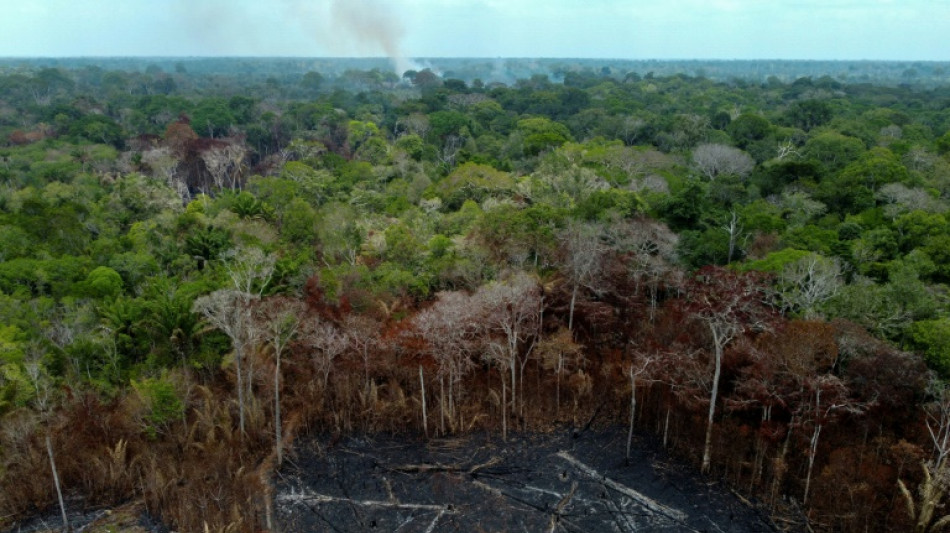
Despite gains in Brazil, forest destruction still 'stubbornly' high: report / Photo: Michael Dantas - AFP

The world lost 10 football fields of old-growth tropical forest every minute in 2023 and despite uplifting progress in the Amazon, the picture elsewhere is less rosy, researchers said on Thursday.
Tropical forests absorb carbon and are a vital ally in the fight against climate change, but they are also the most ravaged by deforestation.
High rates of tropical forest loss remain "stubbornly consistent" despite nations pledging in recent years to protect these critical environments, said researchers from the World Resources Institute (WRI) and the University of Maryland.
Around 3.7 million hectares of primary tropical forest -- an area nearly the size of Bhutan -- was lost last year, they said.
"Impressive" declines in Brazil and Colombia were "largely counteracted by increases" in tropical forest lost elsewhere, said Mikaela Weisse from WRI, a nonprofit research organisation.
"The world took two steps forward, two steps back when it comes to this past year's forest loss," said Weisse, director of WRI's Global Forest Watch, which uses satellite imagery to aid its analysis.
They focused on tropical forests because of their particular vulnerability to deforestation and capacity to store carbon, and considered various causes of destruction including farming, logging and fires.
- Amazon gains -
The 2023 figures represent a nine percent decline in forest loss compared to 2022 but in general, rates have barely wavered from the highs of recent years, researchers said.
Aside from soaking up huge quantities of carbon, tropical forests protect soil, host the majority of the world's plant and animal species, and filter air and water.
But there was good news from Brazil, which lost 36 percent less primary forest than the year prior -- its lowest level since 2015.
This "dramatic" decline was most pronounced in the Amazon, a rainforest so vast that it stores the equivalent of around 20 years of emissions of carbon dioxide.
Researchers said this coincided with the first year of President Luiz Inacio Lula da Silva, who vowed to defend the Amazon and restore forest protections after former leader Jair Bolsonaro revoked environmental safeguards.
There were disparities across the country, however, with a very clear improvement in the Amazon but a deterioration in the Cerrado, the heartland of Brazil's agriculture industry.
In Colombia, where President Gustavo Petro has been trying to negotiate peace with armed groups, there was a roughly 50 percent decline in forest lost in a year.
Forest conservation was an "explicit goal" of these peace talks, Weisse said.
- Off track -
"The 2023 data shows that countries can cut rates of forest loss when they muster the political will to do so. But we also know that progress can be reversed when political winds change," said Rod Taylor, global director of forests at WRI.
By contrast, forest losses hit a record high for a third year running in Bolivia, in part due to the conversion of land for its growing soy industry.
Agriculture also played a major role in sharp increases in forest destruction in Laos -- where land is under pressure due to investments and demand from China -- and Nicaragua, researchers said.
The Democratic Republic of Congo -- home to the enormous Congo Basin, which absorbs more carbon than it releases -- lost more than half a million hectares of primary forest for another year in a row.
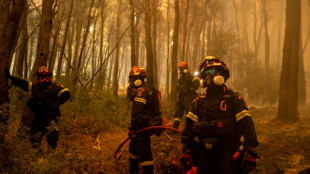
Outside the tropics, wildfires caused immense losses of tree cover, particularly in Canada which experienced record-breaking blazes.
Taylor said this was the second year of full annual data on forest loss since more than 140 countries agreed at the COP26 climate summit to halt and reverse deforestation by 2030.
But deforestation was almost 2 million hectares above the level needed to meet this target, said Taylor.
"Are we on track to halt deforestation by 2030? The short answer? No... we are far off track and trending in the wrong direction," he said.
(O.Joost--BBZ)