Philippines deploys river rangers in battle against plastic / Photo: JAM STA ROSA - AFP

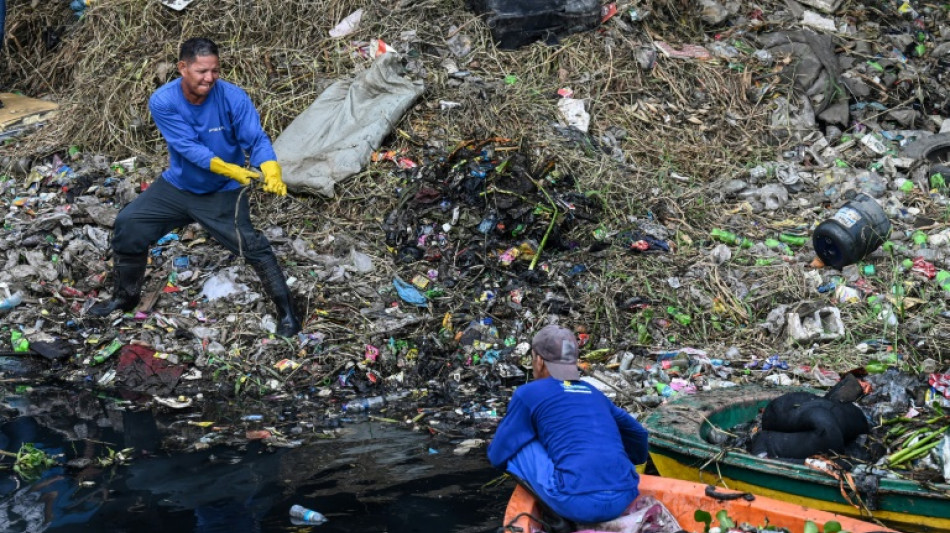
Using a long-handled net, Ronnel Narvas scoops up discarded plastic soft drink bottles, shopping bags and palm-sized sachets as he wades through a foul-smelling tributary in the Philippine capital Manila.
Narvas, 30, is one of more than a thousand rangers employed by the government to clean up the city's waterways, where tonnes of rubbish end up every year.
"It's disappointing, because no matter how diligent we are at cleaning up, the garbage does not run out," Narvas told AFP of the never-ending battle against trash.
"But we need to persevere... at least we are managing to reduce it instead of letting it pile up more."
Inadequate garbage collection services, lack of disposal and recycling facilities, and grinding poverty have been blamed for the growing problem of plastic waste across the country.
The Philippines produces about 61,000 tonnes of trash every day, up to 24 percent of it plastic, figures from the environment department show.
The country is the world's top source of plastic that ends up in the oceans, a 2021 study by Dutch non-profit The Ocean Cleanup found.
It said the Pasig river, which flows through the capital and into Manila Bay, is the "most polluting" in the world.
- 'Swimming' in plastic -
Sachets and other single-use plastics are a huge part of the problem.
"When the rains come, we are literally swimming (in) them," Environment Secretary Maria Antonia Loyzaga said last month.
"But on a daily basis, we consume plastics in the fish caught in our seas, through the substandard water bottles we use and in the very air we breathe," Loyzaga added.
Nieves Denso, a 63-year-old widow, sells small packets of powdered chocolate, coffee, milk, shampoo and detergent from her tiny shop in a riverside slum in Manila.
Sachets are popular in the Philippines, where many people cannot afford to buy household products in large quantities.
Denso collects the empty sachets and every few days she pays children 10 pesos (17 US cents) to take the garbage to a nearby road where she hopes it will be collected.
But she admitted she has no idea if her trash ends up there, or if the children throw it in the river or on vacant land where many of her neighbours discard their waste.
"I put everything in one container and that's it," Denso said when asked if she separates plastic from other waste.
"It's the government's responsibility to make people comply."
- 'It's disheartening' -
Emma Gillego, who lives in a stilt shanty overlooking the Paranaque river, has not seen a garbage truck in her neighbourhood since her family moved there 20 years ago.
Plastic litters the ground even though city sanitation workers visit several times a year to teach residents about waste segregation.
"We don't tell off our neighbours who throw garbage into the water because we don't want to meddle with their lives," Gillego, 58, said.
Lawmakers have enacted a series of environmental measures in recent years, covering everything from rolling out recycling centres to compelling companies to take responsibility for their plastic waste.
"The Philippines has made really commendable efforts in pushing all these legislation efforts together," senior World Bank environmental specialist Junu Shrestha told AFP.
While the legislation gave the Philippines a "road map" in dealing with the waste management problem, implementing it was "another challenge", Shrestha said.
In Manila, where more than 14 million people live, only 60 percent of rubbish is collected, sorted and recycled daily, according to a 2022 World Bank report.
Loyzaga told AFP that the country was in the "infancy stage" of waste segregation and recycling, and she did not see an end to the use of single-use plastic.
"It performs a certain function at the moment for a certain income group in our economy," she said.
While it was unpleasant standing in putrid water for hours on end, river ranger Narvas believed his efforts were helping to reduce flooding in areas along the waterway.
He just wished the community would stop throwing their rubbish in the water.
"It's disheartening," Narvas said.
"But this is our job and we're used to that. We just keep on going."
(L.Kaufmann--BBZ)