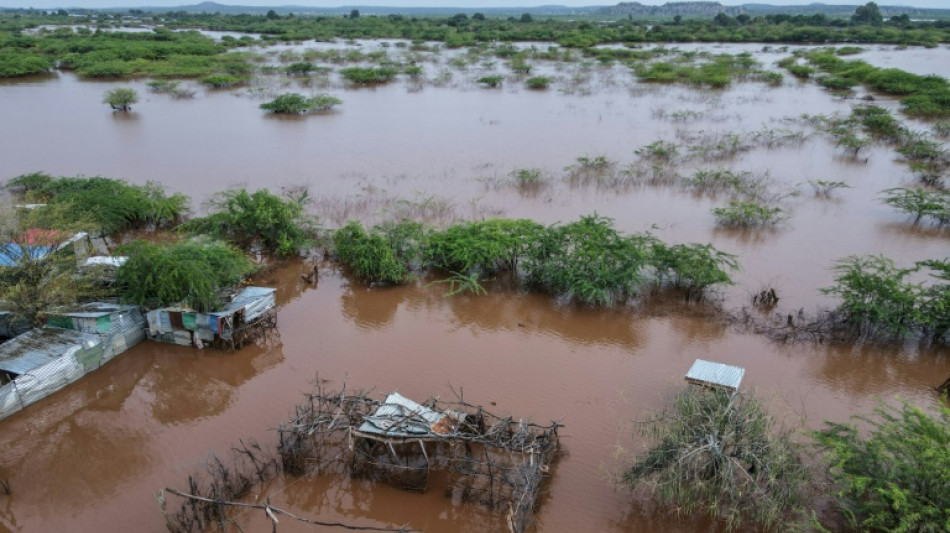
Somalia climate shocks and aid cuts create perfect storm / Photo: Hassan Ali Elmi - AFP/File

After his home in the Somali capital was battered by torrential rains, Mohamed Abdukadir Teesto worries about his future at a time when local and foreign aid is vanishing.
The Horn of Africa nation is among the most vulnerable to climate change, according to the United Nations, and in the last five years has experienced both the worst drought in 40 years and once-in-a-century flooding.
The more severe weather compounds the insecurity many Somalis face after decades of violent insurgency and political instability.
"We have cleaned our house using our bare hands," Teesto, 43, told AFP, saying neither international agencies nor the government had offered any assistance.
"Some families who had their houses destroyed are still displaced and cannot come back," he said. "If it rains again, we will have the same situation."
Teesto is among around 24,000 people in the Banadir region, which includes Mogadishu, impacted by flooding this month that killed at least 17.
Humanitarian work in Somalia was already under-funded before the halt of aid programmes under the US Agency for International Development (USAID), made by President Donald Trump upon his return to the White House.
The UN says its humanitarian needs for the year -- estimated at $1.4 billion -- are only 12 percent funded so far.
"This can get very, very bad, very quickly," said Sara Cuevas Gallardo, spokesperson for the World Food Programme, which handles roughly 90 percent of food security assistance in Somalia.
"We don't know if we have the capacity," she said.
This month, CARE International said Somalia had 1.8 million severely malnourished children under five, with 479,000 at risk of dying without urgent help.
Cuevas Gallardo said Somalia could see a return to the situation in 2020-2023 when it was on the brink of famine.
The difference being that now "we don't have the funds to actually act when we have to," she said.
- 'Breaking point' -
The International Crisis Group (ICG) has repeatedly warned about the link between climate change and conflict.
Recent attacks are stoking fears of a resurgence by the Al-Qaeda-linked Al-Shabaab, adding to the displacement and vulnerability caused by weather problems.
Globally, the main driver of hunger is conflict, Cuevas Gallardo said.
"If it's mixed with the uncertainty of climate shocks in Somalia, then it just equals more food needs, more hunger, more people on the move, and us being unable to respond to that uncertainty as well."
The WFP is not alone in its warnings.
British charity Save the Children said last week that funding shortfalls would force it to shut more than a quarter of the health and nutrition facilities it runs in Somalia in the coming weeks.
They include every single one in the central city of Baidoa.
It shared the story of Fatima and her one-year-old son, who fled their village after successive droughts damaged crops and killed their livestock.
"If we were not able to get medicines and nutrition support here, we would have no other option but to see our children dying in front of us," Save the Children quoted the 25-year-old as saying.
The charity said that the current period always sees an uptick in malnourishment but this year it expects an 11-percent increase in malnutrition, leaving remaining facilities "stretched to breaking point".
At a clinic in Baidoa, doctor Mustafa Mohammed said they have already seen a surge in patients and that closure would be grave.
"There is nowhere else for these children to go."
(U.Gruber--BBZ)