Berliner Boersenzeitung - Japan, South Korea had hottest summer on record in 2025

EUR -
AED 4.30878
AFN 75.088139
ALL 95.561304
AMD 435.019119
ANG 2.099991
AOA 1077.048119
ARS 1633.743618
AUD 1.628028
AWG 2.111859
AZN 1.992549
BAM 1.958981
BBD 2.363569
BDT 143.987894
BGN 1.957109
BHD 0.443079
BIF 3491.606608
BMD 1.173255
BND 1.496952
BOB 8.108753
BRL 5.813124
BSD 1.17352
BTN 111.32055
BWP 15.948049
BYN 3.311545
BYR 22995.796207
BZD 2.360153
CAD 1.594747
CDF 2721.951785
CHF 0.916036
CLF 0.026822
CLP 1055.636074
CNY 8.011278
CNH 7.99944
COP 4290.886514
CRC 533.520798
CUC 1.173255
CUP 31.091255
CVE 110.814062
CZK 24.36217
DJF 208.511097
DKK 7.472484
DOP 69.807476
DZD 155.414871
EGP 62.775014
ERN 17.598824
ETB 184.201363
FJD 2.570129
FKP 0.864241
GBP 0.863158
GEL 3.144316
GGP 0.864241
GHS 13.136436
GIP 0.864241
GMD 85.647414
GNF 10295.311947
GTQ 8.965435
GYD 245.506393
HKD 9.191291
HNL 31.231437
HRK 7.535932
HTG 153.725313
HUF 362.003077
IDR 20384.717408
ILS 3.45811
IMP 0.864241
INR 111.373802
IQD 1536.96393
IRR 1541656.949892
ISK 143.805466
JEP 0.864241
JMD 183.878547
JOD 0.831868
JPY 183.999313
KES 151.525537
KGS 102.56653
KHR 4707.687454
KMF 492.766707
KPW 1055.929389
KRW 1723.388282
KWD 0.361246
KYD 0.977959
KZT 543.555065
LAK 25788.142975
LBP 105064.976893
LKR 375.055706
LRD 215.732235
LSL 19.546108
LTL 3.464316
LVL 0.70969
LYD 7.450082
MAD 10.854074
MDL 20.219293
MGA 4869.007439
MKD 61.642351
MMK 2463.237101
MNT 4197.730703
MOP 9.46916
MRU 46.895281
MUR 54.861245
MVR 18.132674
MWK 2043.224376
MXN 20.452648
MYR 4.637894
MZN 74.955906
NAD 19.546663
NGN 1614.37562
NIO 43.070165
NOK 10.884579
NPR 178.104316
NZD 1.982771
OMR 0.451104
PAB 1.17349
PEN 4.11519
PGK 5.09046
PHP 72.119932
PKR 327.074167
PLN 4.246878
PYG 7217.425722
QAR 4.274757
RON 5.197052
RSD 117.321989
RUB 87.993368
RWF 1714.712049
SAR 4.399682
SBD 9.435445
SCR 17.459933
SDG 704.550818
SEK 10.811603
SGD 1.493199
SHP 0.875953
SLE 28.864339
SLL 24602.564306
SOS 669.928799
SRD 43.947762
STD 24284.007814
STN 24.884737
SVC 10.268679
SYP 129.673977
SZL 19.545913
THB 38.048375
TJS 11.007269
TMT 4.112258
TND 3.381027
TOP 2.824916
TRY 53.025844
TTD 7.96568
TWD 37.070747
TZS 3062.195542
UAH 51.563774
UGX 4412.59685
USD 1.173255
UYU 46.800573
UZS 14020.396174
VES 573.654487
VND 30901.774408
VUV 138.035069
WST 3.185609
XAF 657.071431
XAG 0.015654
XAU 0.000256
XCD 3.17078
XCG 2.114968
XDR 0.816151
XOF 657.022504
XPF 119.331742
YER 279.952314
ZAR 19.463185
ZMK 10560.703776
ZMW 21.915169
ZWL 377.787602
  • RIO

    0.1000

    100.58

    +0.1%

  • CMSC

    0.0600

    22.88

    +0.26%

  • BCE

    0.1800

    23.96

    +0.75%

  • BTI

    -0.0900

    58.71

    -0.15%

  • CMSD

    0.1500

    23.28

    +0.64%

  • NGG

    -1.0600

    88.48

    -1.2%

  • RBGPF

    0.5000

    63.1

    +0.79%

  • BCC

    -1.1400

    78.13

    -1.46%

  • GSK

    -0.7000

    51.61

    -1.36%

  • RYCEF

    0.5500

    16.35

    +3.36%

  • BP

    -0.9700

    46.41

    -2.09%

  • JRI

    -0.0100

    12.98

    -0.08%

  • RELX

    -0.2400

    36.35

    -0.66%

  • AZN

    -2.6300

    184.74

    -1.42%

  • VOD

    0.3500

    16.15

    +2.17%

Japan, South Korea had hottest summer on record in 2025
Japan, South Korea had hottest summer on record in 2025 / Photo: Philip FONG - AFP

Japan, South Korea had hottest summer on record in 2025

Japan and South Korea sweltered this year through the hottest summers since records began, their weather agencies said Monday.

Text size:

Temperatures the world over have soared in recent years as climate change creates ever more erratic weather patterns.

Japan's average temperature between June and August "was 2.36C above the standard value, which marked the hottest summer since records began in 1898", according to the Japan Meteorological Agency (JMA).

"It was the third consecutive summer of record-level high temperatures," the JMA added.

During that same period in South Korea, the average temperature was 25.7C, "the highest since data collection began in 1973", the Korea Meteorological Administration said in a press release.

The previous record over the same period was 25.6C, set just last year.

In Japan the scorching heat left some 84,521 people hospitalised nationwide from May 1 to August 24 this year, up slightly from 83,414 during the same period last year, according to the Fire and Disaster Management Agency.

- 'All man-made' -

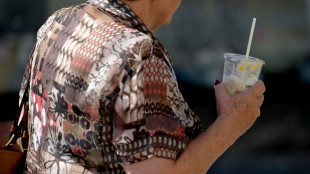
In Tokyo, avid runner Masao Nakano, 80, told AFP he pines for the old days when he could just "step outside, sprinkle water in the street and feel the cool air".

Nakano says he survived the sizzling summer by working out at a gym and jogging to prepare for a marathon.

"This is crazy. It's all man-made, right? All the air-cons and power generation", he said.

Japan's beloved cherry trees are blooming earlier due to the warmer climate, or sometimes not fully blossoming because autumns and winters are not cold enough to trigger flowering, experts say.

The famous snowcap of Mount Fuji was absent for the longest recorded period last year, not appearing until early November, compared with the average of early October.

In South Korea, the country is grappling with a prolonged drought that has hit the eastern coastal city of Gangneung.

A state of national disaster has been declared in the city of 200,000 after weeks without rain -- with water levels at the Obong reservoir, the city's main source of piped water, falling below 15 percent.

The dry spell has forced authorities to implement water restrictions, including shutting off 75 percent of household meters.

Heatwaves are becoming more intense and frequent worldwide because of human-caused climate change, scientists say.

But the speed of temperature increases across the world is not uniform.

Of the continents, Europe has seen the fastest warming per decade since 1990, followed closely by Asia, according to global data from the US National Oceanic and Atmospheric Administration (NOAA).

The United Nations warned last month that rising global temperatures are having an ever-worsening impact on the health of workers, and was also hitting productivity, which they say dropped by two to three percent for every degree above 20C.

burs-aph-kjk/fox

(T.Renner--BBZ)