Berliner Boersenzeitung - Cities face risk of water shortages in coming decades: study

EUR -
AED 4.278799
AFN 77.332466
ALL 96.575617
AMD 445.1876
ANG 2.085576
AOA 1068.388216
ARS 1684.735918
AUD 1.75613
AWG 2.09862
AZN 1.984015
BAM 1.955298
BBD 2.351906
BDT 142.873314
BGN 1.955951
BHD 0.439244
BIF 3450.13256
BMD 1.165091
BND 1.512264
BOB 8.068928
BRL 6.18139
BSD 1.167705
BTN 104.895516
BWP 15.51395
BYN 3.380546
BYR 22835.780461
BZD 2.348507
CAD 1.624445
CDF 2598.152383
CHF 0.935795
CLF 0.027249
CLP 1068.972737
CNY 8.239114
CNH 8.235468
COP 4423.838268
CRC 572.550529
CUC 1.165091
CUP 30.874907
CVE 110.236695
CZK 24.215228
DJF 207.947498
DKK 7.468599
DOP 74.200629
DZD 151.573688
EGP 55.422094
ERN 17.476363
ETB 182.080866
FJD 2.631882
FKP 0.872491
GBP 0.87341
GEL 3.139877
GGP 0.872491
GHS 13.301585
GIP 0.872491
GMD 85.051785
GNF 10146.786517
GTQ 8.944742
GYD 244.307269
HKD 9.07004
HNL 30.745973
HRK 7.537941
HTG 152.955977
HUF 381.927241
IDR 19422.821609
ILS 3.76036
IMP 0.872491
INR 104.791181
IQD 1529.71378
IRR 49079.451231
ISK 149.003201
JEP 0.872491
JMD 187.141145
JOD 0.82607
JPY 180.711448
KES 150.704566
KGS 101.886647
KHR 4676.939601
KMF 491.66861
KPW 1048.573823
KRW 1715.887947
KWD 0.35759
KYD 0.973154
KZT 590.220982
LAK 25331.604319
LBP 104570.198293
LKR 360.448994
LRD 206.107962
LSL 19.822595
LTL 3.44021
LVL 0.704752
LYD 6.347397
MAD 10.774234
MDL 19.862985
MGA 5193.64414
MKD 61.624177
MMK 2446.620372
MNT 4131.997126
MOP 9.362236
MRU 46.266921
MUR 53.675364
MVR 17.954132
MWK 2024.871384
MXN 21.185039
MYR 4.789718
MZN 74.447687
NAD 19.822595
NGN 1690.547045
NIO 42.970442
NOK 11.774198
NPR 167.831186
NZD 2.017279
OMR 0.448002
PAB 1.1678
PEN 3.926892
PGK 4.952877
PHP 68.813177
PKR 329.883811
PLN 4.230421
PYG 8097.955442
QAR 4.268104
RON 5.093784
RSD 117.405001
RUB 89.428762
RWF 1699.056442
SAR 4.372624
SBD 9.581501
SCR 15.83572
SDG 700.739077
SEK 10.962357
SGD 1.508886
SHP 0.87412
SLE 26.796781
SLL 24431.370198
SOS 666.226074
SRD 45.023191
STD 24115.028075
STN 24.494657
SVC 10.21742
SYP 12883.858981
SZL 19.816827
THB 37.09708
TJS 10.731491
TMT 4.077818
TND 3.427635
TOP 2.805259
TRY 49.532165
TTD 7.917001
TWD 36.455959
TZS 2842.8212
UAH 49.235746
UGX 4139.936989
USD 1.165091
UYU 45.74845
UZS 13910.428222
VES 289.625154
VND 30711.794538
VUV 142.222766
WST 3.250779
XAF 655.7858
XAG 0.020016
XAU 0.000276
XCD 3.148716
XCG 2.104569
XDR 0.815587
XOF 655.791427
XPF 119.331742
YER 277.75676
ZAR 19.715959
ZMK 10487.212054
ZMW 26.828226
ZWL 375.158775
  • GSK

    -0.4000

    48.57

    -0.82%

  • VOD

    0.0500

    12.64

    +0.4%

  • RBGPF

    0.0000

    78.35

    0%

  • RIO

    -0.5500

    73.73

    -0.75%

  • CMSC

    0.0400

    23.48

    +0.17%

  • RYCEF

    0.4600

    14.67

    +3.14%

  • NGG

    -0.5800

    75.91

    -0.76%

  • BTI

    0.5300

    58.04

    +0.91%

  • AZN

    -0.8200

    90.03

    -0.91%

  • RELX

    0.3500

    40.54

    +0.86%

  • CMSD

    -0.0300

    23.32

    -0.13%

  • SCS

    -0.1200

    16.23

    -0.74%

  • JRI

    0.0500

    13.75

    +0.36%

  • BCC

    -2.3000

    74.26

    -3.1%

  • BP

    -0.0100

    37.23

    -0.03%

  • BCE

    0.0400

    23.22

    +0.17%

Cities face risk of water shortages in coming decades: study
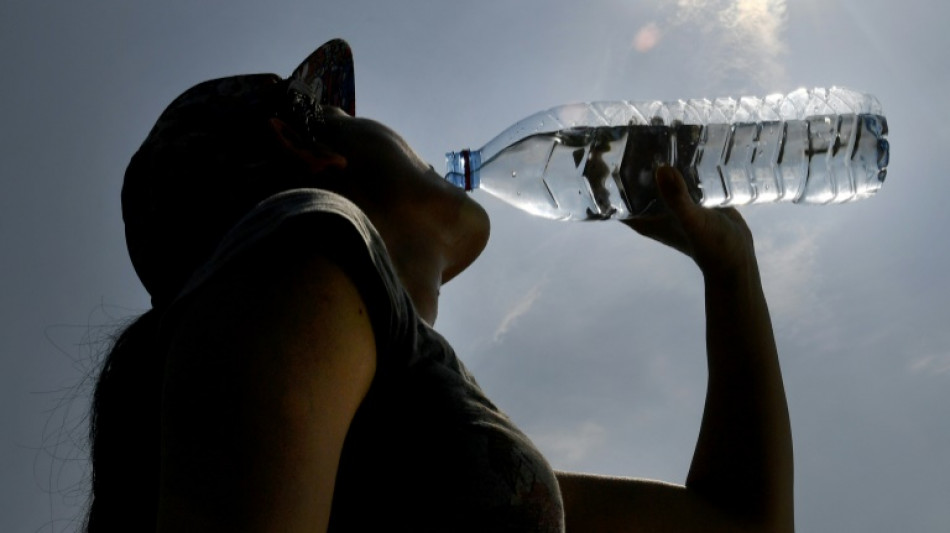
Cities face risk of water shortages in coming decades: study / Photo: Fred TANNEAU - AFP

Cities face risk of water shortages in coming decades: study

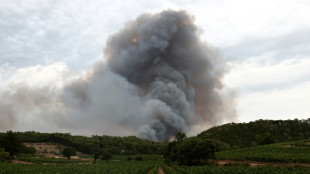
Hotspots of water scarcity could emerge by the 2020s and 2030s across the Mediterranean, southern Africa, and North America, as climate change intensifies droughts, a new study said Tuesday.

Text size:

Scientists have established that climate change is making droughts longer, stronger and more frequent, but less well understood is when and where these extreme dry conditions could trigger acute shortages of drinking water.

South Africa's Cape Town faced the threat of a "Day Zero Drought", where the taps nearly ran dry for millions of people in 2018. India's Chennai faced a similar crisis the following year.

In new peer-reviewed research in the journal Nature Communications, researchers warned that the frequency of "Day Zero" episodes could increase much sooner than previously anticipated.

To study how global warming might impact these events in future, researchers used the latest climate models to estimate when water demands would exceed supply from rainfall, rivers and reservoirs.

The simulations showed that "Day Zero" hotspots are likely to emerge in 35 percent of drought-prone regions within the next 15 years, with the Mediterranean, southern Africa, and parts of North America most affected.

By 2100, such conditions could threaten 750 million people globally -- roughly two thirds in cities and the rest in rural areas -- under a high emissions scenario, the study said.

Urban populations in the Mediterranean are most exposed, with 196 million city dwellers at risk, while rural areas in Asia and northern and southern Africa are disproportionately impacted.

Human-induced climate change and increased water consumption were both factors driving "Day Zero" events, the study said.

- Not a distant threat -

Even if global warming is held at 1.5 degrees Celsius above preindustrial levels "hundreds of millions of people will still face unprecedented water shortages", said Vecchia Ravinandrasana, one of the study's authors, in a press release.

"Our study shows that global warming causes and accelerates Day Zero Drought conditions worldwide," said Ravinandrasana from Pusan National University in South Korea, which led the research.

The world is on track to shoot past 1.5C as early as this decade. Under the Paris climate pact, nations have agreed to limit global temperature rises to well below 2C to avoid the worst impacts.

The study could not account for groundwater, the authors said, overlooking its critical role "as a vital buffer during drought" particularly in regions where it is a key water source.

Global warming is altering the water cycle, disrupting rainfall and spurring droughts in some parts of the world and devastating rainfall in others.

Cape Town narrowly avoided a "Day Zero" episode during a multi-year drought when rivers hit record lows and major reservoirs drained to near empty.

But other cities have experienced similar crises, while major capitals like Los Angeles "remain highly vulnerable", the study said.

Such events were "not just a future concern in a warming world, but also a near-term reality" and better planning was needed.

(O.Joost--BBZ)