Berliner Boersenzeitung - Europe heat sparks harmful ozone pollution, 'extreme' fire risk

EUR -
AED 4.234604
AFN 75.453452
ALL 94.034984
AMD 422.744908
AOA 1058.505761
ARS 1716.64106
AUD 1.640055
AWG 2.076944
AZN 1.961724
BAM 1.965914
BBD 2.322629
BDT 142.402587
BHD 0.434856
BIF 3424.416844
BMD 1.153057
BND 1.485643
BOB 13.57927
BRL 5.865197
BSD 1.153223
BTN 110.282214
BWP 15.758273
BYN 3.37456
BYR 22599.91481
BZD 2.319433
CAD 1.613888
CDF 2634.735473
CHF 0.927801
CLF 0.027223
CLP 1071.397431
CNY 7.801929
CNH 7.779865
COP 3609.437006
CRC 524.292666
CUC 1.153057
CUP 30.556007
CVE 110.835189
CZK 24.203584
DJF 204.92129
DKK 7.475002
DOP 67.115273
DZD 153.032092
EGP 58.886311
ERN 17.295853
ETB 186.139441
FJD 2.553387
FKP 0.867824
GBP 0.856093
GEL 3.020894
GGP 0.867824
GHS 13.475735
GIP 0.867824
GMD 85.32586
GNF 10123.077972
GTQ 8.799268
GYD 241.277525
HKD 9.042791
HNL 30.897954
HRK 7.536355
HTG 150.785714
HUF 362.296198
IDR 20804.662903
ILS 3.534161
IMP 0.867824
INR 110.128058
IQD 1510.67162
IRR 1585741.471806
ISK 142.61021
JEP 0.867824
JMD 182.388293
JOD 0.817455
JPY 183.340082
KES 149.193722
KGS 100.834792
KHR 4637.015895
KMF 495.814258
KRW 1638.217339
KWD 0.35694
KYD 0.961057
KZT 547.088208
LAK 26143.287174
LBP 103272.920228
LKR 387.36278
LRD 208.736556
LSL 19.122676
LTL 3.404677
LVL 0.697472
LYD 7.380971
MAD 10.820566
MDL 20.308742
MGA 4930.514595
MKD 61.838125
MMK 2421.23874
MNT 4146.650533
MOP 9.317857
MRU 46.105187
MUR 54.435819
MVR 17.82629
MWK 1999.739649
MXN 20.011649
MYR 4.715655
MZN 73.691559
NAD 19.122676
NGN 1571.293523
NIO 42.439618
NOK 10.986989
NPR 176.445189
NZD 1.96086
OMR 0.443349
PAB 1.153268
PEN 3.907804
PGK 5.088176
PHP 70.674371
PKR 320.274647
PLN 4.307255
PYG 6892.458113
QAR 4.203927
RON 5.245945
RSD 117.416965
RUB 91.935432
RWF 1697.555122
SAR 4.302823
SBD 9.306957
SCR 15.494452
SDG 692.390762
SEK 10.984539
SGD 1.477959
SLE 27.817454
SOS 659.084933
SRD 43.522085
STD 23865.949363
STN 24.626477
SVC 10.090912
SZL 19.127401
THB 38.468314
TJS 10.649795
TMT 4.04723
TND 3.409741
TRY 54.671156
TTD 7.827506
TWD 37.405738
TZS 3052.721517
UAH 51.449481
UGX 4319.220142
USD 1.153057
UYU 46.388645
UZS 13844.22132
VES 857.062681
VND 30304.06434
VUV 137.826364
WST 3.173816
XAF 659.372
XAG 0.019614
XAU 0.000281
XCD 3.116193
XCG 2.078456
XDR 0.820974
XOF 659.349008
XPF 119.331742
YER 274.802282
ZAR 19.018232
ZMK 10378.896351
ZMW 21.536448
ZWL 371.283844
  • CMSD

    -0.0200

    22.02

    -0.09%

  • RBGPF

    3.2100

    69.21

    +4.64%

  • JRI

    0.1100

    12.87

    +0.85%

  • CMSC

    0.1200

    21.81

    +0.55%

  • BCE

    -0.6300

    21.7

    -2.9%

  • RIO

    3.5200

    97.18

    +3.62%

  • NGG

    1.5100

    80.39

    +1.88%

  • GSK

    -1.1500

    52.07

    -2.21%

  • BCC

    -2.3000

    75.38

    -3.05%

  • BTI

    -1.3800

    61.69

    -2.24%

  • AZN

    -1.9600

    171.34

    -1.14%

  • RELX

    -1.6200

    36.61

    -4.43%

  • RYCEF

    1.1600

    19.63

    +5.91%

  • BP

    0.9000

    44.22

    +2.04%

  • VOD

    0.0100

    16.14

    +0.06%

Europe heat sparks harmful ozone pollution, 'extreme' fire risk
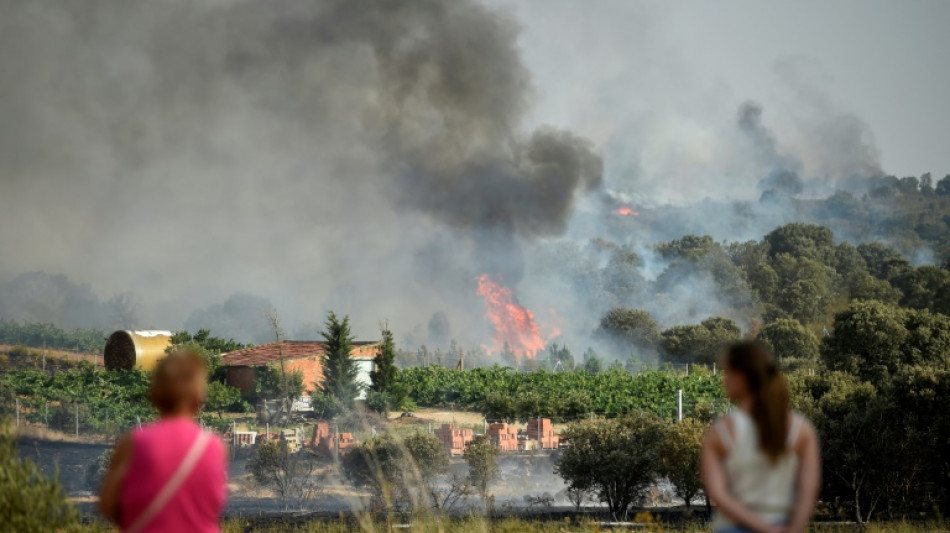
Europe heat sparks harmful ozone pollution, 'extreme' fire risk / Photo: MIGUEL RIOPA - AFP/File

Europe heat sparks harmful ozone pollution, 'extreme' fire risk

Europe's searing heatwave is generating very high levels of harmful ozone pollution, the region's atmospheric monitoring service warned Tuesday, adding that large areas of western Europe also face "extreme" danger of wildfires.

Text size:

Record temperatures, which scientists say are driven by climate change, are predicted in France and Britain Tuesday as suffocating heat that has gripped southwest Europe and sparked ferocious wildfires moves northwards.

"Tinder dry conditions and extreme heat are exacerbating the risk of wildfires," according to a statement from the Copernicus monitoring service.

The organisation's emergency management service has warned that a large proportion of western Europe is in "extreme fire danger" with some areas of "very extreme fire danger".

The heatwave is also causing high levels of ground-level ozone, Copernicus said.

Unlike the protective layer in the upper atmosphere, this is a major greenhouse gas and component of urban smog that harms human health and inhibits photosynthesis in plants.

"The potential impacts of very high ozone pollution on human health can be considerable both in terms of respiratory and cardio-vascular illness," said Mark Parrington, Senior Scientist from the Copernicus Atmosphere Monitoring Service.

Ozone is formed as emissions from fossil fuels and other man-made pollutants react in the presence of sunlight and Copernicus said cutting emissions of these pollutants is "crucial".

Scientists have already detected "extremely high surface ozone pollution" across western and southern Europe, particularly over the Iberian Peninsula and parts of northern Italy.

Daily maximum levels of surface ozone, which normally peaks during the middle of the day, reached unhealthy levels in Portugal, Spain and Italy, according to Copernicus.

Scientists now warn that, while the situation is likely to ease across the Iberian Peninsula, very high surface ozone levels are now being seen in areas of northern and western parts of the continent as temperatures rise.

The ozone levels in these regions are forecast to peak in the next few days, before easing.

Copernicus also predicted no relief from the wildfires that have engulfed swathes of forests across parts of southern Europe.

- One million ozone pollution deaths -

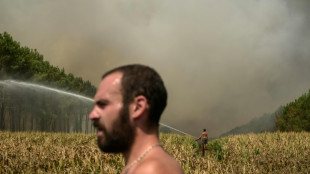
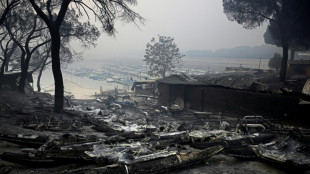
In southwest France, two massive fires have created apocalyptic scenes of destruction, despite much of the country's entire firefighting capacity being deployed.

Copernicus said total carbon emissions from the wildfires in Spain so far in July are the highest seen for the June-July period since 2003.

Parrington said high surface ozone can lead to sore throats, coughing, headaches and an increased risk of asthma attacks.

The Clean Air Alliance estimates that ozone pollution causes approximately one million additional deaths per year.

Ozone is also a key concern for agricultural regions and food security.

In January, researchers estimated that persistently high levels of ozone pollution in Asia are costing China, Japan and South Korea an estimated $63 billion annually in lost rice, wheat and maize crops.

(Y.Berger--BBZ)