Berliner Boersenzeitung - Regional temperature records broken across the world in 2025

EUR -
AED 4.2854
AFN 73.513877
ALL 95.510242
AMD 433.136935
ANG 2.088595
AOA 1071.203322
ARS 1623.155257
AUD 1.637048
AWG 2.103316
AZN 1.988841
BAM 1.949665
BBD 2.351002
BDT 143.219321
BGN 1.946488
BHD 0.440592
BIF 3472.658894
BMD 1.166888
BND 1.490503
BOB 8.065619
BRL 5.857427
BSD 1.167227
BTN 110.652801
BWP 15.777285
BYN 3.286757
BYR 22871.006156
BZD 2.347613
CAD 1.596245
CDF 2707.180185
CHF 0.923656
CLF 0.026831
CLP 1055.999007
CNY 7.979472
CNH 7.98372
COP 4242.349933
CRC 530.8296
CUC 1.166888
CUP 30.922534
CVE 110.708526
CZK 24.389535
DJF 207.37905
DKK 7.473107
DOP 69.283997
DZD 154.851697
EGP 61.871784
ERN 17.503321
ETB 183.201494
FJD 2.574858
FKP 0.863638
GBP 0.866006
GEL 3.138536
GGP 0.863638
GHS 13.057687
GIP 0.863638
GMD 85.182963
GNF 10239.442958
GTQ 8.917899
GYD 244.210479
HKD 9.143869
HNL 31.051229
HRK 7.535408
HTG 152.878925
HUF 365.773316
IDR 20277.072323
ILS 3.468517
IMP 0.863638
INR 110.835288
IQD 1528.623371
IRR 1535041.255104
ISK 143.807139
JEP 0.863638
JMD 183.034034
JOD 0.827365
JPY 187.105255
KES 150.680561
KGS 102.020206
KHR 4679.221247
KMF 492.427083
KPW 1050.160366
KRW 1733.231342
KWD 0.35939
KYD 0.972735
KZT 540.648702
LAK 25642.365622
LBP 104474.479546
LKR 372.936454
LRD 214.561568
LSL 19.685307
LTL 3.445517
LVL 0.705839
LYD 7.409465
MAD 10.809759
MDL 20.094681
MGA 4842.585502
MKD 61.638331
MMK 2450.441126
MNT 4176.159573
MOP 9.422649
MRU 46.651906
MUR 54.645753
MVR 18.034257
MWK 2032.137573
MXN 20.479933
MYR 4.627916
MZN 74.569985
NAD 19.685422
NGN 1604.55262
NIO 42.836401
NOK 10.879948
NPR 177.044124
NZD 2.000105
OMR 0.44867
PAB 1.167227
PEN 4.112129
PGK 5.064072
PHP 71.770626
PKR 325.415929
PLN 4.258634
PYG 7262.147676
QAR 4.251559
RON 5.102787
RSD 117.399467
RUB 87.225251
RWF 1704.823469
SAR 4.376524
SBD 9.380426
SCR 16.071443
SDG 700.710364
SEK 10.870572
SGD 1.494516
SHP 0.8712
SLE 28.702881
SLL 24469.054893
SOS 666.881356
SRD 43.712824
STD 24152.227095
STN 24.738027
SVC 10.213859
SYP 129.215466
SZL 19.6617
THB 38.239409
TJS 10.943018
TMT 4.089943
TND 3.374932
TOP 2.809587
TRY 52.723968
TTD 7.937024
TWD 36.91894
TZS 3028.074582
UAH 51.448105
UGX 4348.316838
USD 1.166888
UYU 46.45382
UZS 14061.001063
VES 566.626558
VND 30754.501952
VUV 138.127072
WST 3.169123
XAF 653.896535
XAG 0.016137
XAU 0.000256
XCD 3.153573
XCG 2.10368
XDR 0.814159
XOF 652.290523
XPF 119.331742
YER 278.448622
ZAR 19.651737
ZMK 10503.389618
ZMW 22.031671
ZWL 375.737482
  • RBGPF

    0.2800

    63.75

    +0.44%

  • CMSD

    -0.1400

    23.06

    -0.61%

  • BCE

    -0.2400

    23.26

    -1.03%

  • CMSC

    -0.0100

    22.82

    -0.04%

  • GSK

    -3.0700

    51.4

    -5.97%

  • NGG

    -1.4700

    85.98

    -1.71%

  • BTI

    -1.0200

    57.45

    -1.78%

  • RIO

    -2.0000

    96.49

    -2.07%

  • BP

    0.4500

    46.8

    +0.96%

  • AZN

    -1.4800

    185.2

    -0.8%

  • BCC

    -3.6100

    79

    -4.57%

  • RELX

    -0.2100

    35.8

    -0.59%

  • JRI

    -0.0700

    12.74

    -0.55%

  • RYCEF

    -0.4000

    14.9

    -2.68%

  • VOD

    -0.1500

    15.34

    -0.98%

Regional temperature records broken across the world in 2025
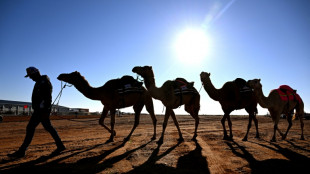
Regional temperature records broken across the world in 2025 / Photo: Sergei GAPON - AFP

Regional temperature records broken across the world in 2025

Central Asia, the Sahel region and northern Europe experienced their hottest year on record in 2025, according to AFP analysis based on data from the European Copernicus programme.

Text size:

Globally, the last 12 months are expected to be the third hottest ever recorded after 2024 and 2023, according to the provisional data, which will be confirmed by Copernicus in its annual report in early January.

But the average, which includes land and oceans, masks overall records for certain parts of the world.

Many poorer nations do not publish detailed climate data, so AFP has completed the global picture by independently analysing Copernicus data from climate models, measurements from about 20 satellites, and weather stations.

The data spans the whole world, hour by hour, since 1970.

Here is what the detailed analysis revealed for 2025, during which 120 monthly temperature records were broken in more than 70 countries.

- Records shattered in C.Asia -

Every country in Central Asia broke its annual temperature records.

Landlocked, mountainous Tajikistan, where only 41 percent of the population has access to safe drinking water, saw the highest abnormal temperatures in the world, at more than 3C above its seasonal averages from 1981 to 2010.

Monthly temperature records have been broken every month since May, with the exception of November.

Neighbouring countries such as Kazakhstan, Iran and Uzbekistan experienced temperatures 2C to 3C above the seasonal average.

- Up to 1.5C hotter in the Sahel -

Temperature records were beaten in several countries in the Sahel and west Africa.

Mali, Niger, Nigeria, Burkina Faso and Chad saw a rare divergence in temperatures, notching 0.7C to 1.5C above their seasonal average.

The last 12 months were the hottest ever recorded in Nigeria, and one of the fourth hottest in the other countries.

Scientists from the World Weather Attribution (WWA) network, who assess the role of human-induced climate change in extreme weather events, wrote in their annual report published on Monday that extreme heat events "have become almost 10 times more likely since 2015".

Countries in the Sahel -- the semi-arid region of west and north-central Africa stretching from Senegal to Sudan -- are among the most vulnerable to rising temperatures, with many already facing armed conflict, food insecurity and widespread poverty.

- Scorching summer in Europe-

Around 10 European countries are on the verge of, or coming close to, breaking their annual temperature record, notably due to an exceptional summer.

In Switzerland and several Balkan countries, summer temperatures were 2C and even 3C above their seasonal average.

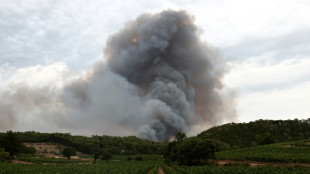
Spain, Portugal and Britain also recorded their worst summer on record, with extreme heat fuelling massive wildfires.

The driest spring in more than a century led to a UK water shortage.

Northern Europe was largely spared the heatwave that hit Europe at the end of June but it instead experienced an abnormally warm autumn.

The last 12 months are expected to be one of the two warmest years on record in Norway, Sweden, Finland and Iceland.

(T.Burkhard--BBZ)