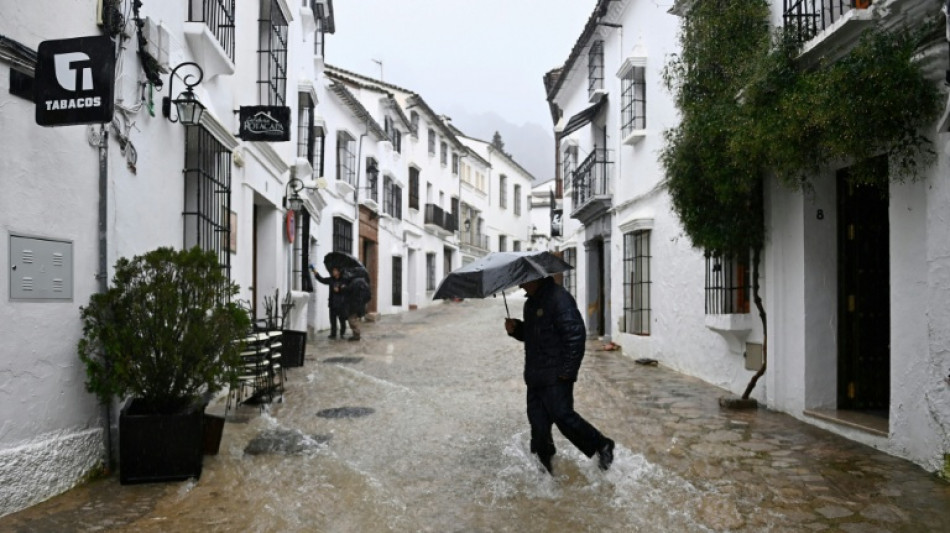
The rain in Spain was worst in nearly 50 years / Photo: Jorge GUERRERO - AFP

Spain endured its wettest January and February in almost half a century, with a string of deadly storms lashing the country, national weather agency AEMET said Thursday.
The Iberian Peninsula is considered a frontline region for climate change, experiencing increasingly long heatwaves that sometimes start before summer, along with more frequent episodes of intense rainfall.
Eleven major storms swept the country from late December to mid-February, bringing heavy rain and strong winds, said AEMET spokesman Ruben del Campo.
"January and February 2026 has been the rainiest in the last 47 years, highlighting the extraordinary nature of these events," he told reporters.
Grazalema, one of the hardest-hit municipalities in southern Spain, saw more than a full year's expected rainfall in just a few days during the passage of Storm Leonardo in February.
The intense flooding and risk of landslides prompted the authorities to evacuate the entire town and two people died as a result of the storm.
Del Campo said the severity of Leonardo was "the footprint of climate change", noting that warmer oceans increase evaporation, while a warmer atmosphere retains more water vapour, resulting in heavier rainfall.
Neighbouring Portugal also experienced its wettest February in 47 years, the Portuguese meteorological agency IPMA reported Tuesday.
This was the eighth consecutive warm or very warm winter in Spain, with temperatures above average, a streak unprecedented in AEMET records, Del Campo said.
He forecast a 50 percent to 70 percent probability that the coming spring will also be warmer than usual.
(S.G.Stein--BBZ)