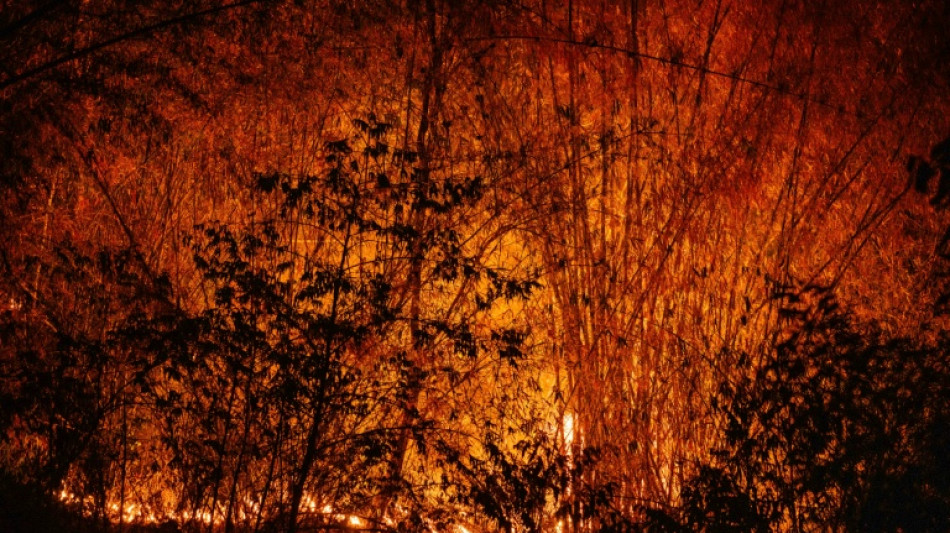
Blood clots, burning eyes: pollution chokes north Thailand / Photo: ANTHONY WALLACE - AFP

After hours spent in the thick pollution-choking parts of northern Thailand, Pon Doikam gets home and blows her burning nose to find blood clots spattered across the tissue.
"It's suffocating," the 36-year-old coconut seller told AFP in Chiang Mai, a tourist destination among the areas affected by dangerous pollution levels this week.
"It feels like you're trapped in the smoke constantly."
Seasonal agricultural burning, forest fires and weather patterns produce an annual pollution season across much of Southeast Asia.
But parts of northern Thailand are seeing haze that even hardened locals say is exceptional.
"I've lived in Chiang Mai since I was a kid, and this is the worst it has ever been," said Pon, who works outdoors all day.
"I don't have a choice," she added. "I have to come out, making a living day to day."
This week Thailand's second city, Chiang Mai, regularly topped the IQAir monitor website's most polluted big cities list.
The situation is even worse to the west in Pai, a backpacker destination known for its greenery and mountains.
Some monitors there recorded levels of PM2.5 -- particles small enough to enter the bloodstream and linked to diseases like cancer -- of over 900 micrograms per cubic metre.
That is 60 times higher than the World Health Organization's recommended 24-hour average exposure.
The area's mountainous geography makes it doubly vulnerable. Smoke is easily trapped, and the forested hillsides are hard to access when fires start.
- 'Very disappointed' -
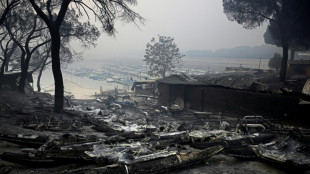
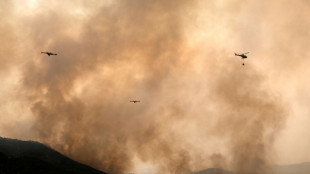
AFP saw multiple blazes burning on hillsides and along roads between Pai and Chiang Mai, lighting up patches of otherwise pitch-black countryside.
Volunteer firefighters like Maitree Nuanja do their best to bolster limited local capacity, relying heavily on donations such as drinking water and face masks.
"The fire control centre gave us 20 litres of fuel and lent us leaf blowers. Once the season ends, we have to return them," he told AFP, standing before a blackened, ash-strewn stretch of land.
"Everyone can see how serious it is now. It's so dark and hazy you can't see a thing, and it's gone on for far too long."
He worries about his home next to a forest, and his health.
"We now live with this smoke, breathing it in every day."
On Wednesday, a volunteer firefighter was found dead from suspected exhaustion linked to heat and underlying health conditions, officials told AFP.
Pollution is particularly dangerous to those with existing health problems, the elderly and children.
In Chiang Mai, the government has installed hundreds of "dust-free rooms" -- equipped with air purifiers and positive pressure systems that keep out the polluted air -- including at the retirement facility that Watwilai Chaiwan now calls home.
The retired nurse, 82, said the pollution made her afraid to go out and aggravated her dizziness and migraines.
"It's a real problem for the elderly. You have to wear a mask the entire time you're breathing this air," she told AFP.
Thailand's government held talks this week on the haze, and some districts in Chiang Mai have issued disaster declarations to help speed up financial support.
But clean air activists say more is needed, and are pushing for the government to move quickly on clean air legislation that stalled last year with the dissolution of parliament.
"A normal government would have been concerned about clean air not only now but a long time ago," said Kanongnij Sribuaiam, legal team leader at Thailand Clean Air Network, which pushed for the legislation.
If no action is taken by May 13, the legislation will expire and the process will have to start from scratch, she added.
"The public is very disappointed."
- 'This is shocking' -
In Chiang Mai, doctor Thanakrit Im-iam was wearing a heavy-duty respirator to protect himself.
He warned that the long-term health consequences of the pollution are "devastating".
"It affects everyone because these toxins and heavy metals enter the body directly," he told AFP, describing "burning eyes, phlegm, and nasal inflammation."
The mask is his only protection, he said.
"We can't control the rest. That's up to the government."
The pollution is also increasingly a deterrent for tourists, who form a key pillar of the region's economy.
"Usually, Chiang Mai is buzzing in March and April, but this year, it's just quiet," said tuk-tuk driver Chakkrawat Wichitchaisilp.
At a viewpoint overlooking Chiang Mai, the city skyline was almost entirely obscured, with only faint outlines of hills visible through a dense grey haze and a dim orange sun hanging in the sky.
"I've taken photos from this very spot, and it's just a beautiful blue sky -- and you can see as far as the horizon," said Martin Astill, 57, a Briton who previously lived in Thailand and was visiting with his family.
"This is shocking. Never seen it as bad as this."
(T.Renner--BBZ)