Berliner Boersenzeitung - This year's El Nino likely to become record-breaker: top expert

EUR -
AED 4.199055
AFN 73.176343
ALL 93.736674
AMD 418.740472
ANG 2.047106
AOA 1049.030252
ARS 1698.78048
AUD 1.645562
AWG 2.058079
AZN 1.962695
BAM 1.955522
BBD 2.302573
BDT 140.901202
BGN 1.933315
BHD 0.431042
BIF 3402.231219
BMD 1.143377
BND 1.476597
BOB 7.916555
BRL 5.876164
BSD 1.143247
BTN 108.514523
BWP 15.440805
BYN 3.26545
BYR 22410.19818
BZD 2.299273
CAD 1.625505
CDF 2578.315681
CHF 0.921848
CLF 0.02691
CLP 1059.09933
CNY 7.770849
CNH 7.771508
COP 3836.820303
CRC 520.82596
CUC 1.143377
CUP 30.299503
CVE 110.250773
CZK 24.229483
DJF 203.583729
DKK 7.474539
DOP 67.510993
DZD 152.110291
EGP 55.856619
ERN 17.150662
ETB 183.392433
FJD 2.559682
FKP 0.855338
GBP 0.854109
GEL 3.012816
GGP 0.855338
GHS 13.050316
GIP 0.855338
GMD 84.046882
GNF 10026.70615
GTQ 8.722836
GYD 239.139141
HKD 8.966738
HNL 30.602917
HRK 7.534284
HTG 149.560047
HUF 353.886185
IDR 20456.680624
ILS 3.458774
IMP 0.855338
INR 108.506007
IQD 1497.6002
IRR 1572944.369234
ISK 143.791093
JEP 0.855338
JMD 180.054404
JOD 0.810647
JPY 185.114523
KES 147.826876
KGS 99.988572
KHR 4592.347155
KMF 493.362371
KPW 1029.040113
KRW 1730.764682
KWD 0.354092
KYD 0.952669
KZT 536.448431
LAK 25760.563196
LBP 102375.989365
LKR 382.758935
LRD 207.841362
LSL 18.569223
LTL 3.376097
LVL 0.691618
LYD 7.332958
MAD 10.69018
MDL 20.11514
MGA 4847.353298
MKD 61.641602
MMK 2400.427177
MNT 4099.700177
MOP 9.234387
MRU 45.622514
MUR 53.830285
MVR 17.665285
MWK 1981.944249
MXN 19.916778
MYR 4.654571
MZN 73.061641
NAD 18.569223
NGN 1567.273882
NIO 42.074387
NOK 11.213172
NPR 173.621318
NZD 2.008754
OMR 0.439627
PAB 1.143247
PEN 3.886481
PGK 5.024286
PHP 70.242257
PKR 317.844395
PLN 4.292479
PYG 6960.010569
QAR 4.167808
RON 5.233701
RSD 117.34716
RUB 87.180244
RWF 1675.369157
SAR 4.294937
SBD 9.258415
SCR 15.390648
SDG 686.598532
SEK 11.043311
SGD 1.476426
SHP 0.853647
SLE 27.86985
SLL 23976.057799
SOS 653.307126
SRD 43.097351
STD 23665.604914
STN 24.496732
SVC 10.003709
SYP 126.379909
SZL 18.558443
THB 38.033879
TJS 10.569136
TMT 4.001821
TND 3.381419
TOP 2.752979
TRY 53.555491
TTD 7.758897
TWD 36.705501
TZS 3001.369264
UAH 50.876512
UGX 4184.405147
USD 1.143377
UYU 46.013459
UZS 13738.047008
VES 761.736568
VND 30061.68013
VUV 137.371201
WST 3.164616
XAF 655.863763
XAG 0.018593
XAU 0.000275
XCD 3.090035
XCG 2.060307
XDR 0.815445
XOF 655.863763
XPF 119.331742
YER 271.066227
ZAR 18.561363
ZMK 10291.771981
ZMW 21.06419
ZWL 368.167075
  • RIO

    -1.3400

    92.24

    -1.45%

  • BCE

    0.6400

    21.51

    +2.98%

  • VOD

    0.2000

    13.28

    +1.51%

  • RBGPF

    0.1700

    68.32

    +0.25%

  • BCC

    -1.2800

    74

    -1.73%

  • CMSD

    -0.0100

    22.22

    -0.05%

  • BTI

    0.4600

    61.92

    +0.74%

  • NGG

    1.0200

    83.61

    +1.22%

  • GSK

    0.7200

    53.81

    +1.34%

  • BP

    0.8250

    38.215

    +2.16%

  • AZN

    2.3600

    192.52

    +1.23%

  • JRI

    -0.0350

    13.075

    -0.27%

  • RELX

    0.7500

    33.02

    +2.27%

  • RYCEF

    -0.6300

    19.46

    -3.24%

  • CMSC

    0.0100

    22.07

    +0.05%

This year's El Nino likely to become record-breaker: top expert
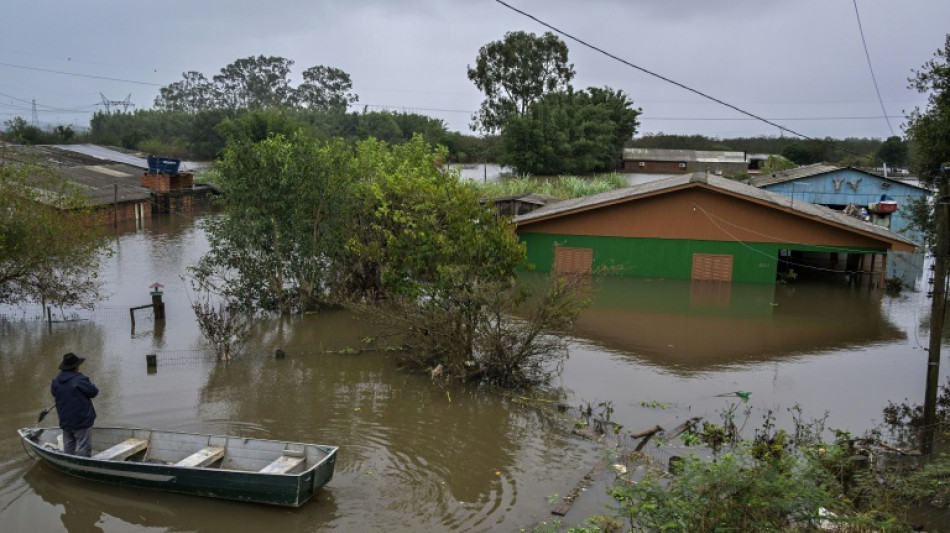
This year's El Nino likely to become record-breaker: top expert / Photo: Nelson ALMEIDA - AFP/File

This year's El Nino likely to become record-breaker: top expert

The current El Nino weather phenomenon is expected to break records for its overall strength, a top expert said Tuesday, as regions face the risk of droughts, floods and other extremes linked to the event.

Text size:

El Nino warms surface temperatures in the central and eastern equatorial Pacific Ocean, bringing worldwide changes in winds, pressure and rainfall patterns.

It typically takes place every two to seven years and lasts around nine to 12 months, and it can lead to droughts in some parts of the world and flooding in others.

This year's El Nino is unlike anything seen in more than three decades of tracking the phenomenon, with forecast models pointing to an "extreme" event, said Tim Stockdale, an El Nino expert at the European Centre for Medium-Range Weather Forecasts (ECMWF), an intergovernmental organisation.

"I think it's absolutely true to say we've never had a forecast of an El Nino that was so strong and so consistent across (forecast) models," he said in a media briefing.

Stockdale said it would be "a very, very big surprise" if the event failed to be a record-breaker.

"I would expect it to break records," he said, while cautioning: "but no guarantees."

While El Nino usually peaks between November and February, the resulting spike in temperatures typically comes later.

Combined with human-induced climate change, the last El Nino contributed to making 2023 the second-hottest year on record and 2024 the all-time high.

- Floods, droughts, wildfires -

The US weather agency declared last month that El Nino had developed and would would intensify into potentially historic strength.

Last week, the World Meteorological Organization (WMO) said El Nino would quickly develop into a strong event between July and September.

UN food aid agencies appealed last month for funds to enact prevention measures over El Nino.

In India, agricultural officials said they would prepare contingency plans to help farmers cope with potentially low rainfall linked to the phenomenon.

Many parts of Asia experience drier-than-average conditions and drought during El Nino years.

El Nino can suppress the monsoon over South Asia, depriving India and other parts of the subcontinent of vital rain that supports hundreds of millions of people.

El Nino also raises the likelihood of drought, heatwaves and wildfires in Australia as warmer-than average conditions grip the continent.

It is often associated with increased rainfall in parts of the Horn of Africa.

But swathes of southern, west, central and eastern Africa usually see drier-than-normal conditions.

Parts of western South America, including coastal Peru and Ecuador, often see above-average rainfall during strong events, raising the risk of flooding and landslides.

In contrast, the weather pattern is tied to drier-than-average conditions in northern Brazil, increasing the risk of wildfires in the Amazon.

(F.Schuster--BBZ)