Deadly virus stalks South Africa's sardines / Photo: RAJESH JANTILAL - AFP/File

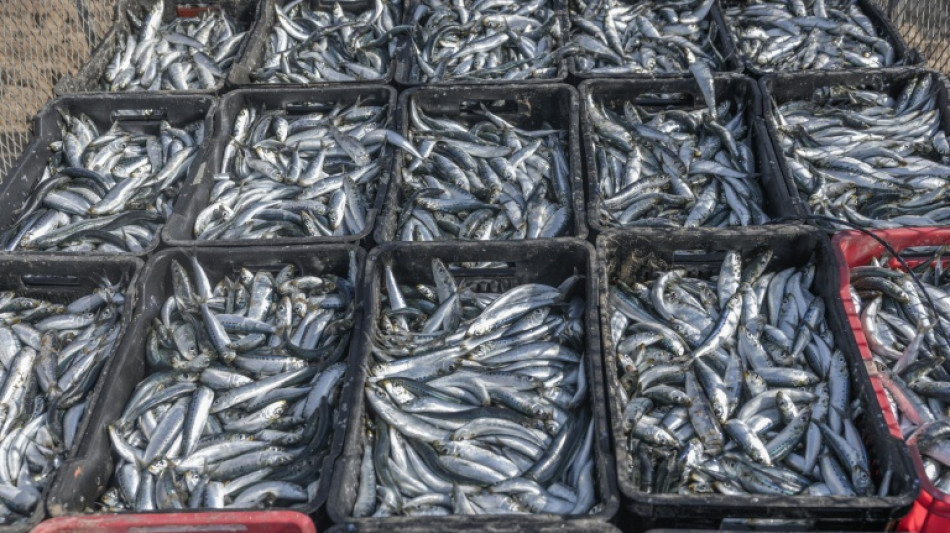
The tide came in last week carrying thousands of dead sardines onto South Africa's south coast and by dawn, stretches of Gqeberha's shoreline were flecked with silver.
Along Hobie and Pollock beaches, bewildered residents watched as waves deposited more fish on the sand, fuelling fears that a virus linked to devastating sardine die-offs overseas may be at work.
"It was a heartbreaking sight," local environmental group Algoa Bay Conservation said.
Calls soon flooded marine scientists' offices.
"We received numerous calls," Nadine Strydom, a professor in the zoology department at Nelson Mandela University, told AFP.
Most of the fish were sardines and pilchards, she said, adding that the true scale of the mortality could be far greater than what washed ashore.
"What we see on the beach is only a fraction, as some could be lying on the seabed," she said.
The mass stranding came just weeks after a similar die-off along South Africa's Western Cape coast, hundreds of kilometres away.
The wash-up has intensified concerns that pilchard herpesvirus, or PHV, a disease that devastated sardine populations in Australia and New Zealand in the 1990s, may be spreading through South African waters.
- 'First time' -
The Department of Forestry, Fisheries and the Environment (DFFE) said on Sunday that a link between the Gqeberha and Western Cape events was considered likely, although it still required confirmation.
"PHV remains the leading explanation for the Western Cape mortality event," the department said, adding that other causes and environmental factors would also be investigated.
The virus was first confirmed in South African waters in July after sardines collected off Saldanha Bay, Cape Canyon, Elands Bay and Gansbaai tested positive, DFFE said.
Genetic sequencing showed more than 99 percent similarity to the strain associated with the Australian outbreak.
"This is the first time it has happened in South African history," Strydom said.
PHV genetic material was found in both dead and apparently healthy sardines collected off Saldanha Bay, with the highest viral levels recorded in dead fish.
But the finding does not prove that PHV caused the deaths, DFFE spokesperson Zolile Nqayi said.
Scientists are examining whether the virus is the primary cause or is infecting fish already weakened by environmental stress.
South Africa's sardine stocks are already low, while oxygen-depleted waters and harmful algal blooms can leave them more vulnerable to disease.
Government testing found no evidence of paralytic shellfish toxins and only low levels of other marine toxins, suggesting algal poisoning was unlikely to be the primary driver.
The investigation is now widening after sardine strandings were reported along Namibia's coastline.
While PHV poses no known risk to human health, the outbreak's wider impacts are already being felt.
At Koeberg nuclear power station near Cape Town, dead sardines clogged a cooling-water intake basin, forcing the national electricity utility to halve power output at one of its two units.
- 'Deeply concerned' -
Scientists and conservation groups fear the consequences could extend far beyond the fishing industry.
Craig Smith, a senior technical specialist at WWF South Africa, said the organisation was working with government and industry representatives to respond to the outbreak.
"We are deeply concerned," Smith said. "In Australia the virus wiped out 70 percent of the stock. We fear this may be the first wave, with the possibility of a more deadly second wave."
Sardines occupy a crucial place in the marine food chain, serving as prey for dolphins, seals, seabirds and the critically endangered African penguin.
The implications "are huge" as lots of fish have died and this can affect the environment, Strydom said.
In Algoa Bay, home to one of the world's most important African penguin colonies, conservationists say the loss of sardines could intensify pressures on penguins already struggling to find enough food.
"Already because of the uncontrolled fishing, penguins are struggling to get food and now with this virus killing sardines it's going to be worse," said environmental chemist Ronelle Friend of Algoa Bay Conservation.
Fishing communities are also watching nervously.
Veteran Durban fisherman Bonny Adams said this year's sardine run was already quieter than usual.
"Now, with this virus, we don't know what to expect. We are worried indeed," he said.
An intergovernmental task team is coordinating surveillance, testing, disposal of dead fish and assessments of the impact on sardine stocks.
The Small Pelagic Scientific Working Group is due to meet this week to consider whether additional management measures are warranted.
For now, however, the scale of the mortality remains uncertain and a clearer picture may emerge later this year when DFFE conducts its annual hydroacoustic survey of sardine stocks.
strs-ho/kjm
(A.Berg--BBZ)