Berliner Boersenzeitung - Lake Urmia risks fully drying up: Iran wetlands chief

EUR -
AED 4.277193
AFN 76.278264
ALL 96.384702
AMD 444.254789
ANG 2.084488
AOA 1067.831058
ARS 1669.875407
AUD 1.753964
AWG 2.096069
AZN 1.984244
BAM 1.954822
BBD 2.344528
BDT 142.396172
BGN 1.956308
BHD 0.43899
BIF 3455.020152
BMD 1.164483
BND 1.507939
BOB 8.043943
BRL 6.350744
BSD 1.164018
BTN 104.659215
BWP 15.4652
BYN 3.346626
BYR 22823.860795
BZD 2.341119
CAD 1.610404
CDF 2599.125794
CHF 0.936598
CLF 0.027365
CLP 1073.513766
CNY 8.233014
CNH 8.233056
COP 4469.284578
CRC 568.61566
CUC 1.164483
CUP 30.858791
CVE 110.746839
CZK 24.199353
DJF 206.952322
DKK 7.46926
DOP 74.818471
DZD 151.338451
EGP 55.403297
ERN 17.46724
ETB 180.669946
FJD 2.633482
FKP 0.872036
GBP 0.873351
GEL 3.138328
GGP 0.872036
GHS 13.333781
GIP 0.872036
GMD 85.007651
GNF 10116.447882
GTQ 8.916541
GYD 243.537172
HKD 9.064392
HNL 30.603057
HRK 7.536071
HTG 152.3838
HUF 382.208885
IDR 19434.051674
ILS 3.767929
IMP 0.872036
INR 104.754244
IQD 1525.472329
IRR 49039.28188
ISK 148.99601
JEP 0.872036
JMD 186.316831
JOD 0.825664
JPY 180.860511
KES 150.572039
KGS 101.834459
KHR 4663.753596
KMF 491.412105
KPW 1048.026495
KRW 1715.92392
KWD 0.357438
KYD 0.970111
KZT 588.683098
LAK 25257.630031
LBP 104279.425622
LKR 359.050455
LRD 206.001381
LSL 19.738426
LTL 3.438415
LVL 0.704384
LYD 6.346874
MAD 10.755749
MDL 19.806011
MGA 5225.03425
MKD 61.609192
MMK 2445.343302
MNT 4129.840334
MOP 9.334532
MRU 46.416721
MUR 53.687009
MVR 17.937387
MWK 2022.70684
MXN 21.166896
MYR 4.787234
MZN 74.422528
NAD 19.738421
NGN 1688.744886
NIO 42.823896
NOK 11.76959
NPR 167.455263
NZD 2.016541
OMR 0.44774
PAB 1.164113
PEN 4.096072
PGK 4.876276
PHP 68.663144
PKR 326.49188
PLN 4.230857
PYG 8005.996555
QAR 4.23994
RON 5.091938
RSD 117.397367
RUB 89.084898
RWF 1689.664388
SAR 4.370504
SBD 9.584382
SCR 16.274091
SDG 700.440621
SEK 10.950883
SGD 1.508844
SHP 0.873664
SLE 27.60251
SLL 24418.617678
SOS 665.506124
SRD 44.982846
STD 24102.440677
STN 24.91993
SVC 10.184289
SYP 12877.133952
SZL 19.738411
THB 37.112493
TJS 10.680213
TMT 4.087334
TND 3.43668
TOP 2.803795
TRY 49.521868
TTD 7.891054
TWD 36.42677
TZS 2835.515749
UAH 48.861004
UGX 4117.9408
USD 1.164483
UYU 45.527234
UZS 13979.615126
VES 296.421323
VND 30695.763805
VUV 142.148529
WST 3.249082
XAF 655.626335
XAG 0.019932
XAU 0.000277
XCD 3.147073
XCG 2.097942
XDR 0.815161
XOF 655.025699
XPF 119.331742
YER 277.787769
ZAR 19.724129
ZMK 10481.745796
ZMW 26.912427
ZWL 374.962952
  • RBGPF

    0.0000

    78.35

    0%

  • CMSC

    -0.0500

    23.43

    -0.21%

  • RYCEF

    -0.1600

    14.49

    -1.1%

  • GSK

    -0.1600

    48.41

    -0.33%

  • SCS

    -0.0900

    16.14

    -0.56%

  • RELX

    -0.2200

    40.32

    -0.55%

  • NGG

    -0.5000

    75.41

    -0.66%

  • CMSD

    -0.0700

    23.25

    -0.3%

  • VOD

    -0.1630

    12.47

    -1.31%

  • RIO

    -0.6700

    73.06

    -0.92%

  • BTI

    -1.0300

    57.01

    -1.81%

  • JRI

    0.0400

    13.79

    +0.29%

  • BCE

    0.3300

    23.55

    +1.4%

  • BCC

    -1.2100

    73.05

    -1.66%

  • AZN

    0.1500

    90.18

    +0.17%

  • BP

    -1.4000

    35.83

    -3.91%

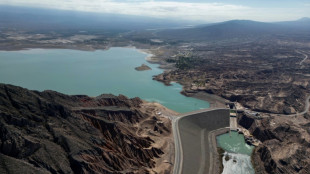
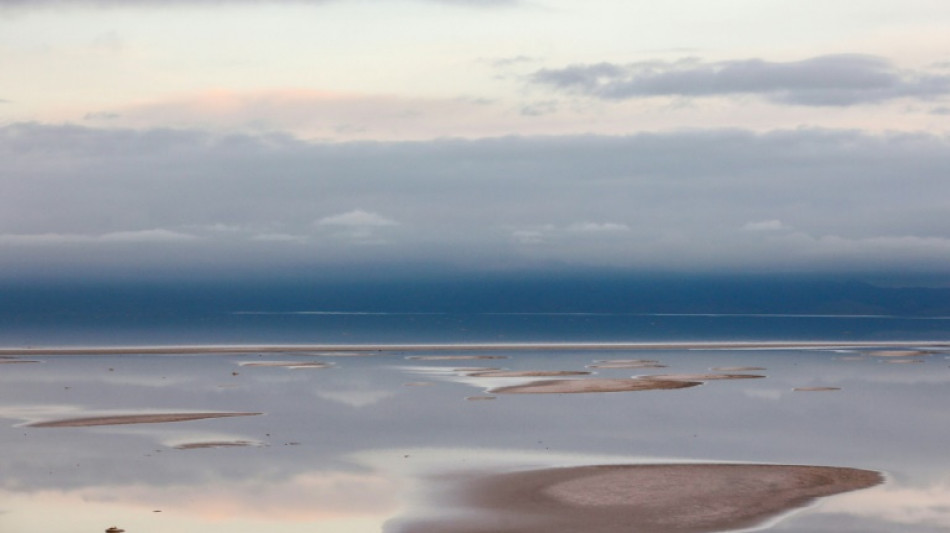
Lake Urmia risks fully drying up: Iran wetlands chief
Lake Urmia risks fully drying up: Iran wetlands chief / Photo: ATTA KENARE - AFP/File

Lake Urmia risks fully drying up: Iran wetlands chief

Iran's Lake Urmia will dry out completely if rescue efforts are not prioritised over the needs of farmers in the drought gripping the region, an environment official said Tuesday.

Text size:

The warning comes just four years after a Japanese government-funded programme had raised hopes of stabilising what was once the Middle East's largest lake and turning around one of the worst ecological disasters of recent decades.

"If the water quotas are not delivered and the approved plans are not fully realised, the lake will definitely dry up and there will be no hope of its recovery," said the head of the environment department's wetlands unit, Arezoo Ashrafizadeh.

"According to the law, the energy ministry is obliged to provide the environmental water needs of Lake Urmia," she told Iran's ISNA news agency.

"But the lake has not received its water entitlement due to a decrease in rainfall among other reasons."

Ashrafizadeh said there needed to be a halt to all new dam construction and measures to "stop agricultural activities" if the lake is to be restored.

Situated in the mountains of northwestern Iran not far from the Turkish border, Lake Urmia is designated as a site of international importance under the United Nations Convention on Wetlands that was signed in the Iranian city of Ramsar in 1971.

The lake has no outlet to the sea and its former size was the result of the volume of water flowing into it matching or exceeding the volume being removed by humans or evaporating off.

The lake once covered 5,000 square kilometres (1,930 square miles). Since 1995, it has been shrinking, according to the UN Environment Programme, due to a combination of rising temperatures, reduced rainfall, dam-building and over-farming.

The drying out has threatened the habitats of shrimp, flamingos, deers and wild sheep and caused salt storms that pollute nearby cities and farms.

Ashrafizadeh said the lake "has not yet completely dried up, but its northern and southern parts have been separated and about 1,000 square kilometres (386 square miles) of the lake remain."

In 2013, Iran and the UN Development Programme launched a campaign to save the lake with funding from the Japanese government.

The plan saw some success as in 2017, the lake expanded in size to reach 2,300 square kilometres (888 square miles) before starting to shrink again in the face of a protracted drought.

In mid-July, police arrested several people for "destroying public property and disturbing the security of the population" after they demonstrated against the drying up of the lake.

It was one of spate of demonstrations in Iran this year against the drying up of rivers and lakes in drought-affected areas of the centre and west.

A largely arid country, Iran suffers from chronic dry spells that are expected to worsen with climate change.

(U.Gruber--BBZ)