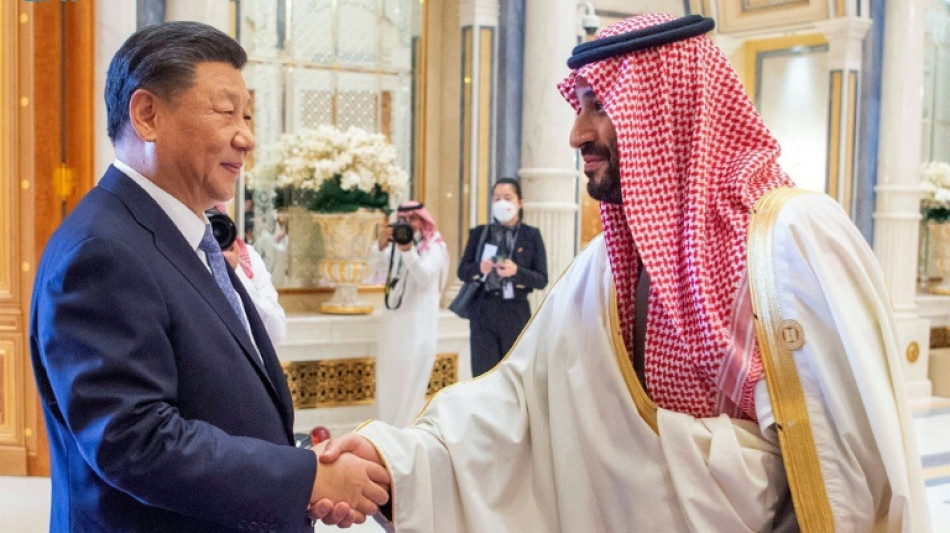
Made in China: Saudi-Iran deal goes beyond Middle East, say analysts / Photo: - - SPA/AFP/File

A surprise deal to restore ties between Saudi Arabia and Iran will reverberate across and beyond the Middle East, analysts said Friday, touching everything from Yemen's war to China's regional engagement.
The agreement calls for the long-time rivals "to resume diplomatic relations and reopen embassies and missions within two months".
It ends the rupture that emerged in 2016 after protesters in Shiite-majority Iran attacked the diplomatic missions of mainly Sunni Saudi Arabia following the Saudi execution of revered Shiite cleric Nimr al-Nimr.
Well before that incident, the regional heavyweights had been on opposing sides of a number of bloody disputes, and recent bilateral talks had not appeared to yield much progress.
That made Friday's announcement all the more unexpected, said Dina Esfandiary of the International Crisis Group.
"The general feeling... was that the Saudis were particularly frustrated and felt that restoring diplomatic ties was their trump card, so it seemed like it was something that they didn't want to budge on," she said.
"It's very welcome that they have."
Analyst Hussein Ibish agreed, calling it "a major development in Middle East diplomacy".
- Saudi charm offensive -
The deal's implications may be felt most immediately in Yemen, where a Saudi-led military coalition has been fighting Iran-backed Huthi rebels since 2015.
A truce announced nearly a year ago expired last October, but Saudi-Huthi talks in recent weeks have fuelled speculation about a deal that could allow Riyadh to partly disengage from the fighting, according to diplomats following the process.
Multiple analysts said Friday the Saudis would not have agreed to improved ties with Iran without concessions on the Islamic republic's involvement in Yemen.
"It's very likely that Tehran had to commit to pressuring its allies in Yemen to be more forthcoming on ending the conflict in that country, but we don't know yet what behind-the-scenes understandings have been reached," said Ibish, senior resident scholar at the Arab Gulf States Institute in Washington (AGSIW).
By mending ties with Iran -- and potentially stepping back from Yemen -- Saudi Arabia can continue a wide-ranging diplomatic push that has also involved recent rapprochements with Qatar and Turkey.
It makes even more sense given the lack of movement towards reviving a nuclear deal between Tehran and Washington, said Torbjorn Soltvedt of the risk intelligence firm Verisk Maplecroft.
"Without a broader easing of tensions between the US and Iran, Saudi Arabia knows that it will need to play a more proactive role in managing relations with Iran," he said.
The charm offensive could even extend to the regional reintegration of Syria, which Saudi Arabia has opposed partly because of Syrian President Bashar al-Assad's close ties to Iran, said Aron Lund of the Century International think tank.
"It's not obvious that these things are linked, at this point, but less Saudi-Iranian hostility could lower the threshold for Saudi-Syrian rapprochement," he said.
- China as 'godfather' -
Beyond its intra-regional consequences, several analysts said, Friday's breakthrough is significant for how it came about: with talks brokered by China.
Despite its escalating engagement with the region -- including a high-profile visit by Xi Jinping to Riyadh in December -- Beijing has long been seen as reluctant to delve into its thornier diplomatic quagmires.
Saudi analysts on Friday said China's role makes it more likely that the deal with Iran will endure.
"China is now the godfather of this agreement and that holds great weight," said Ali Shihabi, a commentator who is close to the government.
"Getting China, with its influence on Iran, to godfather the agreement gave the kingdom the comfort to give Iran the benefit of the doubt."
The deal indicates China is prepared to take on a larger role in the region, said Jonathan Fulton, senior non-resident fellow at the Atlantic Council.
"This may be a sign of its growing confidence in its regional presence, it may be a sign that it thinks there is space to challenge US preponderance in the Middle East," Fulton said.
"In any case, it looks like a diplomatic win for China and a significant departure from its regional approach up to this point."
That will no doubt make Washington, which has a complicated decades-old partnership with Riyadh, "uneasy", said the AGSIW's Ibish.
At the same time, US President Joe Biden's team will likely see the value of the deal in terms of regional stability, he added.
"The Biden administration has been leading the way in emphasising the urgent need to promote diplomacy rather than conflict and confrontation in the Middle East and especially the Gulf region," he said.
"It's likely to view any reduction in tensions between Iran and Gulf Arab countries as generally positive."
(K.Müller--BBZ)